
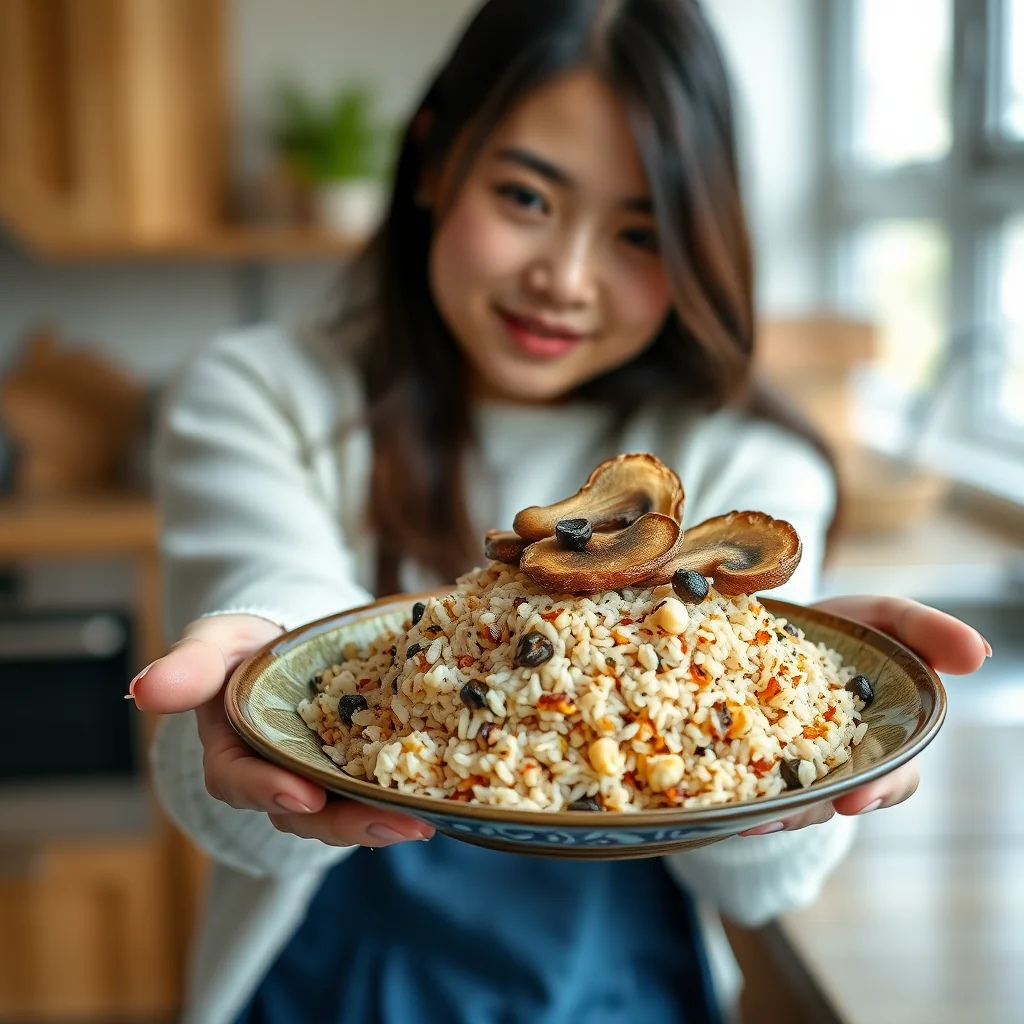
Kayaku gohan (Japanese mixed rice) is a one-pot lesson in balance — shiitake, burdock, and carrot cook right in the rice pot with dashi, so every grain is seasoned from within. It's humble food with the quiet confidence of a dish that's been made for centuries.
Step into the heart of Japanese home cooking with Kayaku Gohan! Often called a ‘Japanese paella,’ this comforting one-pan mixed rice is a staple in households across Japan. It’s a beautiful, savory dish where fluffy short-grain rice absorbs the deep umami flavors of kombu dashi, shiitake mushrooms, and fresh vegetables. Forget complex techniques; this recipe is all about wholesome ingredients coming together in a single pot to create a satisfying meal that’s endlessly customizable. It’s the perfect weeknight dinner or a stunning side dish.
Ingredients
• MAKES: 4 servings
• TIME: 40 minutes
• 1 quart / 950ml (32.1 fl oz) Kombu Dashi
• 5 shiitake mushroom caps, fresh or dried
• 2 tbsp / 30ml neutral oil, like grapeseed or corn
• 1 medium onion, chopped
• 1 burdock root (gobo), peeled and julienned (optional)
• 1 carrot, julienned
• 1 ¾ cups / 350g (12.3 oz) short-grain white rice, rinsed
• 1 cup / 150g (5.3 oz) fresh or frozen peas
• 2 tbsp / 30ml soy sauce
• 1 tbsp / 15ml mirin (for vegan) or honey
• Salt, to taste
• 1 sheet nori, toasted, for garnish (optional)
Instructions
1. Prepare the broth and mushrooms. Gently warm the dashi in a saucepan (do not let it boil). If using dried shiitakes, soak them in the warm dashi for about 10 minutes until tender. Remove the mushrooms and thinly slice all the mushroom caps.
2. Sauté the vegetables. In a deep skillet or wide saucepan with a lid, heat the oil over medium-high heat. Add the chopped onion, sliced mushroom caps, burdock root (if using), and carrot. Cook, stirring occasionally, for about 10 minutes until the vegetables soften and the mushroom edges begin to brown.
3. Toast the rice. Reduce the heat to medium, add the rinsed rice to the skillet, and stir for one minute until the grains are well-coated with oil and combined with the vegetables.
4. Simmer the rice. Stir in the peas, warm dashi, soy sauce, and mirin (or honey). Bring the mixture to a gentle simmer, then reduce the heat to medium-low, cover the pan securely, and cook for 15 minutes.
5. Finish and rest. Uncover the pan. The rice should be mostly cooked but still slightly soupy. Increase the heat slightly and cook for another 2-3 minutes, stirring gently, until the rice is tender and the liquid is absorbed, but the dish remains moist.
6. Serve. Taste and season with additional salt or soy sauce if needed. Serve immediately, garnished with crumbled toasted nori on top.
Nutritional Information
• SERVING SIZE: 1 serving (approx. 1/4 of recipe)
• CALORIES: 450 kcal
• PROTEIN: 10g
• CARBOHYDRATES: 85g
• FAT: 8g
• FIBER: 7g
• (Note: Values are estimates and can vary based on exact used.)
Pro Tips
• Pro-Tips for Perfect Kayaku Gohan
• For a fully vegan dish, ensure you use mirin instead of honey.
• Don’t discard your shiitake stems! Save them to add a flavor boost to your next batch of vegetable stock.
• Swap the peas for 1 cup (240 ml) of asparagus tips, edamame, or lima beans for a different flavor and texture profile.
• Rinsing the short-grain rice until the water runs clear is crucial for removing excess starch and achieving a fluffy, non-sticky texture.
• For the best flavor, toast the nori sheet by quickly passing it over a low gas flame or in a dry pan for a few seconds until it becomes fragrant and crisp.
FAQ
Q: Is this Kayaku Gohan recipe vegan
A: Yes, this recipe is easily made vegan. Simply ensure you use mirin instead of honey as the sweetener. The kombu dashi base is naturally vegan, making this a perfect plant-based Japanese meal.
Q: How can I add more protein to this vegetarian rice dish
A: To boost the protein, consider adding 1 cup (240 ml) of shelled edamame along with the peas. You can also top the finished dish with pan-fried firm tofu cubes, crumbled tempeh, or thinly sliced aburaage (fried tofu pouches) for a heartier meal.
Q: What can I substitute for burdock root or gobo
A: If you can’t find burdock root (gobo), you can simply omit it as it’s listed as optional. For a similar earthy flavor and texture, you could try substituting it with parsnip, julienned celery root, or even extra carrots. The dish will still be delicious.
Q: Can I use vegetable broth instead of kombu dashi
A: Absolutely. While kombu dashi provides a unique umami flavor, a good quality vegetable broth is an excellent substitute. For an even richer flavor, you can use the soaking liquid from dried shiitake mushrooms as part of your cooking liquid.
Q: How do I store and reheat leftover Kayaku Gohan
A: Store any leftovers in an airtight container in the refrigerator for up to 3 days. To reheat, sprinkle a tablespoon of water over the rice and microwave until hot, or gently warm it in a non-stick skillet over medium-low heat until warmed through.
More Recipes You’ll Love
- Hearty Farro Pilaf with Kale and Cranberries
- Couscous Stuffed Bell Peppers
- Roasted Pineapple with Caramelized White Chocolate & Crispy Rice
Kayaku Gohan (Japanese Mixed Rice)
Ingredients
Method
- Prepare the broth and mushrooms. Gently warm the dashi in a saucepan (do not let it boil). If using dried shiitakes, soak them in the warm dashi for about 10 minutes until tender.
- Remove the mushrooms and thinly slice all the mushroom caps.
- Sauté the vegetables.
- In a deep skillet or wide saucepan with a lid, heat the oil over medium-high heat.
- Add the chopped onion, sliced mushroom caps, burdock root (if using), and carrot.
- Cook, stirring occasionally, for about 10 minutes until the vegetables soften and the mushroom edges begin to brown.
- Toast the rice.
- Reduce the heat to medium, add the rinsed rice to the skillet, and stir for one minute until the grains are well-coated with oil and combined with the vegetables.
- Simmer the rice.
- Stir in the peas, warm dashi, soy sauce, and mirin (or honey).
- Bring the mixture to a gentle simmer, then reduce the heat to medium-low, cover the pan securely, and cook for 15 minutes.
- Finish and rest. Uncover the pan. The rice should be mostly cooked but still slightly soupy. Increase the heat slightly and cook for another 2-3 minutes, stirring gently, until the rice is tender and the liquid is absorbed, but the dish remains moist.
- Serve.
- Taste and season with additional salt or soy sauce if needed.
- Serve immediately, garnished with crumbled toasted nori on top.
- Don't discard your shiitake stems! Save them to add a flavor boost to your next batch of vegetable stock.