Ingredients
- 0.66 cups (2.1 oz / 60g) sifted chickpea flour (sift before measuring)
- 0.25 tsp (0.05 oz / 1.5g) salt
- 0.125 tsp (0.02 oz / 0.5g) cayenne pepper or paprika
- 0.125 tsp (0.02 oz / 0.5g) yellow asafetida powder (hing)
- 0.5 tsp (0.08 oz / 2g) dried pomegranate seeds (anardana), optional
- 0.33 cups (2.7 oz / 80g) warm water
- 0.25 tsp (0.04 oz / 1g) baking powder
- 1.5 cups (12 oz / 340g) ghee or vegetable oil, for frying
Ingredients
- 5.0 tbsp (1.0 oz / 30g) sifted chickpea flour (sift before measuring)
- 3.0 cups (25 oz / 710g) water or whey
- 2.0 cups (17 oz / 480g) plain yogurt or cultured buttermilk, stirred until smooth
- 1.0 inch (0.1 oz / 3g) piece of cinnamon stick
- 6.0 whole peppercorns
- 4.0 whole cloves
- 6.0 to 8.0 fresh curry leaves
- 0.5 tsp (0.08 oz / 2g) turmeric
- 2.5 tbsp (0.2 oz / 5g) chopped fresh coriander, divided
- 3.0 tbsp (1.5 oz / 45g) ghee (or 1.0 tbsp peanut oil and 2.0 tbsp unsalted butter)
- 0.5 tbsp (0.1 oz / 3g) cumin seeds
- 2.0 dried whole red chilies
Step-by-Step Instructions
- Combine the 0.66 cups (2.1 oz / 60g) of chickpea flour, 0.25 tsp (0.05 oz / 1.5g) salt, 0.125 tsp (0.02 oz / 0.5g) cayenne, 0.125 tsp (0.02 oz / 0.5g) asafetida, and 0.5 tsp (0.08 oz / 2g) pomegranate seeds in a bowl. Gradually add enough of the 0.33 cups (2.7 oz / 80g) warm water to make a smooth paste, whisking until light. Continue adding water until the batter reaches the consistency of heavy cream. Set aside to rest for 0.5 to 1.0 hours (if using a food processor, rest for only 5 to 10 minutes).
- Pour the ghee or oil into a frying pan to a depth of 0.75 inches (2 cm) and place over moderate heat. Stir the 0.25 tsp (0.04 oz / 1g) baking powder into the rested dumpling batter. Once the oil is hot but not smoking, scoop a scant 1.0 tsp (0.17 oz / 5g) of batter and carefully drop it into the oil. Fry about 12 dumplings at a time, stirring often until crisp and golden. Transfer to paper towels to drain. For softer dumplings, soak them in warm water for 10 to 15 minutes and drain; for crisp contrast in your Pakora Karhi, leave them dry.
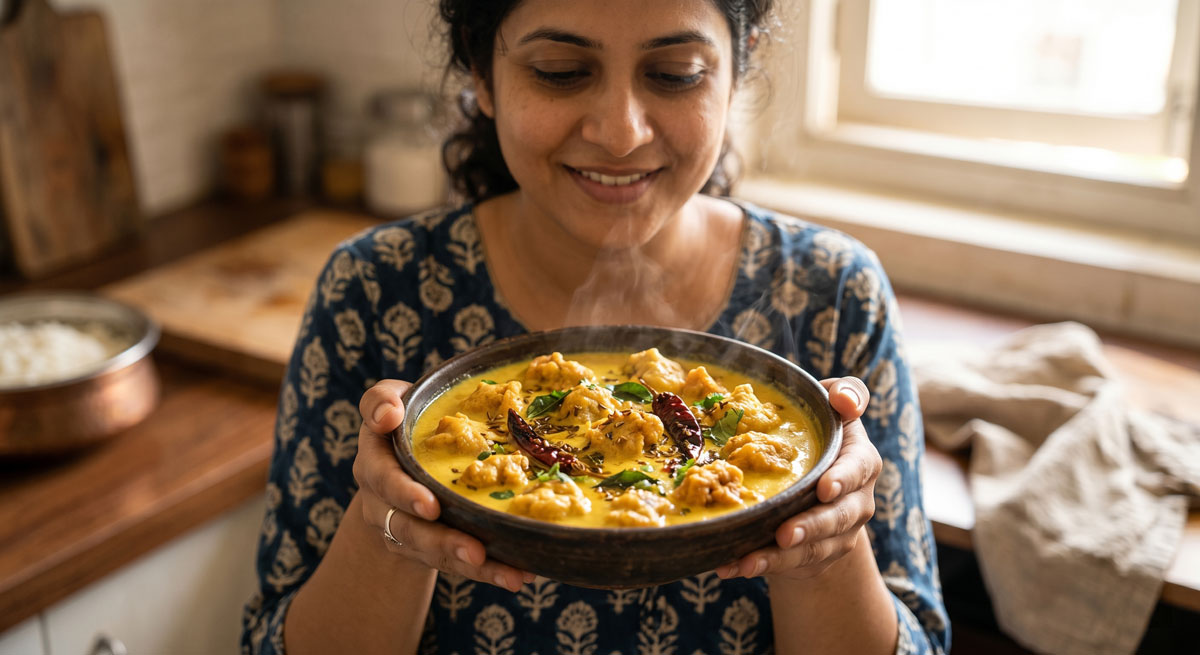
- To build the Pakora Karhi sauce, place 5.0 tbsp (1.0 oz / 30g) chickpea flour in a large bowl and whisk in 0.5 cups (4.2 oz / 120g) of the water or whey to form a smooth batter. Gradually whisk in the remaining liquid and the 2.0 cups (17 oz / 480g) yogurt until smooth. Pour into a saucepan, adding the cinnamon, peppercorns, cloves, curry leaves, turmeric, and half of the chopped coriander. Bring to a gentle boil over moderate heat, stirring constantly. Reduce heat to low and simmer for 20 to 25 minutes, stirring frequently until it reaches a light, custard-like consistency. Stir in the dumplings, cover, and remove from heat.
- Heat the 3.0 tbsp (1.5 oz / 45g) ghee in a small saucepan over moderate heat. When hot, add the 0.5 tbsp (0.1 oz / 3g) cumin seeds and dried red chilies, frying until the cumin darkens. Pour this hot chaunk tempering directly into the Pakora Karhi and cover immediately. After 2 to 3 minutes, add the remaining chopped coriander and swirl gently before serving piping hot.
Nutritional Information (Approximate per Serving)
Based on a 6-serving yield, here is the estimated nutritional breakdown per serving. Keep in mind that frying oil absorption can vary, which will slightly alter the final fat content.
- Calories: 215 kcal
- Carbohydrates: 12g
- Protein: 6g
- Fat: 16g
Pro Tips
- Hydrate the Besan (Chickpea Flour): Do not skip the resting time for the dumpling batter. Allowing the batter to rest for at least 30 minutes ensures the chickpea flour fully hydrates, resulting in lighter, fluffier pakoras rather than dense ones.
- Prevent Yogurt Curdling: To keep your creamy karhi sauce velvety smooth, use room-temperature yogurt and whisk it thoroughly with the chickpea flour before applying heat. Always bring the mixture to a boil over a moderate, gentle heat while stirring continuously.
- Control the Frying Temperature: Maintain your frying oil at a steady moderate heat. If the oil is too hot, the outside of the dumplings will burn while the inside remains raw batter. If it is too cold, the pakoras will absorb excess oil and become greasy.
- Manage the Consistency: Karhi naturally thickens as it cools, especially once the chickpea flour dumplings are added. If you plan to serve it later, take the karhi off the heat when it is slightly thinner than your desired final consistency.
Frequently Asked Questions (FAQ)
Why did my yogurt curdle when making Pakora Karhi? Curdling usually happens if the yogurt is added directly to a hot pan or if it boils too vigorously. To prevent this in an authentic North Indian karhi, always whisk the yogurt with chickpea flour until completely smooth before heating, and stir constantly as it comes to a gentle simmer.
Should I soak the chickpea flour dumplings in water before adding them? This depends entirely on your texture preference! Soaking the fried dumplings in warm water for 10 minutes makes them incredibly soft and sponge-like, allowing them to melt in your mouth. If you prefer a crunchier texture to contrast the velvety yogurt curry, add the dry, crispy pakoras directly to the karhi right before serving.
Can I make this authentic Pakora Karhi ahead of time? Yes, karhi often tastes even better the next day as the spices meld. You can store the cooked yogurt sauce in an airtight container in the refrigerator for up to 3 days. However, for the best texture, store the dry dumplings separately and add them to the sauce when you gently reheat the dish on the stove.
Is it possible to make the pakoras without deep frying? While this 1967 recipe calls for traditional shallow-deep frying in ghee or oil to achieve that authentic puff, you can adapt it. You can cook the chickpea flour batter in an appe/paniyaram pan (a specialized pan with small rounded cavities) with just a few drops of oil, or bake them in an air fryer at 180°C for a lower-fat alternative, though the texture will be slightly less authentic and spongy.