Authentic Homemade Recipe
Here is the fully rewritten, clear, and highly precise recipe formulated for guaranteed culinary success in your kitchen.
Ingredients & Equipment:
- Whole Milk: 8.5 cups (67.6 fl oz / 2000g)
- Lemon Juice (or Citric Acid Solution): 3.0 tbsp (1.5 fl oz / 45g)
- Hot Water (Optional, for softer texture): 1.0 to 2.0 cups (8.0 to 16.0 fl oz / 240g to 480g)
- Equipment: Heavy-bottomed pan (2.0 to 6.0 quarts / 1.9 to 5.7 liters), slotted metal spoon, colander, cheesecloth (3 layers), and a pressing weight (approx. 32.0 oz / 900g).
Step-by-Step Instructions:
- Pour the whole milk (8.5 cups / 67.6 fl oz / 2000g) into a heavy-bottomed pan that allows ample room for boiling. Set the pan over high heat and bring the milk to a full, foaming boil, stirring frequently to prevent scorching and sticking to the bottom. Reduce the heat to low, and just before the foam subsides, drizzle the lemon juice (3.0 tbsp / 1.5 fl oz / 45g) evenly over the milk. Very gently and slowly move the spoon through the milk in one single direction. After 10 seconds, remove the pan from the heat and continue to gently agitate the milk until large lumps of soft curd form. If the cheese has not formed after 1 minute, place the pan back over the heat momentarily until the casein coagulates from the pale yellow whey; if necessary, add an additional 0.5 tbsp (0.25 fl oz / 7.5g) of your acidic agent.
- As soon as the cheese curds have successfully formed, remove the pan from the heat, cover it tightly, and set it aside to rest for exactly 10 minutes. If you desire a very soft cheese consistency, gently pour in 1.0 to 2.0 cups (8.0 to 16.0 fl oz / 240g to 480g) of hot water. When the cheese has settled completely under the surface of the whey, it is ready for the draining process.
- Line a colander with three thicknesses of cheesecloth (or a clean handkerchief) that has been dipped in water and wrung dry; allow the corners and edges of the cloth to hang generously over the sides of the colander. If you wish to collect the whey for future cooking, set the colander over another large pan; otherwise, place it directly in a clean sink. Remove the large lumps of cheese with your slotted spoon and place them carefully into the colander. Gently pour the smaller remaining pieces and the hot whey through the colander to catch every bit of curd.
- Gather up the four corners of the cheesecloth and twist the top closed 1.0 to 2.0 times. Hold the bundle of cheese under a gentle stream of lukewarm water for 5 to 10 seconds to thoroughly rinse off the acidic cutting agent. Gently twist the cloth again to squeeze out the excess water.
- Place the wrapped cheese back into the colander and rest a plastic-wrapped brick, a heavy pan of water, or a stack of kitchen scale weights (roughly 32.0 oz / 900g) on top to exert steady downward pressure. Press and drain the cheese for 20 to 45 minutes depending on the ambient humidity and desired firmness. Unwrap the warm cheese, place it on a smooth, clean work surface, break it apart gently, and press it with a clean cloth to extract any lingering, excess whey.
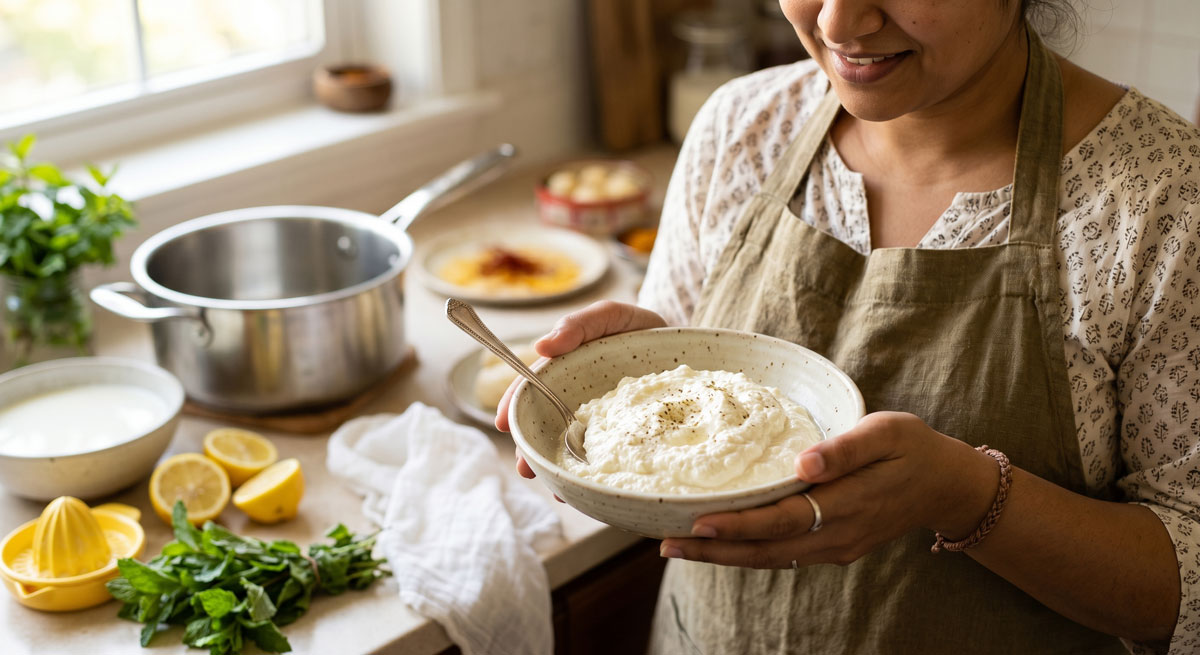
- Knead the cheese by pressing and spreading it out, a small 1.0 oz (28g) bit at a time, using the heel of your palm and the flat part of your hand. Gather up all of the cheese with a spatula and repeat this spreading process again and again for up to 10 minutes, or until the cheese yields about 8.0 oz (225g) of a light, velvety smooth product that has lost all of its grainy texture. Use immediately as directed in your chosen recipe, or wrap tightly and refrigerate for up to 3 days.
Nutritional Information
Note: The following nutritional values are approximate and based on a 1.0 oz (28g) serving size, assuming the recipe yields exactly 8.0 oz (225g) of drained chenna cheese.
- Calories: 85 kcal
- Carbohydrates: 1.5 g
- Protein: 6.0 g
- Fat: 6.5 g
Pro Tips for the Perfect Chenna
As a chef, I've made hundreds of batches of fresh cheese. Follow these insider tips to ensure your chenna is perfectly soft, never rubbery, and ready for your favorite recipes.
- Avoid Ultra-Pasteurized (UHT) Milk: For the best curd yield and texture, strictly use regular pasteurized, full-fat (whole) milk. UHT milk has been heated to extreme temperatures, which alters the protein structure and prevents the casein from coagulating properly.
- Dilute Your Acidic Agent: Instead of adding straight lemon juice to the boiling milk, mix your 3.0 tbsp (1.5 fl oz) of lemon juice with an equal amount of warm water. This gentler introduction of acid prevents the milk proteins from seizing up abruptly, resulting in a much softer, highly desirable curd.
- Do Not Overboil After Curdling: The exact second you see the clear, pale green/yellow whey separate from the white curds, immediately remove the pan from the heat. Continuing to boil the curds will make them tough, chewy, and completely unsuitable for delicate Bengali sweets.
- The "Greasy Palm" Kneading Test: If you are using your chenna for sweets like Rasgulla or Sandesh, you must knead it while it is still warm. You will know you have kneaded it sufficiently (usually around 8 to 10 minutes) when the mixture stops sticking to your work surface and your palms start to feel just slightly greasy from the released butterfat.
Frequently Asked Questions (FAQ)
Q: What is the exact difference between Chenna and Paneer? A: Both are unripened Indian cheeses made from the exact same ingredients (milk and an acidic cutting agent). The difference lies entirely in the moisture content and pressing time. Chenna is drained briefly and retains a high moisture content, resulting in a soft, crumbly texture ideal for kneading into sweets. Paneer is chenna that has been pressed under heavy weight for a longer period to squeeze out all excess whey, resulting in a firm block that can be cubed and fried.
Q: Why did my homemade chenna cheese turn out hard and rubbery? A: A rubbery texture is usually caused by two common mistakes: boiling the milk for too long after the acid has been added, or using far too much lemon juice/vinegar. Always remove the pan from the heat immediately once the whey separates, and start with the minimum recommended amount of acid, adding more only if absolutely necessary.
Q: Can I use white vinegar or citric acid instead of fresh lemon juice? A: Yes, absolutely. White vinegar and citric acid crystals dissolved in warm water are excellent, reliable alternatives to lemon juice. Many professional sweet-makers actually prefer a 0.25 tsp (1g) solution of citric acid because it produces a very clean-tasting cheese without the lingering citrus flavor that lemon juice can sometimes leave behind.
Q: How long can I store fresh homemade chenna in the refrigerator? A: Because chenna is an unripened, high-moisture cheese with no preservatives, it is highly perishable. It is best used immediately, but you can wrap it tightly in plastic wrap or place it in an airtight container and store it in the refrigerator for 2 to 3 days. Do not freeze it, as the texture will become unpleasantly grainy upon thawing.