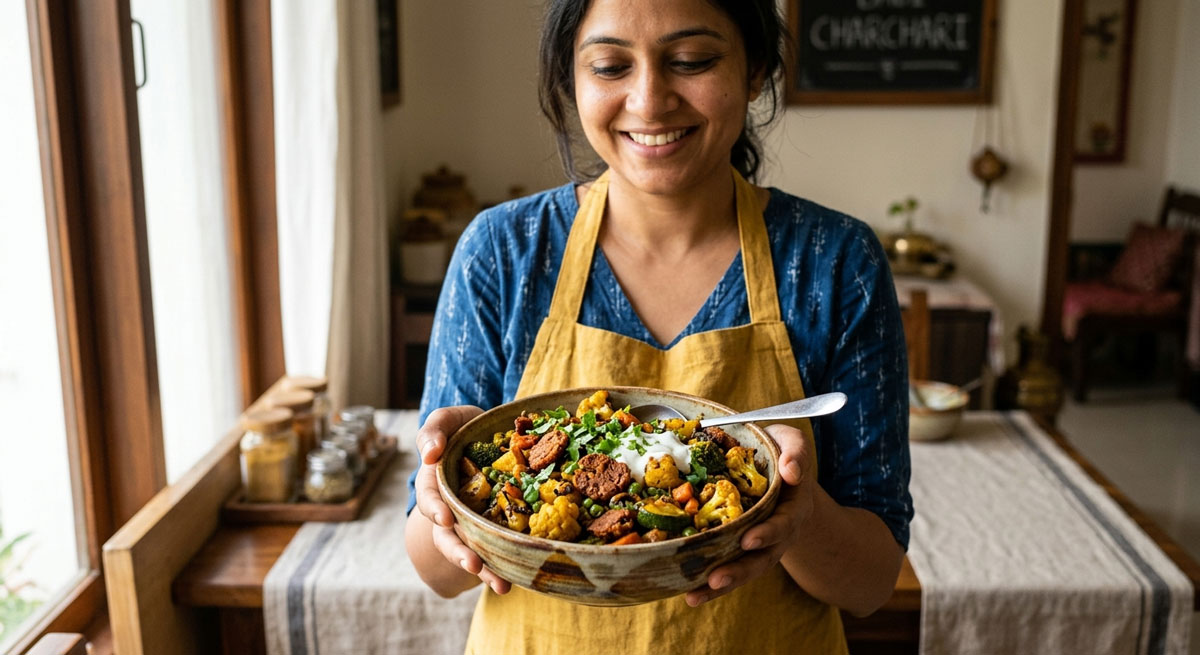
Ingredients
- Preparation time: 10 minutes (after assembling ingredients)
- Cooking time: 30 minutes
- Servings: 6
The Fats & Spices:
- 5.0 tbsp. (2.5 oz / 71g) ghee OR 2.0 tbsp. (1.0 oz / 28g) vegetable oil mixed with 3.0 tbsp. (1.5 oz / 43g) butter
- 0.5 tsp. (0.1 oz / 2g) turmeric
- 1.0 tsp. (0.1 oz / 3g) garam masala
- 0.5 tbsp. (0.3 oz / 8g) salt
The Produce & Badis:
- 2.0 plum-sized dried urad dal badis (2.0 oz / 60g) cracked into bits, OR 0.33 cup (1.0 oz / 30g) raisin-sized dried moong dal badi
- 4.0 cups (16.0 oz / 455g) mixed trimmed carrots, cauliflower, broccoli, and zucchini (cut into 1-inch pieces)
- 1.0 cup (5.0 oz / 140g) fresh peas or trimmed green beans (cut into 1-inch pieces)
- 2.0 medium-sized tomatoes (8.0 oz / 225g), peeled, seeded, and chopped
- 3.0 tbsp. (0.5 oz / 15g) coarsely chopped fresh coriander or parsley
Liquids & Garnish:
- 2.0 cups (16.0 oz / 473g) water
- 0.25 cup (2.0 oz / 60g) sour cream or yogurt (optional garnish)
Step-by-Step Instructions
- Heat the 5.0 tbsp. (2.5 oz / 71g) of ghee (or oil and butter mixture) in a heavy-bottomed 3-quart nonstick pan over moderate heat. When the fat is hot but not smoking, add the dal badis and fry them while stirring constantly until they darken to a reddish-brown color, then immediately add the mixed vegetables, tomatoes, water, turmeric, garam masala, salt, and fresh herbs, bringing the entire mixture to a rolling boil.
- Reduce the heat to low, cover the pan tightly, and let the mixture simmer gently for 30 minutes, checking occasionally to ensure the 2.0 cups (16.0 oz / 473g) of liquid is not drying up too quickly, adjusting the heat if necessary so that the vegetables become tender right as the liquid is fully absorbed.
- Raise the heat once the vegetables are fully cooked and all liquid has been absorbed, allowing the mixture to cook undisturbed without stirring until a rich crust forms on the bottom and the vegetables begin to char. Remove the pan from the heat, cover it, let it rest for 3 to 4 minutes, and then gently fold the flavorful charred crust into the soft vegetables before optionally garnishing with 0.25 cup (2.0 oz / 60g) of sour cream or yogurt.
Nutritional Information (Per Serving)
These values are approximate and based on 6 servings of the base recipe (excluding the optional sour cream/yogurt garnish).
- Calories: 180 kcal
- Carbohydrates: 16g
- Protein: 5g
- Fat: 12g
Chef’s Pro Tips
As a chef, I can tell you that the magic of a "charchari" lies in the technique just as much as the ingredients. Here are a few insider tips to get that perfect texture and flavor:
- Master the Char: The defining characteristic of this dish is the crust that forms at the very end. Do not rush this step! Once the liquid is absorbed, resist the urge to stir. Let the heat build that crust, and crucially, let the pan rest off the heat for 3 to 4 minutes before folding it in. This resting period allows the steam to loosen the charred bits so they mix beautifully into the vegetables.
- Uniformity is Key: Cut your vegetables into precise 1-inch pieces. Because we are simmering everything together, uniform sizing ensures that the hardy carrots and delicate zucchini all reach tenderness at the exact same time without turning to mush.
- Watch the Badis Closely: When frying the dal badis in ghee, keep your eyes on the pan and stir continuously. They go from beautifully toasted (reddish-brown) to bitter and burnt in a matter of seconds.
- Adjust for Heat: Since urad dal badis vary wildly in their spice levels depending on the brand or batch, taste a tiny crumb of the raw badi before cooking. If it's intensely spicy, you might want to use slightly less, or lean heavily on the optional yogurt garnish at the end to balance the heat.
Frequently Asked Questions (FAQ)
What are dal badis and where can I find them? Dal badis (or wadis) are traditional, sun-dried Indian dumplings made from ground lentils (like urad or moong dal) mixed with various spices. They add a brilliant, spicy crunch and deep umami flavor to stews and curries. You can easily find them at your local Indian grocery store or through online specialty spice retailers.
Can I make this Sabji Badi Charchari recipe vegan? Absolutely! To make this charred vegetable medley 100% vegan, simply swap out the ghee and butter for an equal amount of your favorite high-heat vegetable oil (like avocado or sunflower oil). If you choose to garnish, use an unsweetened plain dairy-free yogurt instead of sour cream.
What should I serve with Sabji Badi Charchari? This dry, intensely flavored vegetable stew pairs wonderfully with Indian flatbreads. Serve it alongside fresh, warm roti, paratha, or naan to scoop up the charred bits. It also makes a fantastic side dish next to simple steamed basmati rice and a mild yellow dal.
Can I substitute other vegetables in this medley? Yes, charchari is incredibly versatile and traditionally acts as a fantastic "fridge-clearing" recipe. While carrots, cauliflower, broccoli, and zucchini offer a great texture balance, you can easily incorporate potatoes, eggplant, pumpkin, or bell peppers. Just ensure you cut them to the same 1-inch size for even cooking.