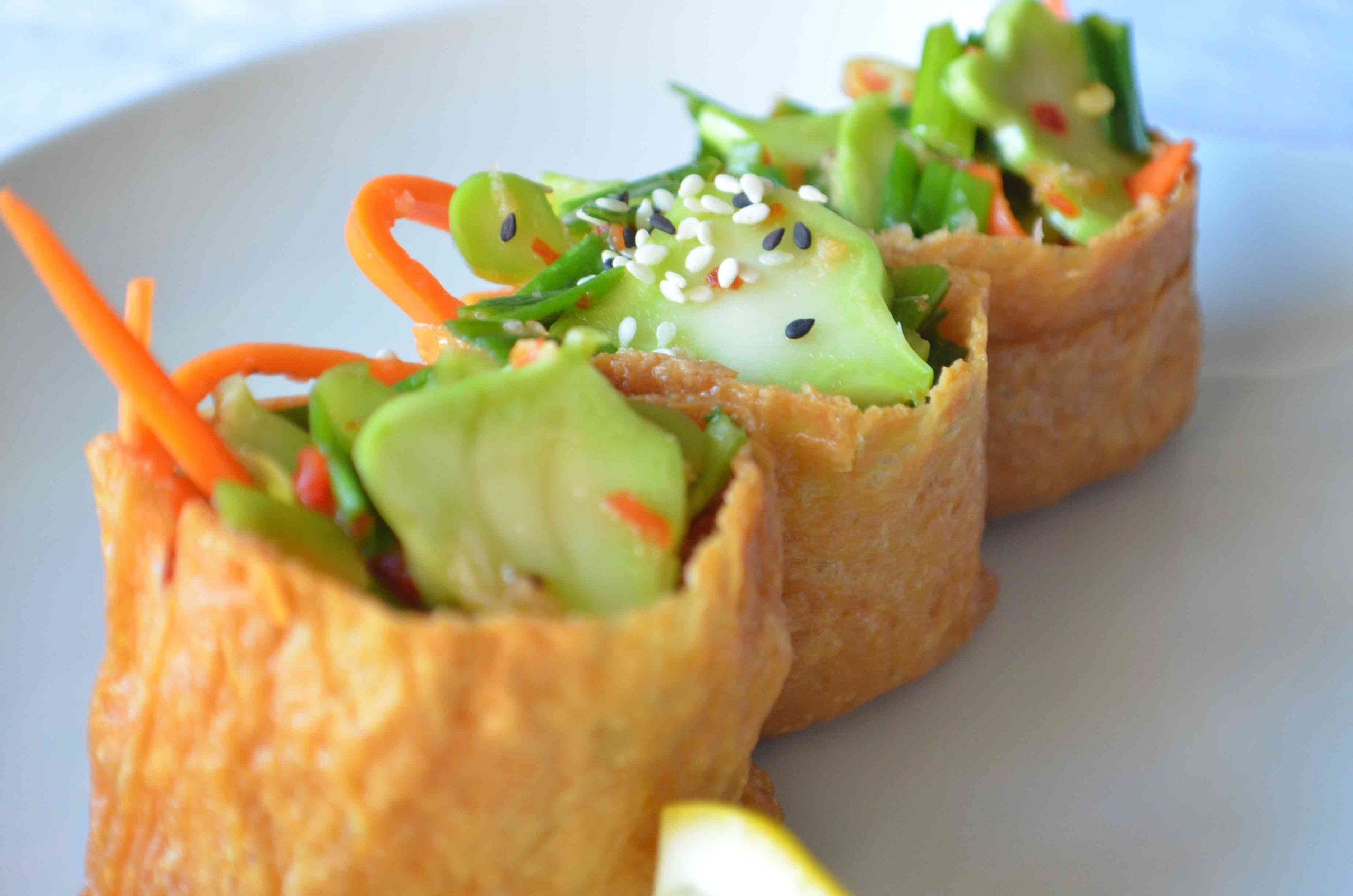
Don’t throw away those broccoli stems! I’m always looking for creative ways to reduce food waste, and it turns out broccoli stems are a hidden culinary gem. They have a wonderfully crisp texture that’s perfect for making a quick, crunchy kimchi. Tucked into sweet and savory inari pouches with seasoned sushi rice, these bites are an explosion of flavor. They’re ready in minutes and make a fantastic lunch, appetizer, or snack that you can prep ahead of time.
Ingredients
• For the Broccoli-Stem Kimchi
• One 4-inch / 10-cm length broccoli stem, sliced
• One 2-inch / 5-cm length daikon radish, peeled and thinly sliced
• 1 carrot, shredded
• 2 green onions (scallions), roughly chopped
• 4 tablespoons salt
• 2 tablespoons garlic chili paste
• 1 teaspoon grated fresh ginger root
• For the Inari Assembly
• 8 inari pouches (seasoned fried tofu pockets)
• 2 cups / 350 g prepared sushi rice (Traditional, Brown, Quinoa, or Multi-Grain)
• 1 cup / 200 g Broccoli-Stem Kimchi (from recipe above)
Instructions
1. Make the Quick Kimchi: In a medium bowl, toss the sliced broccoli stem, daikon radish, carrot, and green onions with the salt. Let the mixture stand for 10 minutes to draw out moisture.
2. Rinse and Squeeze: Thoroughly rinse the vegetables under cold water to remove the excess salt. Using your hands, squeeze out as much water as possible and pat dry.
3. Season the Kimchi: Return the squeezed vegetables to the bowl and mix in the garlic chili paste and grated ginger. Let it stand for at least 5 minutes for the flavors to meld.
4. Prepare the Inari Pouches: Gently lay the inari pouches on a clean kitchen towel and blot away any excess seasoned liquid from the packaging.
5. Fill the Pouches: Carefully open each of the 8 inari pouches. Using wet hands or a wet spoon to prevent sticking, fill each pouch about three-quarters full with your prepared sushi rice, packing it in gently but securely.
6. Top and Serve: Drain any excess liquid from your prepared kimchi. Generously top each rice-filled inari pouch with the broccoli-stem kimchi. Serve immediately and enjoy!
Nutritional Information
• A light and flavorful plant-based snack. This recipe is a good source of fiber from the vegetables and provides vitamins C and K. The fermented elements in kimchi can also contribute to gut health. * is an estimate and may vary based on used.
Pro Tips
• For a deeper flavor, prepare the broccoli-stem kimchi a day in advance and let it marinate in the refrigerator.
• Keep a small bowl of water nearby to wet your hands or spoon when handling the sushi rice. This is the secret to preventing it from sticking to everything!
• Adjust the spice level to your liking by adding more or less garlic chili paste. For a non-spicy version, you can substitute it with a mix of gochujang and a little rice vinegar.
• Garnish your finished inari with a sprinkle of toasted sesame seeds or finely chopped chives for extra texture and visual appeal.
FAQ
Q: How can I add more protein to this vegetarian inari
A: For a protein boost, you can mix cooked and shelled edamame, finely diced firm tofu, or quinoa into your sushi rice before filling the pouches. The inari pouches themselves, being made from tofu, also contribute to the protein content.
Q: Can I make this broccoli stem kimchi inari ahead of time
A: Yes, you can prep the components separately. The broccoli-stem kimchi can be made up to 3 days in advance and stored in an airtight container in the refrigerator—its flavor will deepen over time. Assemble the inari just before serving for the best texture, as the rice can harden and the pouches can become soggy if stored assembled for too long.
Q: Is this recipe gluten-free
A: To make this recipe gluten-free, ensure you use tamari-seasoned inari pouches and a certified gluten-free garlic chili paste or gochujang, as some brands contain wheat. Always check the labels of your ingredients.
Q: What can I use instead of broccoli stems
A: If you don’t have broccoli stems, you can substitute them with other crunchy vegetables like finely chopped cauliflower stems, kohlrabi, or even crisp celery. The goal is to have a firm, crunchy texture for the quick kimchi.