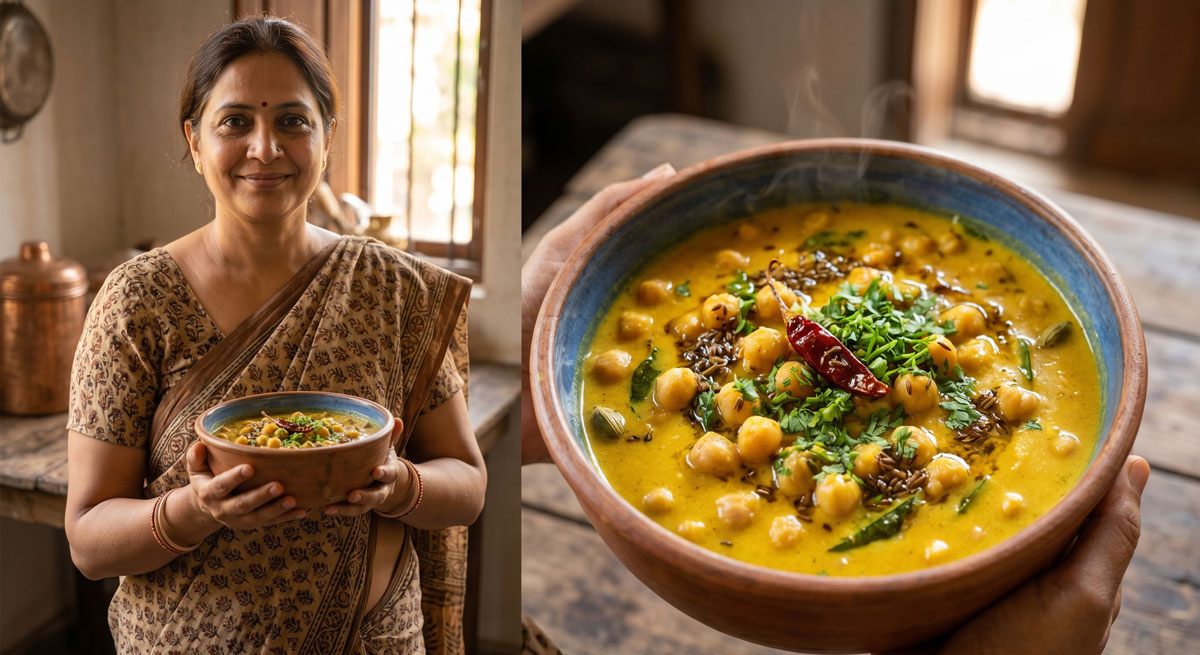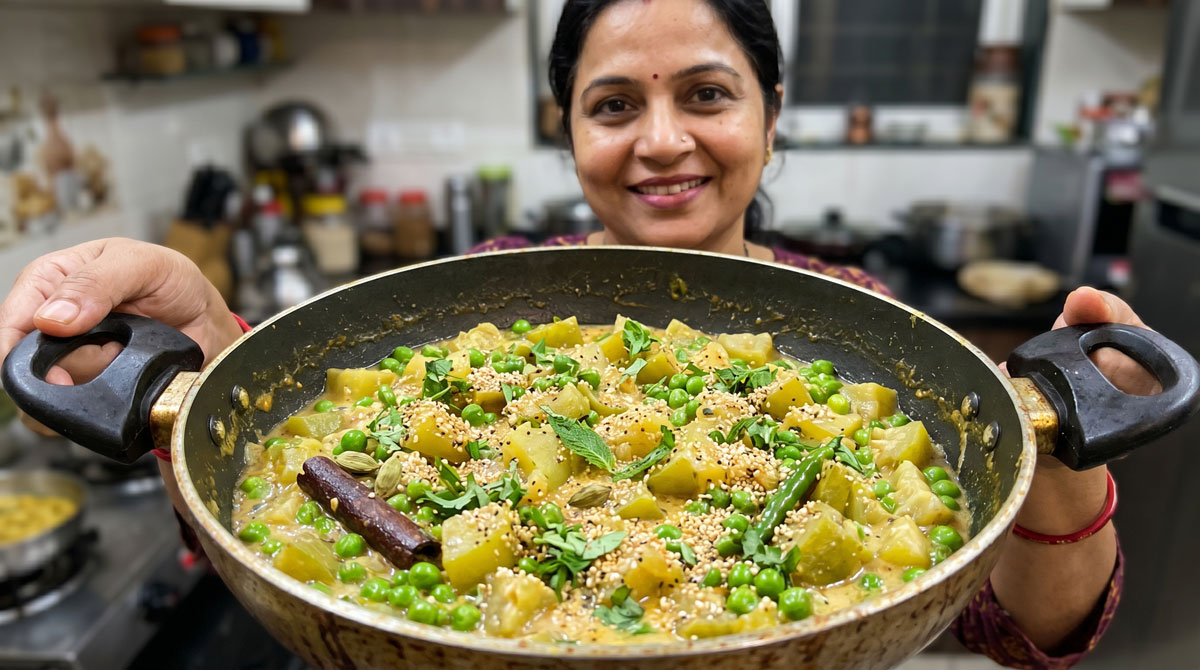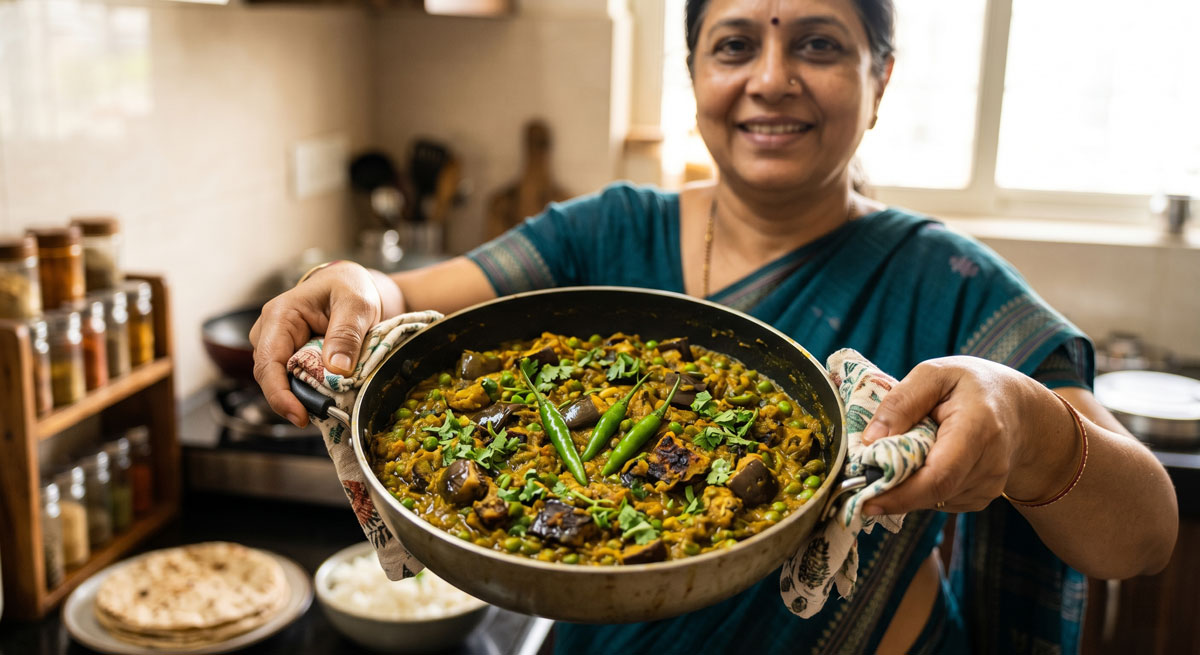
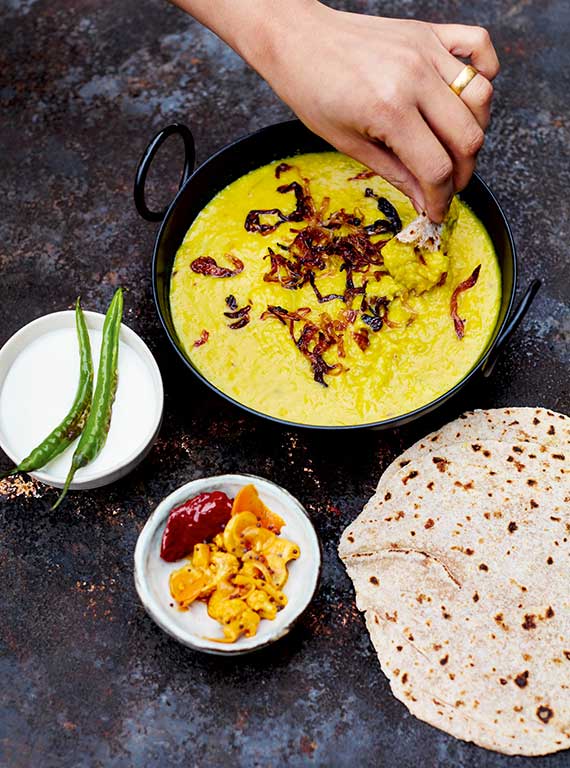
There are some dishes that feel like a warm hug in a bowl, and this Simple Moong Dal is exactly that. It’s one of my all-time favorite lentil recipes, a beautiful and gentle marriage of soft, creamy dal with earthy cumin and a gentle kick of green chile. The final flourish of a sizzling tadka—a tempering of spices in hot ghee—transforms this humble dish into something truly special. This is old-fashioned home cooking at its absolute best: deeply nourishing, wonderfully inexpensive, and the ultimate comfort food.
Ingredients
• 1½ cups / 300g moong dal split yellow mung beans
• 4 tbsp / 56g ghee or unsalted butter
• 1½ tsp / 4.5g cumin seeds
• 3 large shallots finely sliced
• 2 Indian green chiles very thinly sliced
• 5 cloves of garlic crushed
• ½ tsp / 1.5g ground turmeric
• 1 tsp / 3g garam masala
• 1½ tsp / 9g salt or to taste
• 6⅓ cups / 1.5 liters water
Instructions
1. Rinse the moong dal in a fine-mesh sieve under cold water until the water runs clear. Drain well, place it in a deep saucepan with 6⅓ cups / 1.5 liters of water.
2. Bring the dal to a boil over high heat, then reduce the heat to low, cover partially, and let it simmer for 30 to 40 minutes, or until the lentils are completely soft and tender.
3. While the dal cooks, prepare the tadka. Heat the ghee or butter in a separate frying pan over medium heat. Once hot, add the cumin seeds and let them sizzle for about 30 seconds.
4. Add the finely sliced shallots to the pan and cook for about 5 minutes, stirring occasionally, until they soften and become translucent.
5. Stir in the green chiles and crushed garlic. Continue to cook for another 5 minutes, until the shallots begin to turn golden brown at the edges.
6. Add the ground turmeric and garam masala to the pan. Cook for one more minute, stirring constantly, until the spices are fragrant.
7. Carefully pour the hot tadka mixture into the cooked dal. Stir everything together to combine, then add the salt.
8. Check the consistency. If the dal is too thick, add a splash of hot water until it reaches your desired thickness. Taste and adjust the salt if needed. Serve hot with basmati rice or naan.
Nutritional Information
• An excellent source of plant-based protein, essential for muscle repair and growth.
• Rich in dietary fiber, which aids digestion and promotes a feeling of fullness.
• Packed with essential minerals like potassium, magnesium, and iron.
• Naturally gluten-free and low in fat.
Pro Tips
• For a creamier texture, you can use an immersion blender to briefly pulse the dal a few times before adding the tadka.
• To make this recipe vegan, simply substitute the ghee or butter with coconut oil or another neutral-flavored vegetable oil.
• Don’t rush the browning of the shallots. Allowing them to caramelize properly builds a deep, savory flavor base for the entire dish.
• Serve this dal with fluffy basmati rice or warm naan bread, a dollop of plain yogurt to cool the heat, and a spoonful of tangy mango pickle.
FAQ
Q: How can I make this moong dal recipe vegan
A: To make this moong dal completely vegan, simply substitute the ghee or unsalted butter with a plant-based fat. Coconut oil or another neutral-flavored vegetable oil works perfectly for creating the sizzling tadka.
Q: Is this moong dal a good source of vegetarian protein
A: Yes, absolutely. Moong dal, or split yellow mung beans, is an excellent source of plant-based protein and dietary fiber, making this dish a deeply nourishing and satisfying meal for anyone following a vegetarian diet.
Q: How should I store leftover dal
A: Store any leftover moong dal in an airtight container in the refrigerator for up to 4 days. The dal will thicken as it cools, so you may need to add a splash of hot water when reheating it on the stovetop or in the microwave to restore its creamy consistency.
Q: Can I use a different type of lentil for this recipe
A: While this recipe is specifically designed for the quick-cooking and creamy texture of moong dal, you could substitute it with red lentils (masoor dal) for a similar cooking time. Using other lentils like toor dal or chana dal would require a longer cooking time and more water.