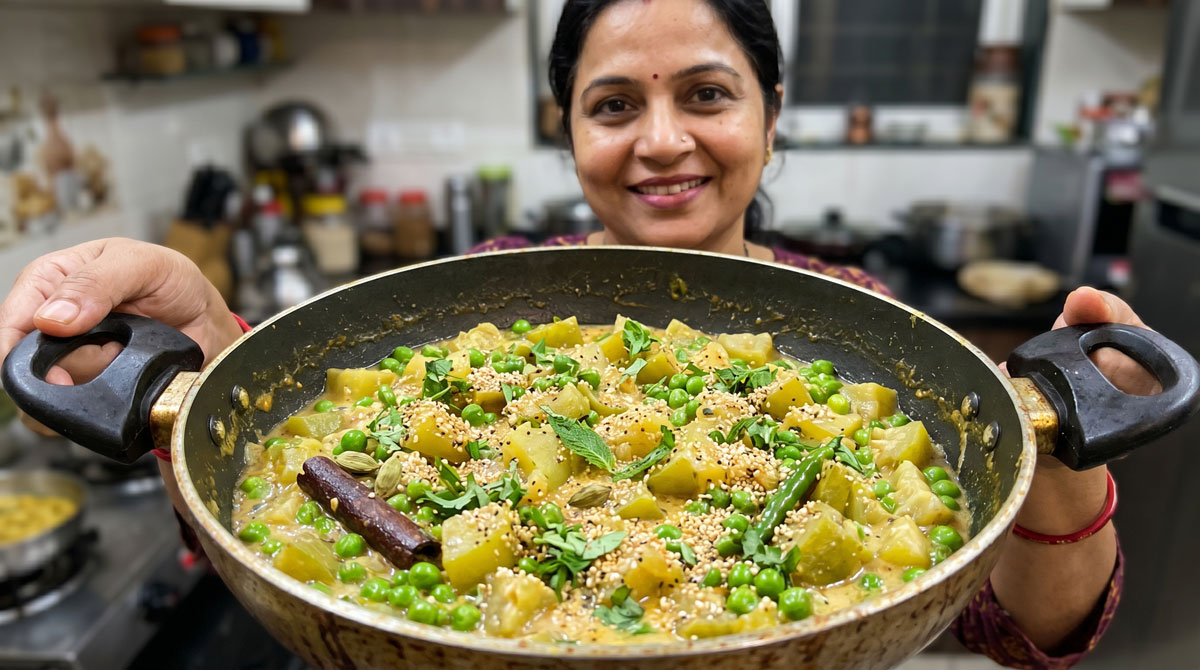
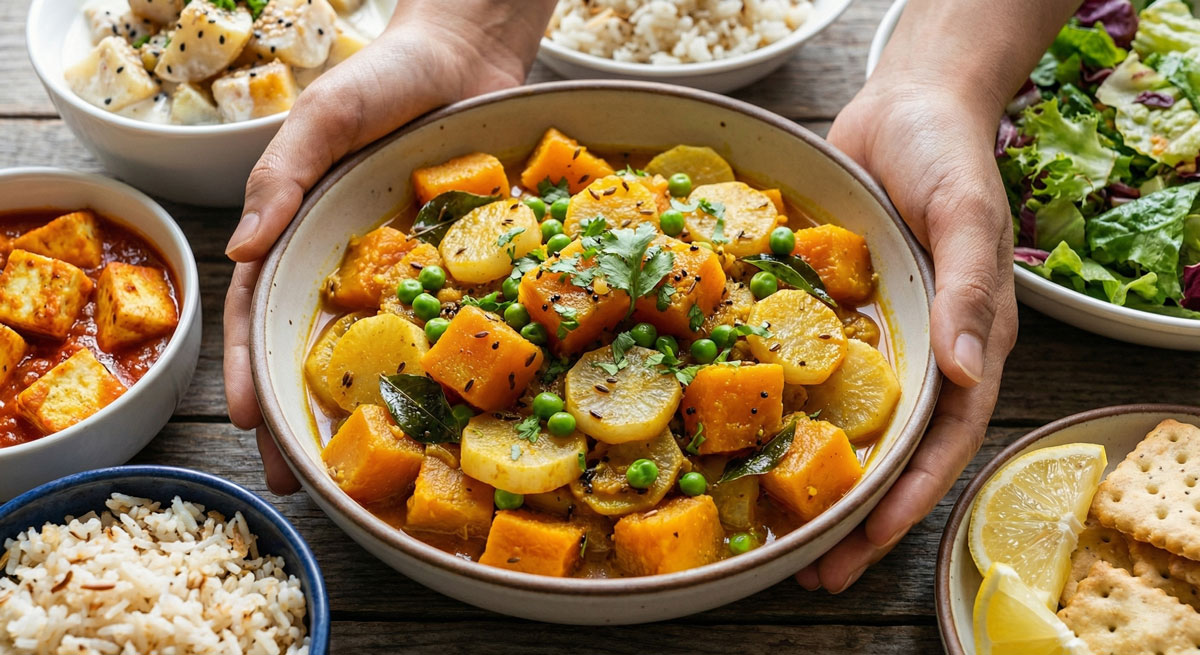
I’ll be honest—I never expected white radish and sweet pumpkin to be a match made in heaven, but this Mooli Kaddu Foogath proved me wrong! There’s something magical about the contrast between the sharp, peppery bite of mooli (radish) and the soft, comforting sweetness of kaddu (pumpkin). The aroma of sizzling spices and fresh curry leaves will fill your kitchen, turning simple vegetables into a cozy, flavor-packed side dish that’s perfect with rice or roti. If you’re looking to shake up your dinner routine, this is it.
Ingredients
• 4 tablespoons / 60 ml ghee or corn oil
• 1 teaspoon / 5 ml minced fresh ginger
• 1 teaspoon / 5 ml cumin seeds
• ½ teaspoon / 2 ml black mustard seeds
• scant ½ teaspoon / 2 ml fenugreek seeds
• 8 curry leaves, preferably fresh
• ¼ teaspoon / 1 ml yellow asafetida powder (hing)
• 2 cups / 480 ml sliced white radishes, about ¾ pound / 340 g
• 1½ pounds / 685 g peeled pumpkin or butternut squash, cut into 1-inch cubes
• ½ cup / 120 ml fresh or frozen peas
• ¼ teaspoon / 1 ml cayenne pepper or paprika
• 1 teaspoon / 5 ml turmeric
• 2 teaspoons / 10 ml ground coriander
• ¼ cup / 60 ml water
• ½ teaspoon / 2 ml amchoor powder or 2 tablespoons / 30 ml lemon juice
• 1 teaspoon / 5 ml salt
• 3 tablespoons / 45 ml chopped fresh coriander
Instructions
1. Heat the ghee or oil in a large, heavy-bottomed pan over medium-high heat. Add the ginger, cumin seeds, mustard seeds, and fenugreek seeds. Fry, stirring constantly, until the fenugreek seeds darken to a khaki-red color.
2. Immediately add the curry leaves and asafetida, followed by the sliced radishes. Sauté for 3-4 minutes until the radishes begin to brown at the edges.
3. Stir in the pumpkin or squash cubes, fresh peas (if using), cayenne pepper, turmeric, ground coriander, and water.
4. Bring the mixture to a simmer, then reduce the heat to low. Cover the pan and cook for 20-30 minutes, or until the pumpkin is fork-tender.
5. A few minutes before serving, gently fold in the amchoor powder or lemon juice, salt, fresh coriander, and frozen peas (if using). Stir until heated through and serve immediately.
Nutritional Information
• Per Serving (Based on 6 servings)
• Calories: 165 kcal
• Total Fat: 9g
• Saturated Fat: 5g
• Sodium: 400mg
• Total Carbohydrates: 19g
• Dietary Fiber: 4g
• Sugars: 6g
• Protein: 3g
• Vitamin A: ~180% DV
• Vitamin C: ~35% DV
Pro Tips
• Watch the Fenugreek: These seeds go from aromatic to bitter in seconds. Once they turn khaki-red, immediately add the next . If they turn dark brown, it’s best to start the tempering process over.
• Choose the Right Squash: Butternut squash holds its shape well and offers a consistent sweetness that balances the radish. If using a softer pumpkin, cut the pieces larger to prevent them from turning to mush.
• The Hing Factor: Asafetida (hing) has a pungent raw smell but mellows into a savory, onion-like flavor when cooked. If you’re new to it, use a small pinch, as it can be very potent.
• Make it Ahead: The flavors in this dish deepen as it sits. Make it a few hours or even a day in advance and gently reheat before serving for an even more delicious result.
FAQ
Q: Can I make this Mooli Kaddu Foogath vegan
A: Absolutely! To make this recipe vegan, simply substitute the ghee with a plant-based oil like corn oil (as mentioned in the ingredients), coconut oil, or another neutral vegetable oil. The rest of the ingredients are naturally plant-based.
Q: How can I add more protein to this vegetarian dish
A: To make this a more protein-rich meal, you can add a cup of cooked chickpeas or lentils along with the pumpkin in step 3. Serving it alongside a dal (lentil soup) or quinoa instead of rice also boosts the overall protein content.
Q: What can I substitute for white radish or mooli
A: If you can’t find white radish (mooli or daikon), you can use turnips for a similar peppery bite. For a milder flavor, you could also use kohlrabi or even increase the amount of butternut squash for a sweeter, simpler curry.
Q: How should I store and reheat this pumpkin curry
A: This dish stores beautifully and the flavors even improve overnight. Keep it in an airtight container in the refrigerator for up to 3-4 days. To reheat, gently warm it in a pan over low heat, adding a splash of water if needed to prevent sticking.