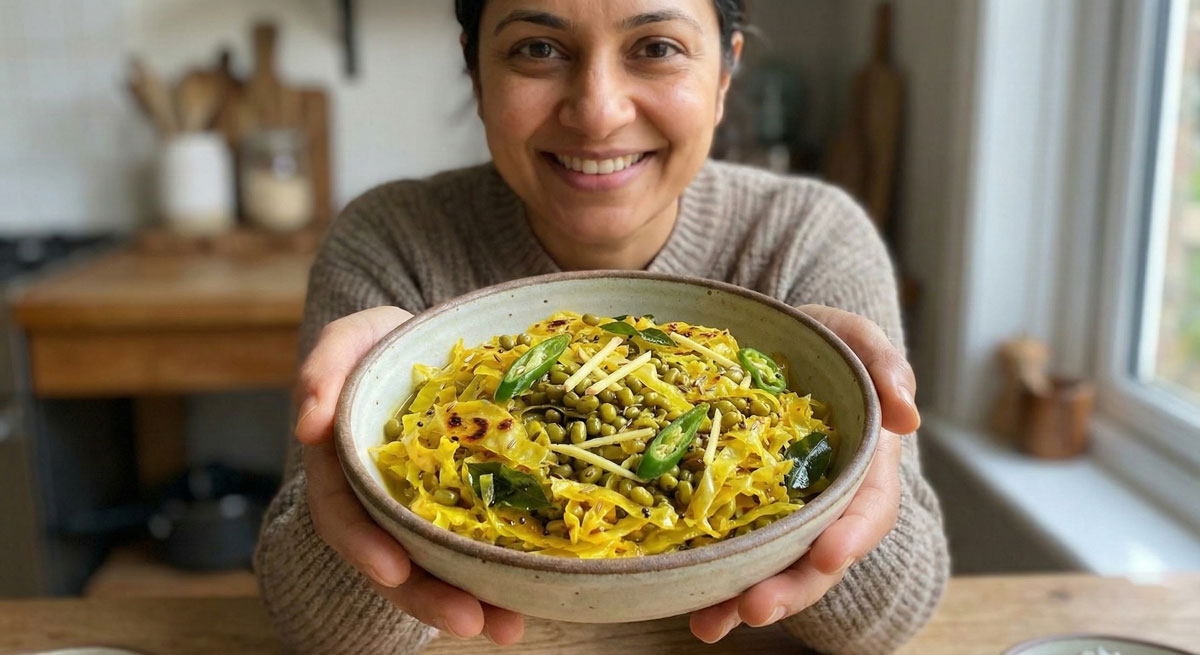
I’ve recently fallen in love with how versatile cabbage can be, especially when you give it the proper spice treatment. This Bandhgobhi Moong Tarkari is my latest obsession—it’s a traditional Bengali-style curried cabbage dish that transforms simple ingredients into something magical. By pairing the crunch of the cabbage with earthy, tender whole mung beans and a kick of ginger and chilies, you get a texture combo that is just incredible. Whether you serve it piping hot with flatbreads or enjoy it as a room-temperature salad, this is the kind of healthy vegetarian recipe that genuinely makes you look forward to eating your greens!
This Bengali-style dish offers a sweet, pleasantly pungent, or mild flavor profile depending on your choice of fat—ghee, mustard oil, or vegetable oil. If using mustard oil, ensure it is heated to the smoking point to mellow its sharpness. You can cook the cabbage until quite tender or leave it with a bright green crunch.
Yields: 4 to 5 servings Bean Soaking & Cooking Time: Approx. 2 hours Prep Time: 5 minutes Cook Time: 15 minutes
Ingredients
-
0.67 cup whole green mung beans (4.76 oz / 135 g)
-
1 tsp cumin seeds
-
1 tsp black mustard seeds
-
2 hot green chilies, seeded and sliced lengthwise
-
1 inch piece of fresh ginger root, scraped and cut into thin julienne
-
5 tbsp ghee, mustard oil, or vegetable oil (2.5 fl oz / 71 g)
-
0.25 tsp yellow asafetida powder (hing)
-
10 curry leaves (or 1 bay leaf)
-
1 small green cabbage, trimmed, cored, and finely shredded (approx. 16 oz / 454 g)
-
1 tsp turmeric powder
-
1 tbsp ground coriander
-
1 tsp salt
-
2 tsp lemon juice
-
1 tsp maple syrup or honey
Instructions
- Prepare the Mung Beans Wash the 0.67 cup (135 g) of mung beans thoroughly. Drop them into 2.1 quarts (2 liters) of boiling water. Simmer over low heat for 2 minutes. Remove the pan from the heat, cover, and set aside to soak for 1 hour. After soaking, bring the water to a boil again and simmer for up to 1 hour, or until the beans are just tender but not broken down. Drain the beans and set them aside.
- Temper the Spices In a small dish, combine the 1 tsp cumin seeds, 1 tsp black mustard seeds, sliced green chilies, and julienned ginger. Heat the 5 tbsp of ghee or oil in a wok or large, heavy casserole over moderately high heat. If using mustard oil, let it reach the smoking point. When the oil is hot, carefully drop in the spice mixture. Fry until the mustard seeds begin to sputter and pop.
- Cook the Cabbage Immediately add the 0.25 tsp asafetida, 10 curry leaves (or bay leaf), the shredded cabbage (16 oz / 454 g), 1 tsp turmeric, and 1 tbsp coriander. Cook, stirring frequently, for 10 to 20 minutes. Adjust the time based on your preference for wilted, browned, or tender cabbage.
- Combine and Serve In the last few minutes of cooking, fold in the cooked mung beans, 1 tsp salt, 2 tsp lemon juice, and 1 tsp sweetener (maple syrup or honey). Serve the dish piping hot or at room temperature.
Here is the estimated nutritional information for the Bandhgobhi Moong Tarkari recipe. These values are calculated based on the specific ingredients provided above, assuming the recipe serves 4 people.
Per Serving (1/4 of recipe)
-
Calories: 308 kcal
-
Total Fat: 18g
-
Saturated Fat: 9g (assuming Ghee is used; lower if using vegetable oil)
-
Total Carbohydrates: 30g
-
Dietary Fiber: 8.4g
-
Sugars: 5g
-
Protein: 10g
-
Sodium: 600mg (approximate, varies based on salt type)
Total Recipe Nutrition (Approximate)
-
Calories: 1233 kcal
-
Total Fat: 72g
-
Total Carbohydrates: 119g
-
Dietary Fiber: 33.6g
-
Protein: 39.4g
Nutritional Notes:
-
High Fiber: This dish is an excellent source of dietary fiber due to the combination of whole mung beans and cabbage.
-
Fat Content: The fat content is relatively high due to the 5 tablespoons of ghee/oil. To make this a lighter dish, you can reduce the oil to 2 or 3 tablespoons, which would lower the calories per serving to approximately 248 kcal.
-
Protein: It provides a solid plant-based protein boost of roughly 10g per serving.
Pro Tips for Perfect Bandhgobhi Moong Tarkari
-
Don’t Fear the Smoke: If you are using mustard oil, this is the one time you want to see smoke. Heating the oil until it smokes is crucial to burn off the raw, pungent “nose-tingling” chemicals. If you skip this, the dish might taste bitter. Once it smokes, lower the heat slightly before adding spices so they don’t burn instantly.
-
Watch the Bean Texture: The secret to this dish is the contrast between the soft cabbage and the firm bite of the beans. Be careful not to overboil the mung beans in step one. They should be cooked through (al dente) but definitely not mushy, as they will soften further when tossed with the cabbage.
-
Mise en Place is Key: Indian cooking often involves a technique called tempering or tadka (frying spices in hot oil). This happens fast—in seconds! Measure your cumin, mustard seeds, chilies, and ginger into a small bowl before you turn on the stove. If you try to measure while the oil is hot, your mustard seeds will burn before you find the ginger.
-
Control the Crunch: If you prefer your cabbage to have a nice crunch (which pairs beautifully with the soft beans), cook it uncovered on medium-high heat. If you prefer a softer, melting texture, cover the pan for the first 5 minutes of cooking to trap the steam, then uncover to brown it.
-
The Acid Finish: Don’t skip the lemon juice at the very end. The acidity cuts through the richness of the ghee/oil and brightens the earthy flavors of the turmeric and coriander. It wakes the whole dish up!
Frequently Asked Questions
What is Bandhgobhi Moong Tarkari? Bandhgobhi Moong Tarkari is a traditional North Indian and Bengali dish consisting of stir-fried cabbage (Bandhgobhi) and whole green mung beans (Moong). It is spiced with turmeric, ginger, and mustard seeds, resulting in a healthy, high-fiber dry curry that can be served as a side dish or a main course.
Can I use canned mung beans instead of dried? Yes, you can use canned mung beans to save time. Since canned beans are already cooked, skip the soaking and boiling steps (Step 1). Simply rinse the canned beans thoroughly and add them to the cabbage during the last few minutes of cooking to heat them through without turning them into mush.
Is this cabbage and mung bean recipe vegan? This recipe is naturally vegan if you use mustard oil or vegetable oil for cooking. If you follow the traditional method using Ghee (clarified butter), it is vegetarian but not vegan.
What is a good substitute for Mustard Oil? If you do not have mustard oil or find its flavor too pungent, you can substitute it with any neutral vegetable oil, avocado oil, or Ghee. However, mustard oil adds a distinct, sharp flavor characteristic of Bengali cuisine.
Is this dish Gluten-Free? The main ingredients (cabbage, mung beans, spices) are naturally gluten-free. However, Asafetida (Hing) is often processed with wheat flour to keep it free-flowing. To ensure this dish is 100% gluten-free, use a certified gluten-free Asafetida or omit it entirely.
How long does Curried Cabbage with Mung Beans last in the fridge? This dish stores very well and often tastes better the next day as the flavors meld. It can be stored in an airtight container in the refrigerator for 3 to 4 days. It can be reheated in a pan or microwave, or served at room temperature as a salad.