
Quick & Colorful Veggie Yakisoba
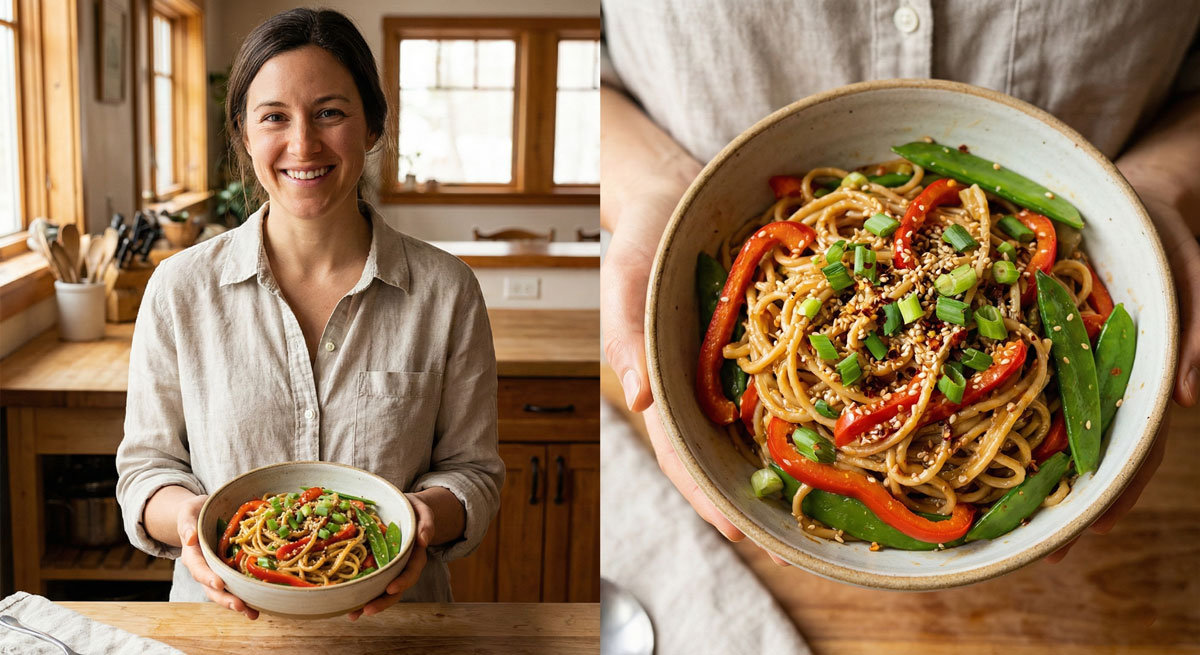
Craving a noodle dish that’s fast, flavorful, and packed with goodness? Look no further! Yakisoba, which literally translates to “fried buckwheat noodles,” is a Japanese stir-fry classic that’s about to become your new weeknight favorite. We’re skipping the heavy oils and loading this version with a rainbow of crisp, fresh vegetables, all tossed in a simple yet irresistible savory sauce. Get ready for a satisfying slurp of perfectly pan-fried noodles and vibrant veggies in every single bite!
PREP: 25 minutes | COOK: 20 minutes | YIELD: 8 x 1-cup servings
Ingredients
• For the Sauce
• 2 Tbsp / 30 ml low-sodium tamari
• 1 Tbsp / 15 ml rice vinegar
• 1 Tbsp / 15 ml Sucanat or other unrefined sugar
• ½ tsp / 2.5 ml sesame oil
• For the Stir-Fry
• 8 oz / 225 g Chinese or Japanese buckwheat noodles
• 1 Tbsp / 15 ml grapeseed oil, or other high-heat oil
• 1 yellow or white onion, thinly sliced
• 1 Tbsp / 15 ml grated fresh ginger
• 2 ribs celery, thinly sliced crosswise
• 4 cups / 950 ml shredded red or purple cabbage
• 1 cup / 240 ml shredded carrot
• 8 oz / 225 g sliced bamboo shoots, drained
• For Garnish
• 2 green onions, green parts only, chopped
• 1-2 Tbsp / 15-30 ml sesame seeds
Instructions
1. Prepare the Sauce: In a small bowl, whisk together the tamari, rice vinegar, Sucanat, and sesame oil until the sugar is completely dissolved. Set aside.
2. Cook the Noodles: Cook the buckwheat noodles according to the package directions. Drain well and set aside.
3. Sauté the Aromatics: Heat a large wok or cast-iron skillet over high heat until very hot. Add the grapeseed oil, then add the sliced onion. Cook, stirring occasionally, for about 3 minutes until soft and slightly charred. Stir in the grated ginger.
4. Stir-Fry the Vegetables: Add the celery, cabbage, carrot, and bamboo shoots to the wok. Using tongs, toss and fold the vegetables continuously for 3 to 5 minutes, until they are tender-crisp and have reduced in volume.
5. Combine and Serve: Add the cooked noodles to the wok, then pour the prepared sauce over everything. Toss well to combine and coat the noodles and vegetables evenly. Continue cooking for another minute until the noodles are heated through. Serve immediately, garnished with chopped green onions and sesame seeds.
Nutritional Information
• Per 1-cup serving
• Calories: 104
• Protein: 3 g
• Carbs: 17 g
• Total Fat: 3 g
• Saturated Fat: 0.5 g
• Fiber: 2 g
• Sodium: 207 mg
• Cholesterol: 0 mg
Pro Tips
• For a heartier meal, add cubed firm tofu or edamame during the last few minutes of cooking the vegetables.
• Don’t be afraid to customize! Sliced bell peppers, mushrooms, or bean sprouts make excellent additions.
• After draining the noodles, rinse them briefly under cold water and toss with a tiny bit of sesame oil to prevent sticking.
• Serve with a side of sriracha or Asian chili-garlic sauce for those who enjoy a little extra heat.
FAQ
Q: How can I add more protein to this veggie yakisoba
A: To make this a more protein-rich meal, add 1 block of cubed firm or extra-firm tofu or 1 cup of shelled edamame. For best results with tofu, press it first to remove excess water, then pan-fry the cubes until golden before adding them with the other vegetables. Add edamame during the last 2-3 minutes of stir-frying.
Q: Is this vegetarian yakisoba recipe gluten-free
A: Yes, this recipe can easily be made gluten-free. It already uses tamari, which is typically gluten-free, but you should always check the label. The key is to ensure you are using 100% buckwheat soba noodles, as some brands are a mix of buckwheat and wheat flour. With certified gluten-free tamari and 100% buckwheat noodles, the dish is completely gluten-free.
Q: What other vegetables can I use in this yakisoba
A: This recipe is incredibly versatile! Feel free to substitute or add other vegetables based on what you have. Sliced bell peppers, mushrooms, broccoli florets, snow peas, or bean sprouts are all excellent additions. Add harder vegetables like broccoli earlier in the cooking process and quick-cooking ones like bean sprouts at the very end.
Q: How do I store and reheat leftover yakisoba
A: Store any leftovers in an airtight container in the refrigerator for up to 3 days. To reheat, you can microwave it in short bursts or, for best results, stir-fry it in a lightly oiled pan or wok over medium-high heat for a few minutes until warmed through. This helps the noodles and vegetables regain some of their original texture.