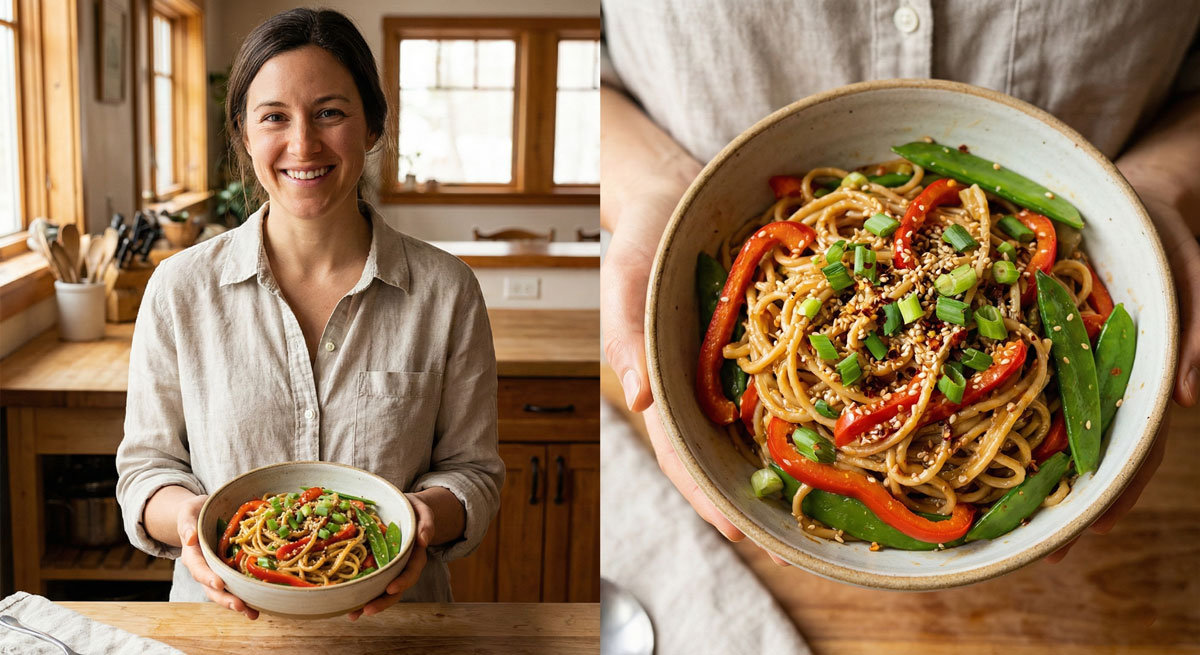
Life has been absolutely hectic lately, and getting a healthy, filling dinner on the table quickly is my top priority right now. If you have a hungry teenager at home like I do, you know the struggle of finding something satisfying that doesn’t cost a fortune. That’s why these Vegetarian Asian Sesame Tahini Noodles have become a total lifesaver in my kitchen. They are incredibly affordable, packed with crunchy fresh veggies, and that nutty, creamy sesame sauce is honestly addictive—best of all, the whole dish is ready to serve in about 15 minutes.
- Prep Time: 15 minutes
- Cook Time: 5-8 minutes (depending on noodles)
- Servings: 8
- Cost per serving: ~$1.15
Ingredients
- 1 lb (454g) Asian noodles (Soba, Udon, or Whole Wheat Spaghetti)
- 0.5 cup (120g) Tahini paste (sesame seed paste)
- 0.33 cup (80ml) Warm water (for thinning the sauce)
- 2 tbsp (30ml) Soy sauce (use Tamari for gluten-free option)
- 2 tbsp (30ml) Rice vinegar
- 2 tsp (10ml) Toasted sesame oil
- 1 clove Garlic, finely minced
- 2 tsp (approx. 10g) Fresh ginger, finely minced
- 0.25 tsp Crushed red pepper flakes (adjust to taste)
- 1 Large Red bell pepper, cored and sliced thin (~5 oz / 150g)
- 3 medium Scallions (green onions), chopped (white and green parts)
- 0.75 cup (85g) Snow peas, ends trimmed and chopped
Instructions
- Bring a large pot of salted water to a rolling boil. Add the 1 lb (454g) of Asian noodles and cook according to the specific package instructions until tender but firm (al dente). Once cooked, drain thoroughly in a colander and rinse briefly under cold water to prevent sticking.
- While the noodles are boiling, prepare the dressing. In a medium mixing bowl or a high-speed blender, combine 0.5 cup (120g) tahini, 0.33 cup (80ml) warm water, 2 tbsp (30ml) soy sauce, 2 tbsp (30ml) rice vinegar, 2 tsp (10ml) sesame oil, the minced garlic, 2 tsp minced ginger, and 0.25 tsp crushed red pepper flakes. Whisk or blend until the mixture is completely smooth and emulsified.
- Place the drained, cooled noodles into a large mixing bowl. Add the sliced red bell pepper, the chopped scallions, and the 0.75 cup (85g) of chopped snow peas.
- Pour the prepared sesame tahini sauce over the noodle and vegetable mixture. Using tongs, toss the ingredients gently but thoroughly until every strand of noodle and piece of vegetable is evenly coated in the creamy sauce.
- Taste the noodles and add a pinch of salt or extra soy sauce if needed. Serve immediately at room temperature or chilled. This dish keeps well in the refrigerator for up to 3 days.
Nutritional Information
(Amount per serving)
- Calories: 315 kcal
- Total Fat: 9g
- Carbohydrates: 50g
- Protein: 5g
- Dietary Fiber: 3g
- Sugars: 1g
- Sodium: 295mg
Pro Tips for the Best Results
- Quality Matters: Since Tahini is the star of the show, use a high-quality, runny tahini paste (preferably one made from 100% Humera sesame seeds). If your tahini is the stiff, chalky kind from the bottom of the jar, the sauce will be difficult to mix.
- Don’t Skip the Rinse: Unlike Italian pasta where you want to keep the starch, Asian noodles for cold salads must be rinsed under cold water immediately after boiling. This stops the cooking process and prevents them from clumping together into a giant ball.
- Adjusting Consistency: Tahini has a tendency to “seize” or thicken rapidly when water is added. If your dressing looks curdled or too thick at first, just keep whisking and add warm water 1 tablespoon (15ml) at a time until it becomes silky and pourable.
- Toast Your Sesame: For an extra layer of flavor, quickly toast the sesame seeds in a dry pan for 1-2 minutes before garnishing. The heat releases the natural oils and intensifies the nutty aroma.
Frequently Asked Questions (FAQ)
1. Can I make this recipe gluten-free? Yes, absolutely. To make this dish 100% gluten-free, simply swap the soy sauce for Tamari or Coconut Aminos, and ensure you use noodles labeled as gluten-free (such as 100% buckwheat soba noodles or brown rice noodles).
2. How long do these noodles last in the fridge? These noodles are excellent for meal prep! They can be stored in an airtight container in the refrigerator for up to 3 to 4 days. In fact, the flavors often meld better after sitting for a few hours. If the noodles absorb too much sauce overnight, just toss them with a splash of warm water or extra soy sauce before serving.
3. I don’t have tahini; what can I use as a substitute? If you are out of tahini, smooth peanut butter is the classic alternative for these types of noodles. It changes the flavor profile to a more traditional “Dan Dan” style noodle, but it is equally delicious. Almond butter also works for a milder taste.
4. Is this dish spicy? As written, it has a very mild kick from the crushed red pepper flakes. If you prefer zero heat, simply omit the red pepper flakes. If you love spice, feel free to add a teaspoon of chili garlic sauce (Sambal Oelek) or Sriracha to the dressing.
I hope these Vegetarian Asian Sesame Tahini Noodles become a regular part of your meal rotation! They are the perfect balance of nutty, savory, and fresh, proving that simple ingredients can create complex flavors. Whether you’re packing them for a work lunch or serving them as a side dish at dinner, they are sure to be a hit. If you try this recipe, please leave a comment below and let me know how it turned out—I’d love to hear what veggies you decided to add!