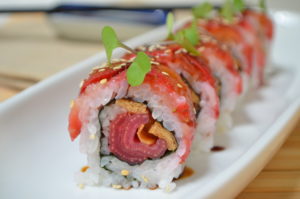
Strawberries on sushi? Hear me out! This isn’t just a recipe; it’s a culinary adventure that will challenge everything you thought you knew about veggie rolls. We’re pairing the sweet, jammy notes of fresh strawberries with the delightfully tart bite of sesame-poached rhubarb, all wrapped up in a perfect package of seasoned rice and nori. The result is a stunningly beautiful, surprisingly sophisticated roll that’s bursting with unique, vibrant flavors. It’s the perfect centerpiece for a special occasion or whenever you’re craving something truly different. Get ready to wow your taste buds (and your dinner guests)!
Ingredients
• (Makes 2 Rolls)
• 1 cup / 200 g sugar
• 2 cups / 500 ml water
• Four 4-inch / 10-cm stalks rhubarb
• 4 tablespoons soy sauce
• 8 large strawberries, sliced very thinly
• Two 4 x 7-inch / 10 x 18-cm nori sheets
• 1½ cups / 300 g prepared Traditional Sushi Rice or Brown Sushi Rice
• 4 inari pouches, cut into thin strips
• 1 oz / 30 g daikon radish, shredded
• 2 tablespoons Vegetarian Eel Sauce
• 1 teaspoon toasted sesame seeds
Instructions
1. Prepare the Rhubarb: In a medium pan over high heat, dissolve the sugar in the water. Add the rhubarb stalks and soy sauce. Bring to a boil and cook for about 10 minutes, until the rhubarb is tender but still holds its shape. Carefully remove the rhubarb from the liquid and set it aside to cool completely.
2. Create the Strawberry Topping: Lay a sheet of plastic wrap on your work surface. Arrange half of the ultra-thin strawberry slices in two overlapping rows across the center to create a ‘sheet’ of strawberries. Set aside and repeat with the remaining slices on a second piece of plastic wrap.
3. Assemble the Roll Base: Place a nori sheet on your bamboo mat or cutting board, rough side up. Lightly wet your fingertips and spread ¾ cup / 150 g of sushi rice evenly over the entire nori sheet.
4. Flip and Fill: Carefully flip the nori sheet over so the rice side is facing down. Arrange half of the inari strips, cooled rhubarb, and shredded daikon in a line across the center of the nori.
5. Roll it Up: Using your fingertips to hold the fillings in place, lift the edge of the nori closest to you with your thumbs. Roll it over the filling, tucking it in tightly to create a firm cylinder. Continue rolling until the roll is complete.
6. Shape the Roll: Use your bamboo mat (covered in plastic wrap for easy cleanup) to gently press and shape the roll into a neat, firm log.
7. Add the Strawberries: Place the roll seam-side down. Carefully invert one of the strawberry sheets over the top of the sushi roll. Keeping the plastic wrap on, use the bamboo mat to gently press the strawberries so they adhere to the rice.
8. Slice and Serve: Repeat steps 3-7 to make the second roll. With the plastic wrap still on, use a very sharp, wet knife to slice each roll into 8 even pieces. Gently press the roll with the mat one last time before removing the plastic wrap. Arrange on a platter, drizzle with Vegetarian Eel Sauce, and sprinkle with toasted sesame seeds.
Nutritional Information
• Nutritional Highlights
• Vegan and plant-based
• Rich in Vitamin C from strawberries and daikon
• A source of dietary fiber from rhubarb and brown rice
• A unique and delicious way to enjoy your daily fruit intake!
Pro Tips
• Use a mandoline slicer for paper-thin, uniform strawberry slices.
• Gently blot the strawberry slices with a paper towel before arranging them; this helps them stick to the rice.
• When cooking the rhubarb, watch it closely. You want it tender enough to bite through but firm enough that it doesn’t turn to mush.
• For clean cuts, use a very sharp knife and wipe the blade with a damp cloth between each slice.
• Covering your bamboo rolling mat with plastic wrap prevents the rice from sticking and makes cleanup a breeze.
FAQ
Q: Can I make this strawberry sushi roll gluten-free
A: Yes, you can easily make this recipe gluten-free. Simply substitute the soy sauce with a gluten-free tamari for poaching the rhubarb. Additionally, ensure your inari pouches are certified gluten-free, as many brands contain wheat. If you can’t find them, thin strips of avocado or baked tofu are excellent gluten-free alternatives.
Q: What can I substitute for the inari pouches
A: If you can’t find inari pouches, several vegetarian options work well. For a creamy texture, use thin slices of avocado. For a protein boost, add strips of smoked or baked tofu. You could also use thinly sliced cucumber or mango for a different kind of fresh, fruity crunch.
Q: Is this vegetarian sushi a good source of protein
A: This recipe focuses on unique fruit and vegetable flavors. The inari pouches (fried tofu) provide a small amount of plant-based protein. To create a more protein-rich meal, you could serve these rolls alongside a bowl of steamed edamame or add a thin line of pan-fried firm tofu or tempeh inside the roll.
Q: How should I store leftover fruit sushi
A: Sushi is always best enjoyed fresh, especially when made with delicate fruit like strawberries. If you have leftovers, place the slices in a single layer in an airtight container and refrigerate for up to 24 hours. The rice will harden, so let it sit at room temperature for about 20 minutes before eating to soften it slightly.