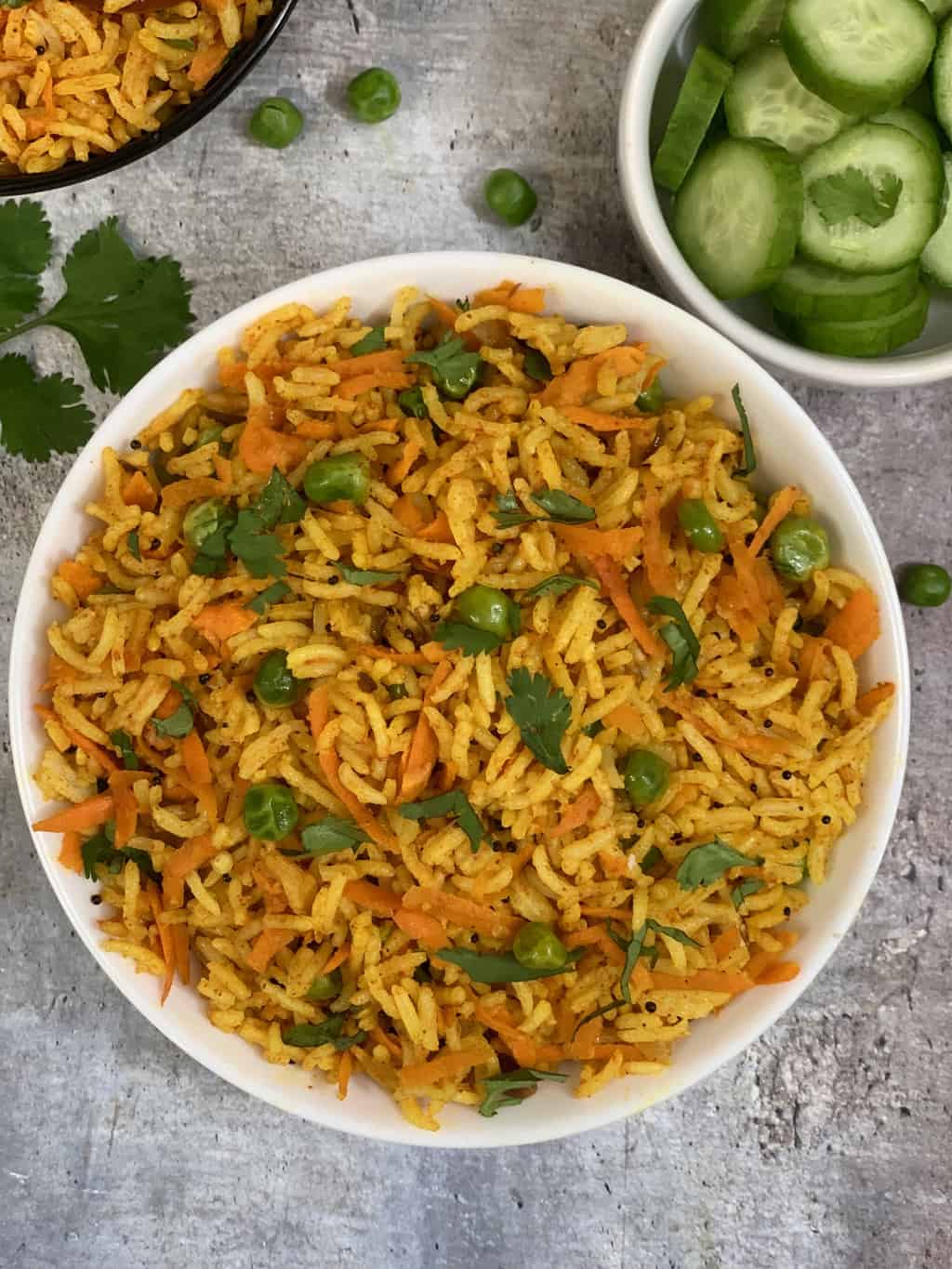
A Feast for the Senses: Carrot & Coconut Rice Pilaf
Tired of plain old rice? Let’s elevate your side dish game with this stunning Carrot and Coconut Rice Pilaf! Imagine fluffy, fragrant basmati rice, beautifully marbled with sweet shredded carrots and nutty, toasted coconut. Each spoonful is a delightful surprise, with a subtle sweetness from juicy raisins and an aromatic whisper of whole spices like cloves, cinnamon, and peppercorns. This dish isn’t just a feast for the eyes with its pale golden hue; it’s a quick, aromatic, and utterly delicious addition to any lunch or dinner. Pair it with your favorite dal or a crisp salad for a truly complete and satisfying meal.
Ingredients
• 1 cup / 95 g basmati or other long-grain white rice
• 2 tablespoons / 30 ml ghee or vegetable oil
• 1½ tablespoons / 22 ml sesame seeds
• 6 whole cloves
• 6 black peppercorns
• 1 1½-inch / 4 cm piece of cinnamon stick
• 3 tablespoons / 45 ml fresh or dried shredded coconut
• 1⅔–2 cups / 400–480 ml water
• 1½ cups / 360 ml shredded carrots, about 8 ounces / 230 g
• 1¼ teaspoons / 6 ml salt
• 2 tablespoons / 30 ml raisins or currants
Instructions
1. Prepare the rice: If using basmati, rinse it under cold water until the water runs clear. Soak for 15-20 minutes, then drain thoroughly.
2. Toast the spices: Heat the ghee or oil in a heavy-bottomed saucepan over medium heat. Once hot, add the sesame seeds, whole cloves, peppercorns, cinnamon stick, and shredded coconut. Stir-fry for 1-2 minutes until the coconut is fragrant and turns a light golden brown.
3. Sauté the rice: Add the drained rice to the saucepan and stir-fry for 2-3 minutes. The grains should become slightly translucent at the edges.
4. Cook the pilaf: Pour in the water and add the shredded carrots, salt, and raisins. Increase the heat to high and bring the mixture to a rolling boil.
5. Simmer: Immediately reduce the heat to the lowest setting, cover the saucepan with a tight-fitting lid, and let it simmer gently for 20-25 minutes. Do not lift the lid or stir. The rice is done when it’s fluffy and all the liquid has been absorbed.
6. Rest and fluff: Turn off the heat and let the rice rest, still covered, for at least 5 minutes. This allows the grains to firm up. Before serving, gently fluff the rice with a fork to separate the grains.
Nutritional Information
• Nutritional Highlights
• Calories: Approx. 350-400 kcal per serving
• Rich in Vitamin A from carrots, supporting vision and immune health.
• Provides healthy fats from coconut and ghee.
• A good source of dietary fiber.
Pro Tips
• For a more intense coconut flavor, use unsweetened coconut flakes and toast them until they are a deep golden brown in step 2.
• The whole spices (cloves, peppercorns, cinnamon) are for aroma. You can bundle them in a small piece of cheesecloth for easy removal before serving.
• Don’t skip the 5-minute resting period! It’s crucial for allowing the steam to redistribute, ensuring perfectly fluffy, non-sticky rice grains.
• For extra protein and crunch, stir in a handful of toasted cashews or slivered almonds along with the raisins.
FAQ
Q: Can I make this carrot and coconut rice pilaf vegan
A: Absolutely! To make this recipe vegan, simply substitute the ghee with a plant-based oil like vegetable oil, coconut oil, or avocado oil. The rest of the ingredients are naturally vegan.
Q: How can I add more protein to this vegetarian pilaf
A: To make this a more complete meal, you can add protein by stirring in a cup of cooked chickpeas or lentils at the end. The Pro Tips also suggest adding toasted cashews or slivered almonds for extra protein and crunch. Serving it alongside a lentil dal or tofu curry is another excellent option.
Q: What is the best way to store and reheat leftover rice pilaf
A: Store any leftovers in an airtight container in the refrigerator for up to 3-4 days. To reheat, sprinkle a tablespoon of water over the rice and microwave until hot, or gently warm it in a saucepan over low heat. The added water helps to steam the rice and restore its fluffy texture.
Q: Can I use brown rice instead of white basmati rice
A: Yes, you can use brown basmati rice for a higher fiber option. However, brown rice requires more water and a longer cooking time. You will likely need to increase the water to about 2¼ to 2½ cups and extend the simmering time to 40-45 minutes. Always check your specific rice package for cooking instructions.