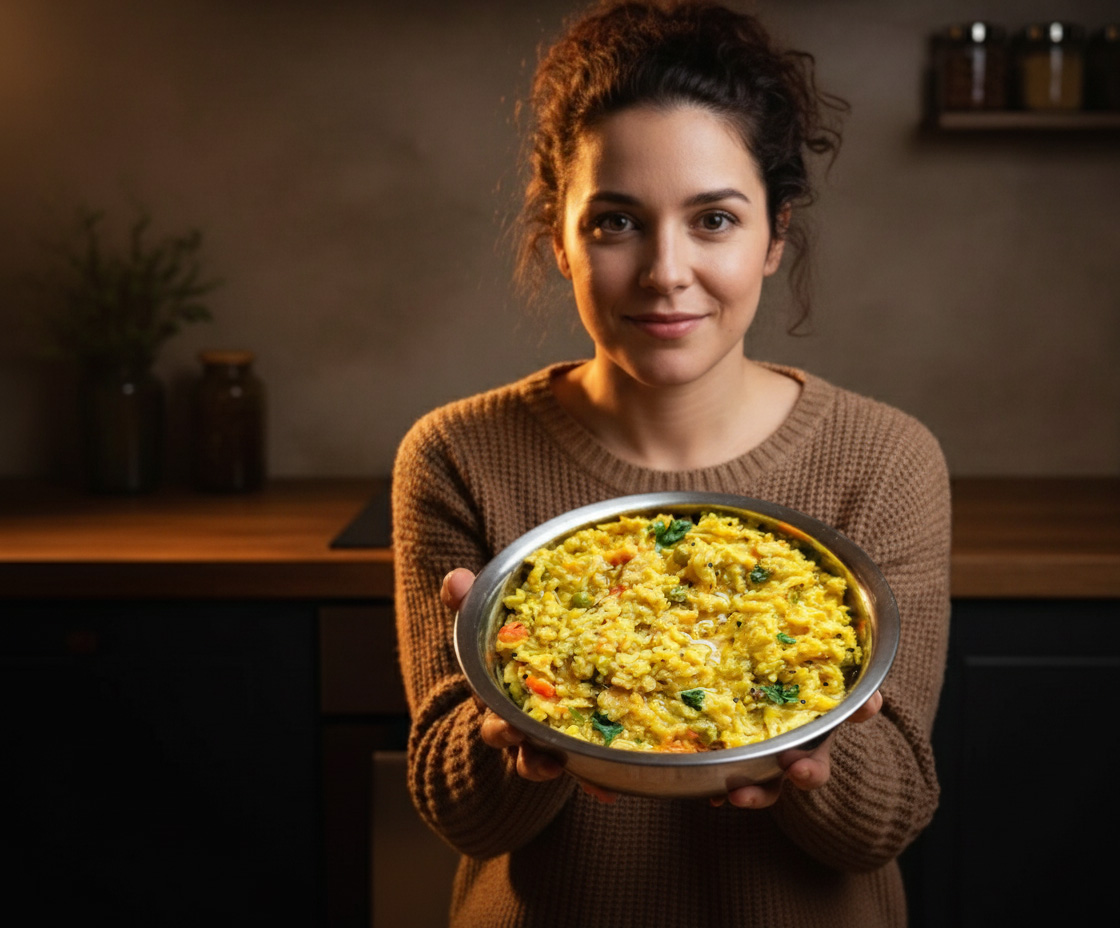
Imagine this: It’s 1969, and you’re cooking in the English countryside estate of John Lennon and Yoko Ono. Your guest of honor? The revered spiritual teacher Srila Prabhupada. This isn’t a fantasy; it’s the true story behind this incredible khichari recipe. One day, Prabhupada gave his cook precise instructions for his lunch: the khichari must be generously seasoned with cumin, asafetida, and turmeric. The cauliflower must be browned just so. And it must be served with a side of luscious melted ghee. The result was so spectacular that he declared it a ‘poor man’s feast, fit for a king!’ Now, you can recreate that same royal, soul-soothing dish in your own kitchen. It’s more than a meal; it’s a taste of history.
Ingredients
• Preparation time: 5 minutesCooking time: 1–1½ hoursServes: 4 to 6
• 1 cup / 95 g basmati or other long-grain white rice
• ⅔ cup / 145 g split moong dal, without skins
• 1 small cauliflower, cut into 2 x ¾-inch flowerets
• 4 tablespoons / 60 ml ghee
• 1 tablespoon / 15 ml cumin seeds
• ½ tablespoon / 7 ml fresh ginger, finely minced
• 1 tablespoon / 15 ml minced hot green chilies, seeded
• ¼–½ teaspoon / 1–2 ml yellow asafetida powder (hing)
• 7 cups / 1.75 liters water
• 1¼ teaspoons / 6 ml turmeric powder
• ¾ cup / 180 ml fresh or frozen green peas
• 2½ teaspoons / 12 ml salt, or to taste
• 1 tablespoon / 15 ml butter or ghee, for finishing
Instructions
1. Rinse the rice and dal separately under cool water until the water runs clear. Drain well and set aside.
2. Heat 4 tablespoons of ghee in a heavy-bottomed 4–5 quart pot over high heat. Once hot, add the cumin seeds. When they begin to sizzle and turn brown (this will happen in seconds), stir in the minced ginger and green chilies.
3. Immediately add the asafetida, followed quickly by the cauliflower florets. Stir-fry for 4–5 minutes, allowing the cauliflower to brown slightly.
4. Add the drained rice and dal to the pot. Stir continuously for one minute to toast them lightly with the spices.
5. Pour in the water and add the turmeric powder. If using fresh peas, add them now. Bring the mixture to a rolling boil.
6. Reduce the heat to low, partially cover the pot, and let it simmer gently for 1 to 1½ hours. Stir occasionally to prevent sticking, especially as it thickens.
7. The khichari is ready when the rice and dal are completely soft and the consistency resembles a thick porridge. If using frozen peas, stir them in during the last 5 minutes of cooking.
8. Turn off the heat. Stir in the salt and the final tablespoon of butter or ghee. Serve hot.
Nutritional Information
• Per serving (approximate, based on 6 servings)
• Calories: 380 kcal
• Protein: 12 g
• Carbohydrates: 55 g
• Fat: 13 g
• Fiber: 8 g
• Sodium: 980 mg
Pro Tips
• If you can’t find split moong dal, soak whole mung beans overnight. In the morning, rub them between your hands to remove the skins, rinse, and parboil for 20-25 minutes before using in the recipe.
• To create the full ‘feast fit for a king,’ serve the khichari with a bowl of plain yogurt, crispy fried potatoes, and a simple green salad.
• The ‘tadka,’ or tempering of spices in hot ghee at the beginning, is the most crucial step for flavor. Ensure the ghee is hot enough for the cumin seeds to sizzle instantly, but don’t let them burn.
• For a creamier consistency, use a whisk to vigorously stir the khichari for the final minute of cooking. For a thinner, soupier khichari, simply add another cup of hot water.
FAQ
Q: Can I make this khichari recipe vegan
A: Yes, absolutely. To make this a vegan khichari, simply substitute the ghee and butter with a high-quality, high-smoke-point oil like coconut oil or avocado oil. The flavor profile will be slightly different but still delicious and comforting.
Q: Is this moong dal khichari a good source of protein
A: Yes, this khichari is an excellent source of plant-based protein. The combination of split moong dal (lentils) and basmati rice creates a complete protein, providing all the essential amino acids your body needs. Each serving contains approximately 12 grams of protein.
Q: What can I use instead of split moong dal
A: While split moong dal is traditional for its digestibility and creamy texture, you can substitute it with red lentils (masoor dal). Red lentils cook in a similar amount of time and will also break down nicely. If using other dals like toor (pigeon pea), you may need to soak them first and adjust the cooking time.
Q: How should I store and reheat leftover khichari
A: Store leftover khichari in an airtight container in the refrigerator for up to 4 days. It will thicken considerably when chilled. To reheat, add a splash of hot water or vegetable broth to the pot or bowl and warm it on the stovetop or in the microwave, stirring until it reaches your desired consistency.