
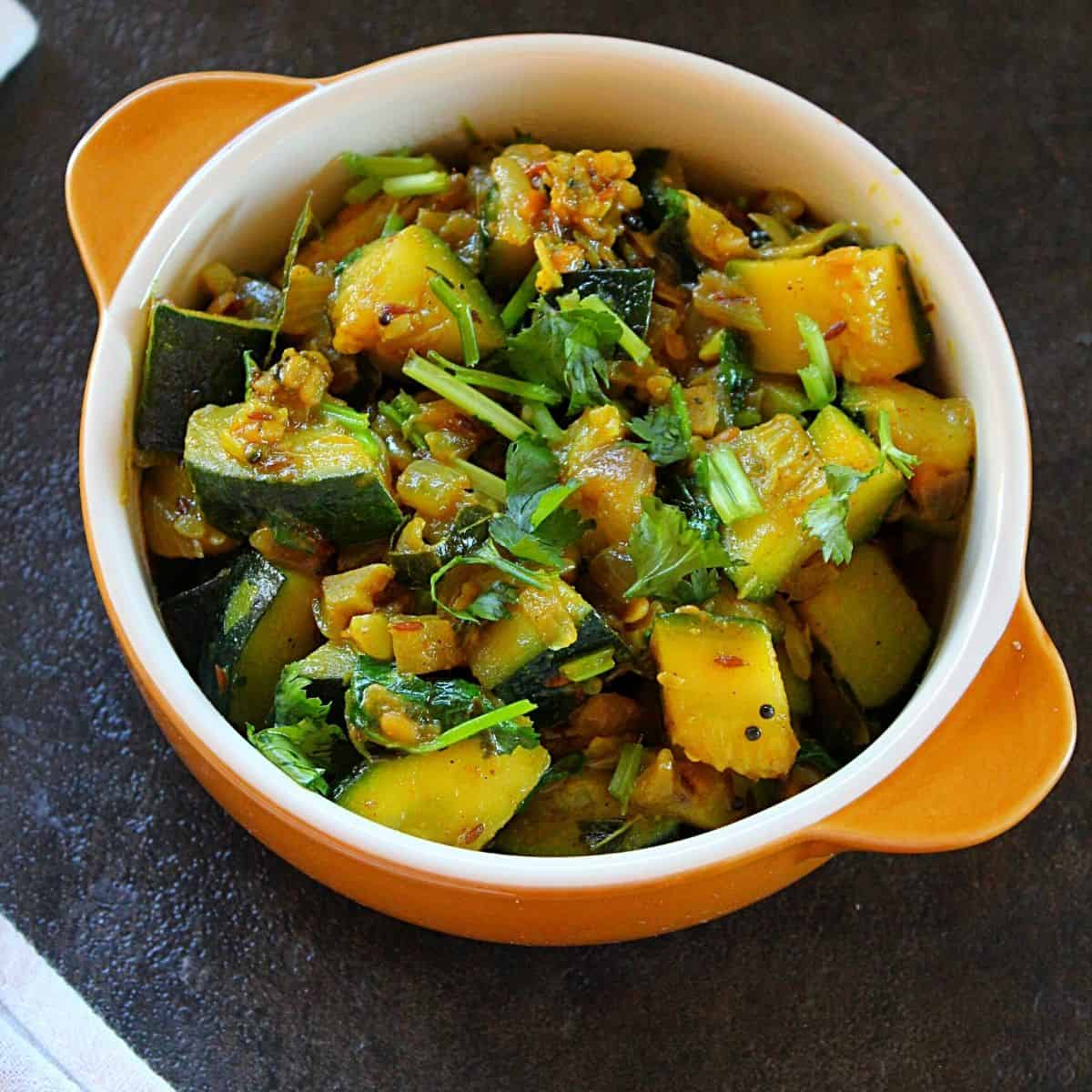
Journey with me to the vibrant desert heart of Rajasthan, where culinary genius is born from necessity. With fuel wood being scarce, local cooks developed brilliant, quick-cooking techniques. One of my favorites is flash-frying vegetables in a spiced yogurt sauce, or ‘dahi.’ This simple method not only cooks the vegetables in minutes but also cloaks them in a luscious, tangy sauce that’s packed with flavor and protein. This Zucchini and Squash Sabzi is a perfect example—a humble, delicious dish that transforms everyday ingredients into something truly special. It’s proof that the most memorable meals are often the simplest.
Ingredients
• (Serves 4)
• 1 lb / 450g young zucchini and/or yellow squash
• 3 tbsp / 45g plain sour yogurt (dahi)
• ½ tsp ground turmeric
• ½ tsp ground coriander
• ¾ tsp salt
• Freshly ground black pepper, to taste
• ¼ tsp red chili powder, or to taste
• 1 tbsp / 15ml olive or peanut oil
• 1 pinch ground asafetida (hing)
• ¼ tsp whole brown mustard seeds
• ¼ tsp whole cumin seeds
Instructions
1. Cut the zucchini and squash in half lengthwise, then slice crosswise into ½-inch (1.25 cm) thick pieces. In a small bowl, whisk together the yogurt, turmeric, coriander, salt, black pepper, and chili powder until smooth. Set aside.
2. Place a medium frying pan over medium-high heat and add the oil. Once the oil is hot, add the asafetida, mustard seeds, and cumin seeds. Let them sizzle for a few seconds until the mustard seeds begin to pop.
3. Immediately add the chopped zucchini and squash to the pan. Stir and fry for 3-4 minutes, until the vegetables are tender-crisp and just beginning to brown at the edges.
4. Reduce the heat to medium-low. Add the spiced yogurt mixture one tablespoon at a time, stirring for about a minute after each addition to prevent curdling and allow the sauce to thicken.
5. After all the yogurt is incorporated, add 1 tablespoon of water, stir a final time to create a light sauce, and taste for salt. Turn off the heat and serve immediately.
Nutritional Information
• (Estimated Per Serving)
• Calories: 75 kcal
• Protein: 2g
• Carbohydrates: 5g
• Fat: 5g
• Fiber: 1.5g
Pro Tips
• Use a full-fat, sour yogurt for the best tangy flavor and creamy, stable sauce. If your yogurt is mild, leave it at room temperature for several hours to culture and sour naturally.
• To prevent the yogurt from curdling, lower the heat significantly before adding it to the hot pan. Incorporate the yogurt mixture gradually, one spoonful at a time, stirring continuously.
• Avoid overcooking the squash. The goal is a tender-crisp texture that holds its shape, providing a delightful contrast to the creamy sauce.
• Serve this dish immediately with warm flatbreads like chapatis or roti to scoop up every last bit of the delicious sauce. It also pairs beautifully with a simple dal and basmati rice.
FAQ
Q: Can I make this zucchini squash sabzi vegan
A: Yes, you can make this recipe vegan by substituting the dairy yogurt. For the best results, use a thick, unsweetened, plain plant-based yogurt, such as coconut or cashew yogurt. These options will provide a similar creamy texture and tangy flavor profile.
Q: How can I add more protein to this vegetarian dish
A: To boost the protein content, you can add 1 cup of cooked chickpeas or cubed firm tofu to the pan along with the zucchini and squash. Alternatively, serving it alongside a protein-rich dal, as suggested in the pro tips, creates a complete and balanced vegetarian meal.
Q: What can I use if I don’t have asafetida (hing)
A: If you don’t have asafetida (hing), you can omit it from the recipe. To add a similar savory, allium-like flavor, you could sauté a small amount of finely minced garlic or shallot in the oil for 30 seconds before adding the mustard and cumin seeds.
Q: How do I store and reheat leftover sabzi
A: Store any leftover Zucchini and Squash Sabzi in an airtight container in the refrigerator for up to 2 days. To reheat, gently warm it in a pan over low heat, stirring occasionally. Avoid using a microwave, as the high heat can cause the yogurt sauce to separate or curdle.