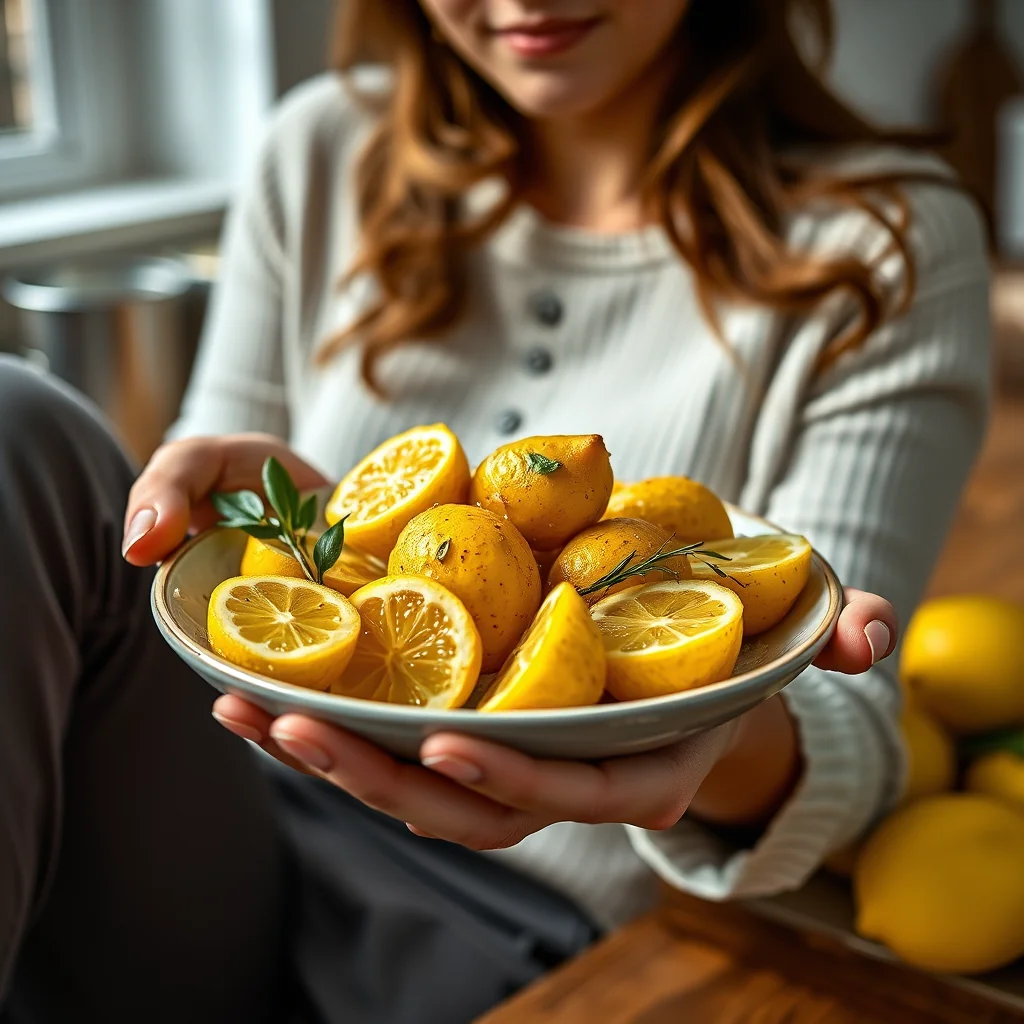
Homemade preserved lemons ask for fifteen minutes of work and a few weeks of patience, then pay you back all year. Meyer lemons pack into jars with sea salt and their own juice, topped with a layer of olive oil. That salty-citrus depth is the secret behind half the good vegetarian cooking I know.
Unlock a world of vibrant, complex flavor with one of the secret weapons of North African and Middle Eastern kitchens: preserved lemons! Far more than just a pickle, these salt-cured gems transform through fermentation, shedding their sharp acidity for a silky texture and an intensely savory, umami-rich lemon flavor. They add an incredible depth to tagines, couscous, salads, and roasted vegetables that fresh lemon simply can’t replicate. While they sound exotic, they are incredibly simple to make at home. This is my tried-and-true method for creating a jar of pure sunshine that will elevate your vegetarian cooking for months to come.
Ingredients
• 8 to 10 organic Meyer lemons or other thin-skinned lemons, enough to pack a 1-quart jar
• 1/2 cup / 150g (5.3 oz) sea salt, plus more for packing
• 2 to 3 additional lemons for fresh juice, as needed
• Extra virgin olive oil, for topping
Instructions
1. Sterilize Your Jar: Submerge a 1-quart wide-mouth jar in boiling water for 1 minute. Using tongs, carefully lift it out, pouring the water back into the pot. Place it upside down on a clean towel to drain and cool.2. Prep the Lemons: Scrub the lemons well and pat them dry. From the top (bud end), slice each lemon into quarters lengthwise, stopping about 1/2 inch from the bottom so the lemon remains connected at the base.3. Salt the Lemons: Gently open the lemon quarters and generously pack the insides with sea salt.4. Pack the Jar: Place a tablespoon of salt at the bottom of your sterilized jar. Tightly pack the salt-filled lemons inside, pressing down firmly to release their juices and fit as many as possible.5. Submerge and Seal: Pour enough additional fresh lemon juice into the jar to completely cover the lemons. Sprinkle another tablespoon of salt over the top. Seal the jar tightly.6. Ferment: Let the jar sit in the refrigerator for at least 3 weeks, shaking it gently every few days to redistribute the salt and juices. The lemons are ready when the rinds are soft and translucent.
Nutritional Information
• Serving Size: 1 wedge (approx. 1/8 lemon)
• Calories: ~5
• Key Nutrients: A good source of Vitamin C and beneficial probiotics from the fermentation process.
• Note: Preserved lemons are high in sodium due to the salt brine. Use them as a seasoning and rinse before use to reduce saltiness.
Pro Tips
• To use, remove a lemon wedge from the jar, rinse it thoroughly under cold water to remove excess salt, and scrape out the pulp (optional, as it can be bitter). Finely chop or slice the rind.
• If any lemons become exposed to air in the jar during storage, top them off with a layer of extra virgin olive oil to prevent mold.
• The salty, citrusy brine is liquid gold! Don’t discard it. Use a splash in salad dressings, marinades, or to finish a soup for a bright, savory kick.
• Your preserved lemons will keep in the refrigerator for at least 6 months, and often up to a year. Their flavor will continue to deepen and mellow over time.
FAQ
Q: How do preserved lemons add umami to vegetarian dishes
A: The salt-curing and fermentation process transforms the lemon’s sharp acidity into a deep, savory, and complex umami flavor. Finely chopping the rind and adding it to vegetarian tagines, lentil soups, or roasted root vegetables provides a savory depth that you can’t get from fresh lemon, enhancing the overall richness of the dish without any meat products.
Q: What are the best vegetarian pairings for preserved lemons
A: Preserved lemons are incredibly versatile in vegetarian cooking. They pair beautifully with chickpeas, lentils, and white beans in stews and salads. They also elevate roasted vegetables like cauliflower, eggplant, and carrots, and are a classic addition to grain dishes like couscous and quinoa. For a fresh pairing, mix them into yogurt or tahini-based sauces.
Q: Can I use the preserved lemon brine in vegan dressings
A: Absolutely! The leftover brine is a flavor-packed ingredient perfect for vegan cooking. It’s salty, tangy, and full of lemon essence. Whisk a spoonful into your favorite vinaigrette instead of plain salt and vinegar, or add it to a tahini dressing for a bright, savory kick that’s perfect for salads and grain bowls.
More Recipes You’ll Love
- Vegetarian Nobu-Style Miso-Glazed Tofu Wraps
- Matar Paratha (Spiced Pea-Stuffed Indian Flatbread)
- Savory Asparagus and Swiss Crêpes
Homemade Preserved Lemons for Vegetarian Cooking
Ingredients
Method
- Sterilize Your Jar: Submerge a 1-quart wide-mouth jar in boiling water for 1 minute.
- Using tongs, carefully lift it out, pouring the water back into the pot.
- Place it upside down on a clean towel to drain and cool. 2. Prep the Lemons: Scrub the lemons well and pat them dry. From the top (bud end), slice each lemon into quarters lengthwise, stopping about 1/2 inch from the bottom so the lemon remains connected at the base. 3. Salt the Lemons: Gently open the lemon quarters and generously pack the insides with sea salt. 4. Pack the Jar: Place a tablespoon of salt at the bottom of your sterilized jar. Tightly pack the salt-filled lemons inside, pressing down firmly to release their juices and fit as many as possible. 5. Submerge and Seal: Pour enough additional fresh lemon juice into the jar to completely cover the lemons.
- Sprinkle another tablespoon of salt over the top. Seal the jar tightly. 6. Ferment: Let the jar sit in the refrigerator for at least 3 weeks, shaking it gently every few days to redistribute the salt and juices. The lemons are ready when the rinds are soft and translucent.