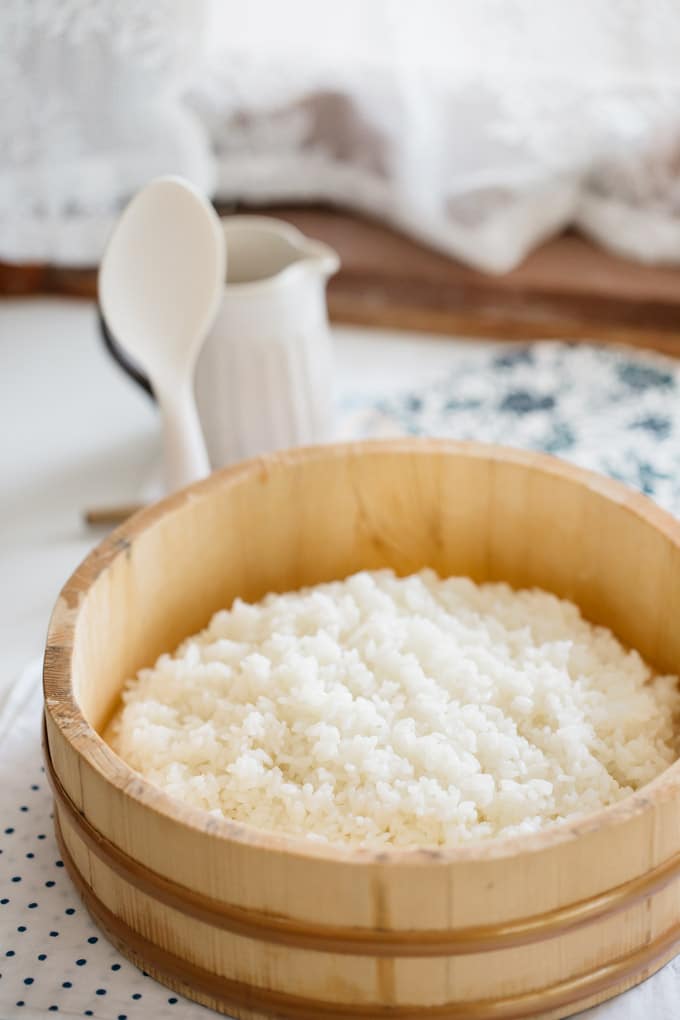
Dreaming of crafting your own stunning veggie sushi rolls at home? The secret isn’t in the fancy fillings—it’s all in the rice! While this recipe takes a little time, most of it is completely hands-off. Your patience will be rewarded with a bowl of glossy, perfectly seasoned, and fluffy sushi rice that’s a dream to work with. This is the foundation for creating sushi that rivals your favorite restaurant. Let’s get rolling!
Ingredients
• 2½ cups / 500 g short-grain white rice
• 2½ cups minus 3 tablespoons / 580 ml water
• ¾ cup / 185 ml Sushi Rice Dressing
Instructions
1. Wash the Rice: Place the rice in a medium bowl and cover with cool water. Gently swish the rice with your hand in a circular motion, then carefully pour off the milky water. Repeat this process three more times until the water is mostly clear.
2. Drain Thoroughly: Transfer the washed rice to a fine-mesh strainer and rinse one last time with cool water. Let the rice drain completely in the strainer for at least 10 minutes.
3. Cook the Rice: Combine the drained rice and the measured water in your rice cooker. Start the cooker and let it run for a full 40 minutes. Your cooker might signal it’s done earlier, but resist the urge to open the lid! Patience is key here.
4. Prepare Your Paddle: While the rice cooks, soak a wooden spoon or rice paddle in a small bowl of water. This simple trick prevents the sticky rice from clinging to your utensil.
5. Season the Rice: Once cooked, immediately transfer the hot rice to a large, flat, non-metallic surface like a cutting board or a traditional wooden *hangiri*. Using your soaked paddle, gently “cut” and fold the rice to break it up. Drizzle the Sushi Rice Dressing over the rice in thirds, gently folding and tossing after each addition to coat every grain evenly.
6. Cool it Down: Spread the seasoned rice in a thin, even layer across the board. Let it cool for 10 minutes. Gently flip the rice over with your paddle and allow it to cool for another 5 minutes, or until it reaches room temperature.
7. Store for Use: Transfer the finished sushi rice to a large non-metal bowl and cover it with a damp, lint-free dishcloth. Use within 4 hours for the best texture and flavor.
Nutritional Information
• Per 1-cup serving (approx.)
• Calories: 280 kcal
• Carbohydrates: 62 g
• Protein: 5 g
• Fat: 0.5 g
• Sodium: 350 mg
Pro Tips
• Don’t skip the rinsing step! Washing away the excess surface starch is the key to achieving fluffy, distinct grains rather than a mushy clump.
• Always use non-metallic tools. A wooden or plastic paddle and bowl will prevent any reaction with the vinegar dressing, which can alter the rice’s flavor.
• For an authentic glossy finish, have a friend gently fan the rice with a piece of cardboard or a fan as you fold in the dressing. This cools it rapidly and evaporates excess moisture.
• The 40-minute cooking time is non-negotiable. Trust the process and let the rice steam fully, even if your cooker’s light turns off early.
FAQ
Q: Is sushi rice dressing always vegetarian and vegan
A: Yes, traditional sushi rice dressing is naturally vegetarian and vegan, made from rice vinegar, sugar, and salt. Always check the label if you’re using a store-bought version, but it’s rare to find non-vegan ingredients. This recipe’s dressing is completely plant-based.
Q: How can I add more protein to my vegetarian sushi rolls
A: This sushi rice is the perfect base for high-protein vegetarian fillings. Try adding baked tofu, edamame, pan-fried tempeh, or a sprinkle of toasted sesame seeds. Avocado and shiitake mushrooms also add satisfying texture and nutrients.
Q: Can I make this vegetarian sushi rice ahead of time
A: For the best texture, it’s recommended to use the sushi rice within 4 hours of making it. If you must store it longer, keep it in a non-metallic bowl covered with a damp cloth at room temperature. Avoid refrigerating it, as this will make the rice hard and dry.
Q: Can I use brown rice for a healthier vegetarian sushi
A: While short-grain white rice is traditional for its sticky texture, you can use short-grain brown rice for a whole-grain option. You will need to adjust the water ratio and cooking time according to your rice cooker’s instructions for brown rice, as it requires more water and a longer cooking cycle.