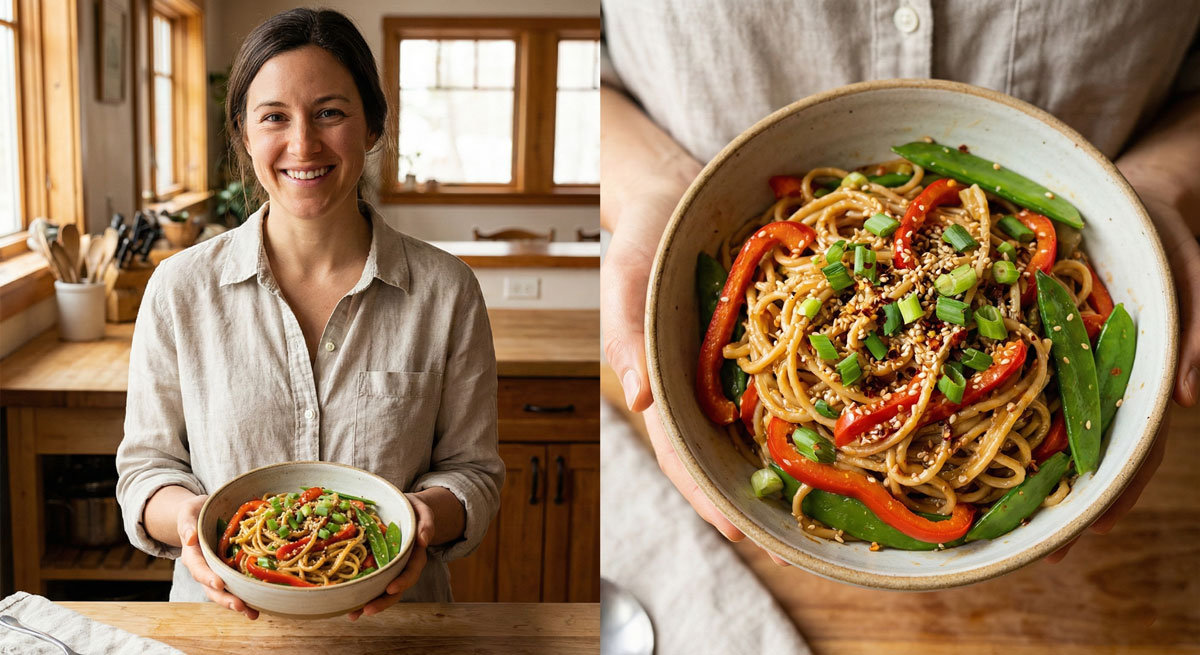

Who doesn’t love a big, comforting bowl of Pad Thai? The perfect balance of sweet, sour, and savory flavors is completely irresistible. But you don’t need to order takeout to get your fix! This Easy Vegetarian Pad Thai recipe brings all the classic flavors you love to your home kitchen in under 30 minutes. We’re using crispy pan-fried tofu for a satisfying protein punch and a simple, creamy sauce made with a secret ingredient—tahini!—for a nutty depth you’ll adore. Get ready to make this your new go-to weeknight meal.
Ingredients
• For the Pad Thai Sauce
• 1/4 cup / 60g tahini
• 1/4 cup / 60ml ketchup
• 1/4 cup / 60ml low-sodium soy sauce
• 2 tbsp / 30ml rice vinegar
• 3 tbsp / 45ml fresh lime juice
• 2 tbsp / 25g granulated sugar
• 3/4 tsp crushed red pepper flakes, or to taste
• For the Noodles and Tofu
• 1 lb / 454g thin rice noodles
• 1 14-oz / 400g block firm tofu, pressed and diced small
• 1/4 cup / 60ml vegetable oil
• 3 cloves garlic, minced
• 4 scallions, chopped
• 1/2 tsp salt, or to taste
Instructions
1. Place the rice noodles in a large bowl and cover with very hot water. Let them soak until tender but still firm, about 5-7 minutes depending on the brand. Drain well and set aside.
2. In a small bowl, whisk together all the sauce : tahini, ketchup, soy sauce, rice vinegar, lime juice, sugar, and red pepper flakes. Set aside.
3. Heat the vegetable oil in a large skillet or wok over medium-high heat. Add the diced tofu and fry, stirring occasionally, until it’s lightly golden brown and crispy on all sides. Add the minced garlic and cook for another 30 seconds until fragrant.
4. Add the drained noodles to the skillet with the tofu. Stir-fry for 2-3 minutes, using tongs to separate the noodles and combine them with the tofu.
5. Reduce the heat to medium, pour the prepared tahini sauce over the noodles, and toss everything together until the noodles are evenly coated. Cook for 3-4 minutes, allowing the sauce to thicken and heat through.
6. Stir in the chopped scallions and salt. Cook for one more minute, give it a final toss, and serve immediately.
Nutritional Information
• Serves: 6
• Cost Per Serving: Approximately $2.18
• Serving Size: 1 cup
• Calories: 481
• Fat: 16g
• Carbohydrates: 74g
• Protein: 9.5g
• Fiber: 3g
• Sugar: 7g
• Sodium: 757mg
Pro Tips
• Pro-Tips for Perfect Veggie Pad Thai
• For the crispiest tofu, press it for at least 30 minutes before dicing. Wrap the block in paper towels or a clean kitchen towel, place it on a plate, and put something heavy on top.
• Don’t overcook the rice noodles during the soaking stage. They should be pliable but still have a slight bite, as they will continue to cook in the skillet. Rinsing them with cold water after draining stops the cooking process.
• Feel free to add more vegetables for extra texture and nutrients. Classic additions like bean sprouts, shredded carrots, and red bell pepper strips work beautifully. Add them in with the garlic.
• Garnish generously for the full experience. Top your finished dish with a sprinkle of crushed peanuts, fresh cilantro, and extra lime wedges for squeezing over.
FAQ
Q: Is this vegetarian pad thai recipe also vegan
A: Yes, this recipe is 100% vegan as written. It uses tofu for protein and omits traditional ingredients like fish sauce and egg, making it entirely plant-based.
Q: Can I make this pad thai gluten-free
A: Absolutely. The rice noodles are naturally gluten-free. To make the entire dish gluten-free, simply substitute the low-sodium soy sauce with a gluten-free tamari or coconut aminos.
Q: What other protein can I use besides tofu
A: If you’re not a fan of tofu, you can easily substitute it with other vegetarian proteins. Try using a block of crumbled tempeh, shelled edamame, or even a can of rinsed chickpeas. Add them at the same step you would add the tofu.
Q: How do I store and reheat leftover pad thai
A: Store any leftovers in an airtight container in the refrigerator for up to 3 days. For best results when reheating, warm it in a skillet over medium heat with a splash of water or vegetable broth to help loosen the noodles and prevent them from drying out.
Q: Why does this recipe use tahini and ketchup instead of tamarind paste
A: This recipe is designed for ease and accessibility. Tahini and ketchup are common pantry staples that create a delicious sweet, sour, and savory flavor profile similar to traditional Pad Thai without requiring a specialty ingredient like tamarind paste. The tahini also adds a unique creamy, nutty depth to the sauce.