
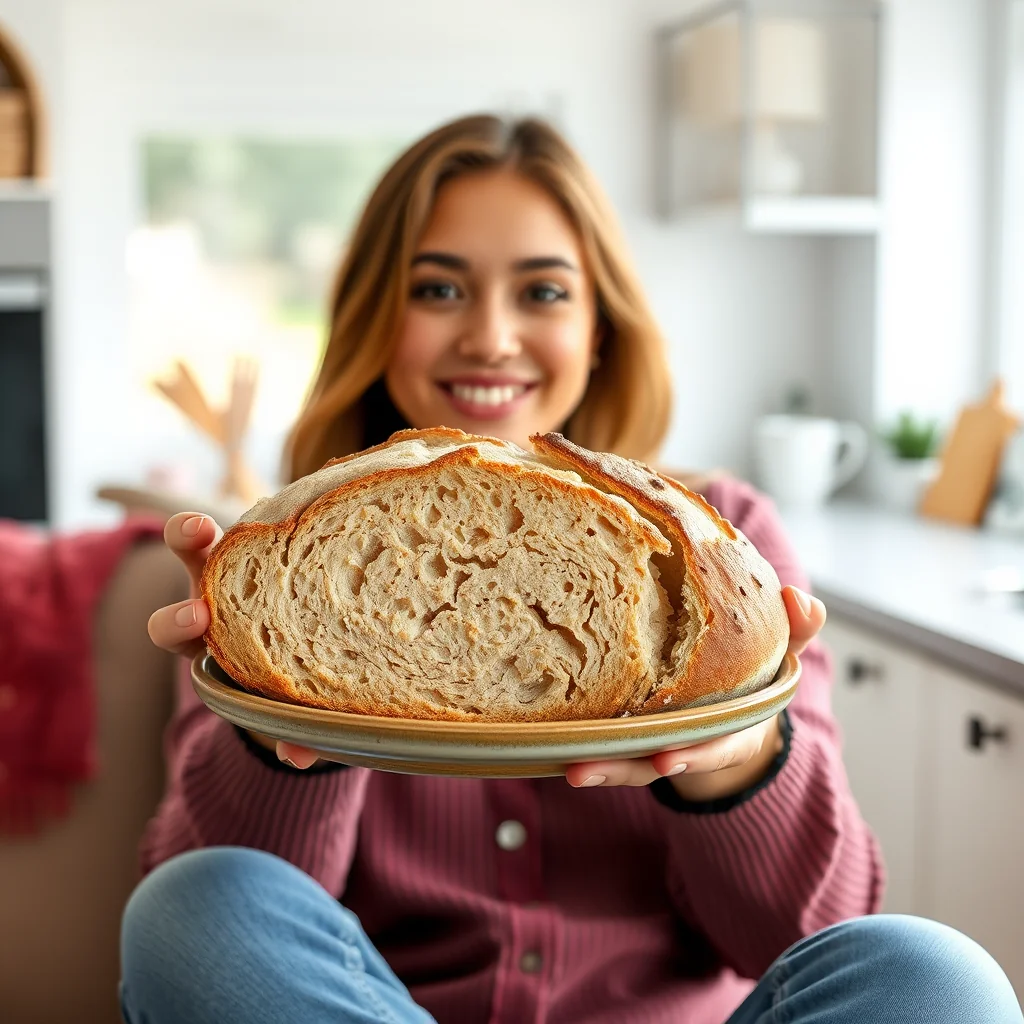
Hybrid sourdough bread gives you real sourdough character without the strict schedule: a rye-flecked dough raised by starter and a pinch of instant yeast together, so the clock bends around your day instead of the reverse. Deep crust, open crumb, and no 3 a.m. alarms.
There’s nothing quite like the crackle of a freshly baked sourdough crust and the soft, tangy crumb within. If you’ve been intimidated by traditional sourdough, this recipe is your perfect entry point. We use a simple starter and a touch of commercial yeast to create a ‘hybrid’ dough. This method is faster, incredibly reliable, and yields a loaf with a wonderfully complex flavor that’s tangy but not overwhelmingly sour. It’s the best of both worlds, giving you artisanal results with a straightforward process. Ready to fill your home with the incredible aroma of baking bread?
Ingredients
• MAKES: 1 large boule, 3-4 baguettes, or 12-16 rolls
• TIME: Approx. 48 hours for the first bake, 24 hours for subsequent bakes
• 4 ½ cups / 540g (19 oz) bread or all-purpose flour, plus more for dusting
• 1 cup / 120g rye flour
• ⅝ teaspoon / 2.5g (0.09 oz) instant yeast, divided
• 2 teaspoons / 12g (0.42 oz) fine sea salt
• 2 ½ cups / 600ml warm water, plus more as needed, divided
Instructions
1. Part 1: Creating Your Sourdough Starter (First Time Only)
2. Two to three days before you plan to bake, create the starter. In a medium bowl, mix together 1 ½ cups (180g / 6.3 oz) of the bread flour, ⅛ teaspoon of the instant yeast, and 1 cup (240ml) of warm water. Stir with a wooden spoon until combined.
3. Cover the bowl loosely with plastic wrap or a clean kitchen towel and place it in a warm, out-of-the-way spot (like on top of the refrigerator).
4. Stir the mixture every 8 to 12 hours. Over the next 24-48 hours, it will become bubbly, active, and develop a distinct, mildly sour aroma. Once it’s active, your starter is ready!
5. Part 2: Baking Your Sourdough Loaf
6. The night before you want to bake, feed your starter. In a large bowl or the bowl of a food processor, combine all of your active starter with 2 cups (240g / 8.5 oz) of the remaining bread flour and about 1 ½ cups (360ml / 12.2 fl oz) of warm water. Mix until smooth. Cover and let it rest at room temperature overnight, or for at least 6 hours. The mixture will become bubbly and foamy.
7. The next day, reserve your starter for future bakes. Transfer half of the bubbly mixture to a covered container and place it in the refrigerator. This is your ongoing starter!
8. To the remaining mixture in the bowl, add the remaining ½ teaspoon yeast, the salt, the rye flour, and the final 1 cup (120g / 4.2 oz) of bread flour. Mix until a shaggy dough forms. If using a food processor, process until a moist but well-defined ball forms, adding a tablespoon of water at a time if too dry, or a tablespoon of flour if too sticky.
9. Cover the dough and let it rise at room temperature for at least one hour.
10. Lightly flour your work surface. Gently tip the dough out and shape it into your desired form—a round boule, long baguettes, or individual rolls. Place the shaped dough on a floured cloth or parchment paper, cover with a towel, and let it rest while you preheat your oven to 400°F / 200°C. Place a baking stone or an empty cast-iron skillet in the oven to heat up.
11. Once preheated, carefully slash the top of your loaf with a razor blade or sharp knife. Turn the oven temperature down to 375°F / 190°C.
12. Carefully transfer the dough to the hot baking stone or a lightly oiled baking sheet. Bake for 30-45 minutes (less for rolls), or until the crust is a deep golden brown and the internal temperature reads at least 210°F / 99°C on an instant-read thermometer.
13. For a shinier crust, you can lightly spray the loaf with water as soon as it comes out of the oven. Let it cool completely on a wire rack before slicing to ensure the perfect texture.
Nutritional Information
• Approximate values per slice (1/12 of a boule)
• Calories: 185 kcal
• Carbohydrates: 38g
• Protein: 6g
• Fat: 1g
• Sodium: 390mg
• Fiber: 2g
Pro Tips
• for Perfect Sourdough
• Don’t be afraid to swap flours. You can use all white bread flour or substitute whole wheat for some or all of the rye flour to change the flavor and texture.
• To maintain your starter, feed it with a little flour and water every 1-2 weeks, or simply use it to bake a new loaf, which replenishes it automatically.
• For an extra crispy, artisan-style crust, place a shallow pan of hot water on the bottom rack of the oven to create steam during the first 20 minutes of baking.
• An instant-read thermometer is the most reliable way to check for doneness. A fully cooked loaf should register between 205-210°F (96-99°C).
• Resist the urge to slice into the bread while it’s hot! Allowing it to cool completely on a wire rack is crucial for the internal crumb to set properly.
FAQ
Q: Is this sourdough recipe vegan
A: Yes, this sourdough recipe is 100% vegan. It is made with simple, plant-based ingredients: flour, water, salt, and yeast. There are no eggs, dairy, or other animal products involved in the process.
Q: What are some healthy vegetarian pairings for this sourdough
A: This bread is a perfect canvas for countless vegetarian meals. Try it toasted and topped with mashed avocado and chili flakes, spread with hummus and roasted vegetables, or served alongside a hearty lentil or black bean soup. It’s also fantastic for making gourmet grilled cheese with plant-based cheese.
Q: How can I add more protein and fiber to this vegetarian bread
A: To boost the nutritional content, you can easily add more protein and fiber. Try substituting some of the bread flour with whole wheat or spelt flour as mentioned in the pro-tips. You can also mix in 1/4 to 1/2 cup (480 ml) of seeds like flax, chia, or sunflower seeds during the final mixing stage (step 8).
Q: How should I store this homemade bread to keep it fresh
A: For the best texture, store your completely cooled loaf in a paper bag or a bread box at room temperature for up to 3 days. Avoid the refrigerator, as it can make the bread go stale faster. For longer-term storage, slice the loaf, wrap it tightly, and freeze for up to 3 months. You can toast slices directly from the freezer.
More Recipes You’ll Love
- Masala Poori (Deep-Fried Seasoned Whole Wheat Bread)
- Vegetarian Mexican Pizza
- Indian-Inspired Naan Pizza with Lentil and Potato
Simple Hybrid Sourdough Bread
Ingredients
Method
- Part 1: Creating Your Sourdough Starter (First Time Only)
- Two to three days before you plan to bake, create the starter.
- In a medium bowl, mix together 1 ½ cups (180g / 6.3 oz) of the bread flour, ⅛ teaspoon of the instant yeast, and 1 cup (240ml) of warm water.
- Stir with a wooden spoon until combined.
- Cover the bowl loosely with plastic wrap or a clean kitchen towel and place it in a warm, out-of-the-way spot (like on top of the refrigerator).
- Stir the mixture every 8 to 12 hours. Over the next 24-48 hours, it will become bubbly, active, and develop a distinct, mildly sour aroma.
- Once it's active, your starter is ready!
- Part 2: Baking Your Sourdough Loaf
- The night before you want to bake, feed your starter.
- In a large bowl or the bowl of a food processor, combine all of your active starter with 2 cups (240g / 8.5 oz) of the remaining bread flour and about 1 ½ cups (360ml / 12.2 fl oz) of warm water.
- Mix until smooth.
- Cover and let it rest at room temperature overnight, or for at least 6 hours. The mixture will become bubbly and foamy.
- The next day, reserve your starter for future bakes.
- Transfer half of the bubbly mixture to a covered container and place it in the refrigerator. This is your ongoing starter!
- To the remaining mixture in the bowl, add the remaining ½ teaspoon yeast, the salt, the rye flour, and the final 1 cup (120g / 4.2 oz) of bread flour.
- Mix until a shaggy dough forms. If using a food processor, process until a moist but well-defined ball forms, adding a tablespoon of water at a time if too dry, or a tablespoon of flour if too sticky.
- Cover the dough and let it rise at room temperature for at least one hour.
- Lightly flour your work surface. Gently tip the dough out and shape it into your desired form—a round boule, long baguettes, or individual rolls.
- Place the shaped dough on a floured cloth or parchment paper, cover with a towel, and let it rest while you preheat your oven to 400°F / 200°C.
- Place a baking stone or an empty cast-iron skillet in the oven to heat up.
- Once preheated, carefully slash the top of your loaf with a razor blade or sharp knife.
- Turn the oven temperature down to 375°F / 190°C.
- Carefully transfer the dough to the hot baking stone or a lightly oiled baking sheet.
- Bake for 30-45 minutes (less for rolls), or until the crust is a deep golden brown and the internal temperature reads at least 210°F / 99°C on an instant-read thermometer.
- For a shinier crust, you can lightly spray the loaf with water as soon as it comes out of the oven.
- Let it cool completely on a wire rack before slicing to ensure the perfect texture.
- Don't be afraid to swap flours. You can use all white bread flour or substitute whole wheat for some or all of the rye flour to change the flavor and texture.