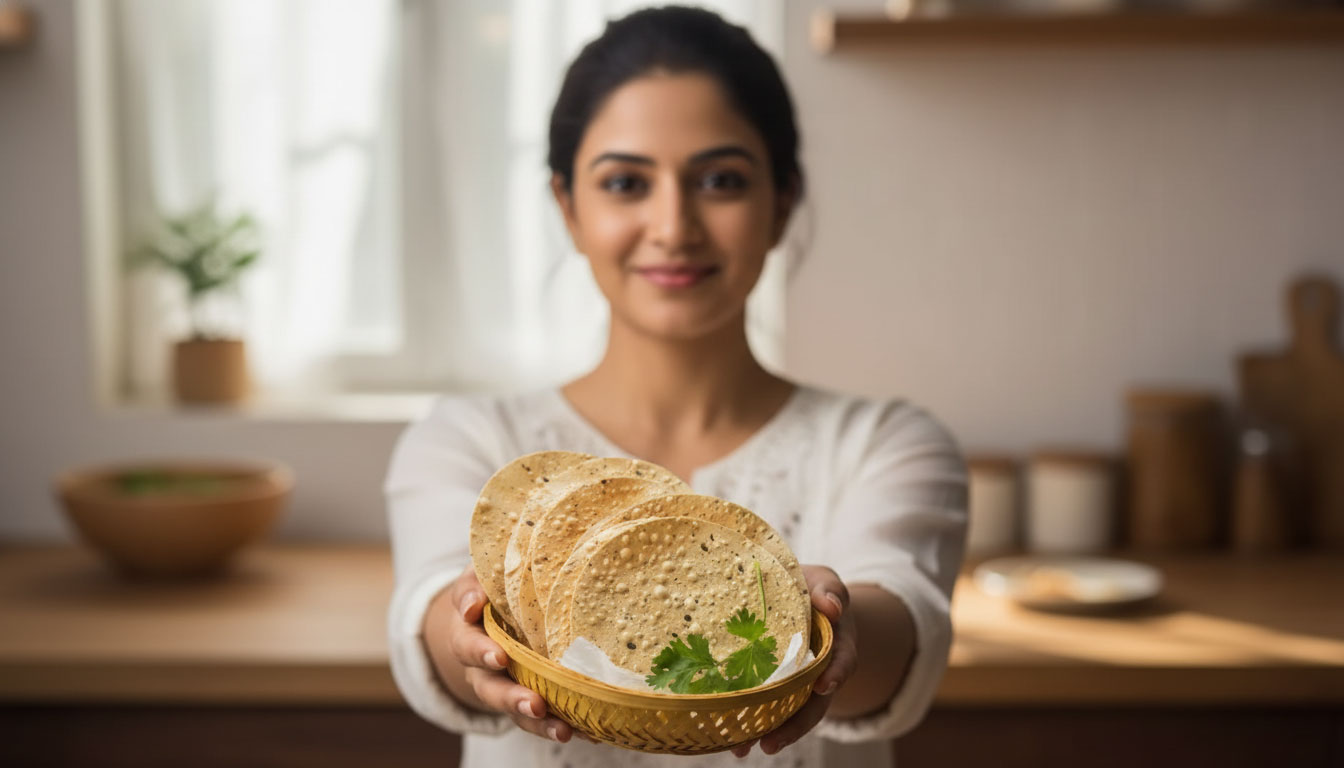
Ready for the crispiest, most addictive snack to ever grace your plate? Meet the papadum! This thin, crunchy lentil wafer is a staple in Indian cuisine, and for good reason. Whether you call it Paparh (the larger, spiced version from North India) or Pappadam (the smaller, plain version from the South), this versatile cracker is the perfect way to start a meal, scoop up chutneys, or add a delightful crunch alongside your favorite curry. While making them from scratch is a labor of love, store-bought, sun-dried papadums are readily available and cook up in mere seconds. Forget soggy snacks—we’re about to unlock the secrets to perfectly puffed, shatteringly crisp papadums using two simple methods: deep-frying and flame-toasting.
Ingredients
• What You’ll Need
• Pre-made Dal Wafers (Papadums or Paparh) – as many as desired
• Ghee or Vegetable Oil for frying – enough for a 1 inch / 2.5 cm depth
Instructions
1. How to Cook Papadums
2. Method 1: To Deep-Fry (Light & Crisp)
3. Pour ghee or vegetable oil into a large frying pan to a depth of 1 inch / 2.5 cm and place over moderately high heat.
4. Once the oil is hot (around 360°F / 180°C), carefully slide one papadum into the pan. It will sizzle and expand almost instantly.
5. Using the back of a large slotted spoon, gently press down on the surface of the papadum to keep it from curling. It will become crisp in under 5 seconds.
6. Immediately remove the papadum from the oil. It should be a light golden-yellow, not brown.
7. Drain the cooked papadum vertically on a rack or in a colander lined with paper towels to allow excess oil to drip off.
8. Repeat with the remaining papadums, ensuring the oil doesn’t get hot enough to smoke.
9. Method 2: To Toast Over an Open Flame (Low-Fat & Smoky)
10. Using a pair of tongs, hold a single papadum about 2 inches / 5 cm over a high-heat gas or electric burner.
11. Constantly move the papadum over the heat. You will see it lighten in color, bubble up, and develop charred black spots. This constant motion prevents it from burning.
12. Flip the papadum over and toast the other side in the same manner until it is brittle and evenly cooked.
13. The finished papadum should be yellowish with charred flecks. Stack them as you cook and serve immediately.
Nutritional Information
• Nutritional Highlights
• Source of Protein: Made from lentils, papadums are a good source of plant-based protein and fiber.
• Low-Fat Option: Flame-toasted papadums are virtually fat-free, making them a fantastic light and healthy snack.
• Naturally Gluten-Free: Most traditional lentil-based papadums are gluten-free, but always check the packaging to be certain.
Pro Tips
• Pro-Tips for Perfect Papadums
• Cook Quickly: Papadums cook in seconds! Remove them from the heat just as they lighten in color to avoid a bitter, burnt taste.
• Keep Them Flat: When frying, use the back of a spatula to gently press down on the papadum as it cooks. This prevents it from curling up too much.
• Even Roasting: For the flame-toasted method, keep the papadum moving constantly with tongs to ensure it cooks evenly and gets those perfect charred spots without burning.
• Flavor First: If you’re new to papadums, start with plain, black pepper, or red chili varieties. They offer classic flavors without being overwhelming.
• Stay-Crisp Storage: Store cooked papadums in an airtight container at room temperature. They’ll stay crispy for a few hours, but are always best enjoyed fresh.
FAQ
Q: Are papadums a good source of vegetarian protein
A: Yes, papadums are an excellent source of plant-based protein and fiber. They are traditionally made from lentils, making them a nutritious and satisfying addition to any vegetarian meal.
Q: What is the healthiest way to cook papadums for a vegetarian diet
A: For the healthiest, virtually fat-free option, toast the papadums directly over an open flame using tongs. This method gives them a delicious smoky flavor without any added oil, making them a perfect light and healthy vegetarian snack.
Q: Can I make these papadums vegan
A: Absolutely. To ensure your papadums are completely vegan, simply use vegetable oil instead of ghee for frying. Most store-bought lentil papadums are naturally vegan, but it’s always a good idea to check the ingredients list on the package.
Q: How do I keep cooked papadums crispy
A: To maintain their signature crunch, store cooked papadums in an airtight container at room temperature. While they are best enjoyed fresh, this will keep them crispy for a few hours.