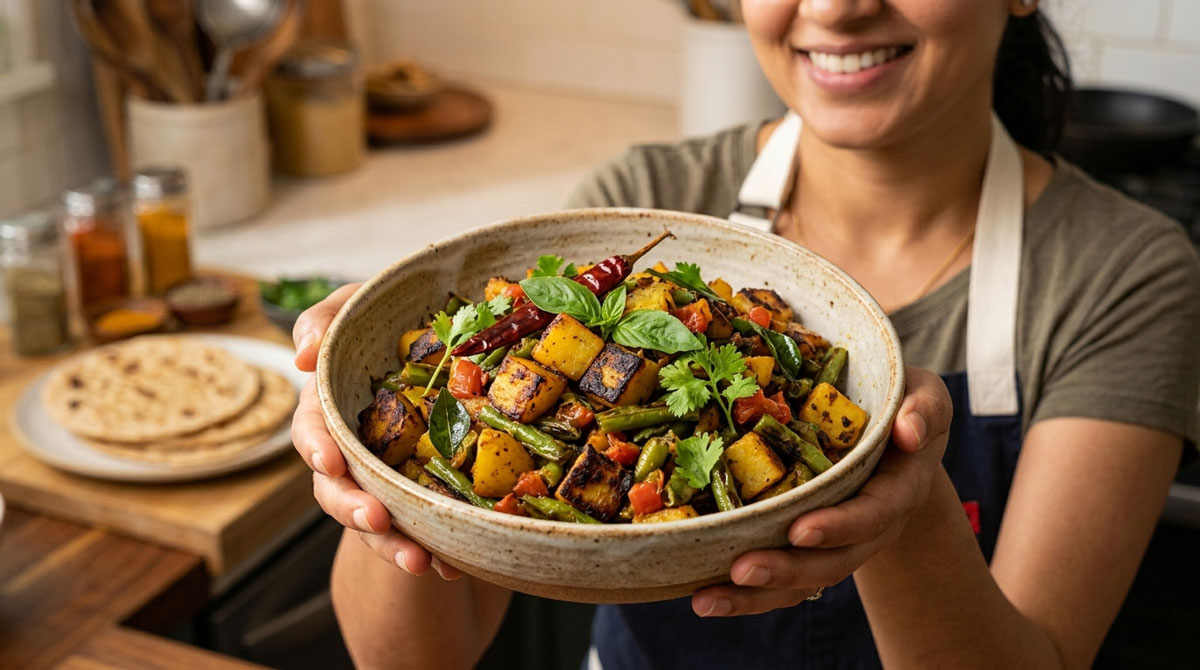
Ingredient
- Tomatoes: 1.0 cup (5.3 oz / 150g) peeled, seeded, and chopped (about 2 medium-sized tomatoes)
- Curry Leaves: 6.0 to 8.0 fresh leaves
- Potatoes: 5.0 medium-sized waxy boiling potatoes, peeled and cut into 1-inch cubes, weighing 20.0 oz (570g)
- Green Beans: 2.5 cups (16.0 oz / 455g) trimmed and cut into 1.5-inch pieces
- Fresh Basil: 3.0 sprigs
- Red Chilies: 1.0 to 2.0 dried whole chilies
- Fresh Coriander: 4.0 sprigs
- Turmeric: 0.5 tsp (0.07 oz / 2g)
- Yellow Asafetida Powder (Hing): 0.25 tsp (0.03 oz / 1g) (Note: This amount applies to the yellow Cobra brand; reduce by 75% if using a stronger variety)
- Salt: 1.25 tsp (0.25 oz / 7g)
- Black Pepper: 0.1 tsp (0.01 oz / 0.3g) freshly ground
- Ghee or Butter: 6.0 tbsp (3.0 oz / 85g)
- Water: 2.6 cups (22.2 oz / 630g)
Step-by-Step Instructions
- Place all of your prepped ingredients into a heavy-bottomed 3.0-quart nonstick pan, starting with the chopped tomatoes at the bottom and finishing by pouring the water over the top. Bring the mixture to a rolling boil over moderately high heat, then immediately reduce the heat to moderate and let it continue to boil vigorously for 5.0 minutes.
- Reduce the heat down to medium-low to maintain a gentle boil, partially cover the pan with a lid, and cook for 20.0 to 25.0 minutes. Occasionally peek into the pan to ensure the water isn't evaporating too quickly; you want the vegetables to become just fork-tender precisely as the last of the water is fully absorbed. Adjust the heat or add a tiny splash of water if necessary to achieve this balance.
- Raise the heat to moderately high to finish the dish and fry the vegetables quickly without stirring. This crucial step allows the moisture to cook off and a flavorful, slightly charred crust to form on the bottom. Once you achieve the desired crust and texture, remove the pan from the heat, cover it tightly, and let it rest for 5.0 minutes. Gently fold the charred crust into the tender vegetables, remove the whole red chilies so no one gets a fiery surprise, and serve warm!
Nutritional Information
Approximate values per serving (based on 6 servings):
- Calories: 205 kcal
- Carbohydrates: 23g
- Protein: 3.3g
- Fat: 11.3g
Pro Tips
- Choose the Right Pan: A heavy-bottomed nonstick skillet or a well-seasoned cast-iron pan is absolutely essential. Thin pans will cause the dish to burn rather than develop the slow, beautiful char we are looking for.
- Respect the Potatoes: Stick to waxy boiling potatoes (like Yukon Gold or red potatoes). Starchy potatoes like Russets will break down and turn to mush during the boiling phase, ruining the necessary texture of the dish.
- Do Not Stir at the End: When you raise the heat for the final step to form the crust, resist the urge to stir! Stirring will disrupt the caramelization process. Trust your nose and ears to know when it's perfectly charred.
- Mind Your Hing (Asafetida): Asafetida varies wildly in strength depending on the brand. If you are not using the yellow Cobra brand mentioned, definitely reduce the amount by three-fourths to prevent it from overpowering the fresh herbs and delicate vegetables.
Frequently Asked Questions (FAQ)
What is the best type of potato to use for an Aloo Barbatti Charchari recipe? Waxy boiling potatoes are the best choice for this dish. Varieties like Yukon Gold, red potatoes, or new potatoes hold their shape perfectly during the boiling and charring processes, ensuring the dish has the proper fork-tender texture without turning into a mash.
Can I make Aloo Barbatti Charchari ahead of time? While you can prep the vegetables in advance, this dish is best served immediately after cooking. The signature crispy, charred crust at the bottom of the pan softens once it is stirred in and stored. If you do have leftovers, reheat them in a skillet over medium heat to try and revive some of that texture.
Is it possible to make this recipe vegan? Absolutely! To make a vegan version of this Aloo Barbatti Charchari recipe, simply swap out the 6 tablespoons of ghee or butter for a high-quality, neutral plant-based oil or a vegan butter alternative. The dish will still develop a fantastic crust and robust flavor.
Why did my vegetables turn to mush instead of charring? This usually happens if the heat is too low during the final cooking stage, if the lid is left on for too long trapping steam, or if too much water was added. The water needs to be completely absorbed right as the vegetables become tender so the dry heat can start frying the bottom layer in the ghee.