Ingredients
The Paste:
- 4 tbsp (0.5 oz / 14g) white poppy seeds (khas khas)
- 0.5 tbsp (0.25 oz / 7g) black mustard seeds
- 0.66 cups (5.3 oz / 150g) water for soaking
- 0.5-inch piece (0.1 oz / 3g) fresh ginger root, scraped
- 1-2 hot green chilies, seeded
- 1 tbsp (0.1 oz / 1g) chopped fresh coriander (reserve remainder for garnish)
- 0.33 cups (2.7 oz / 80g) heavy cream or half-and-half
The Vegetables:
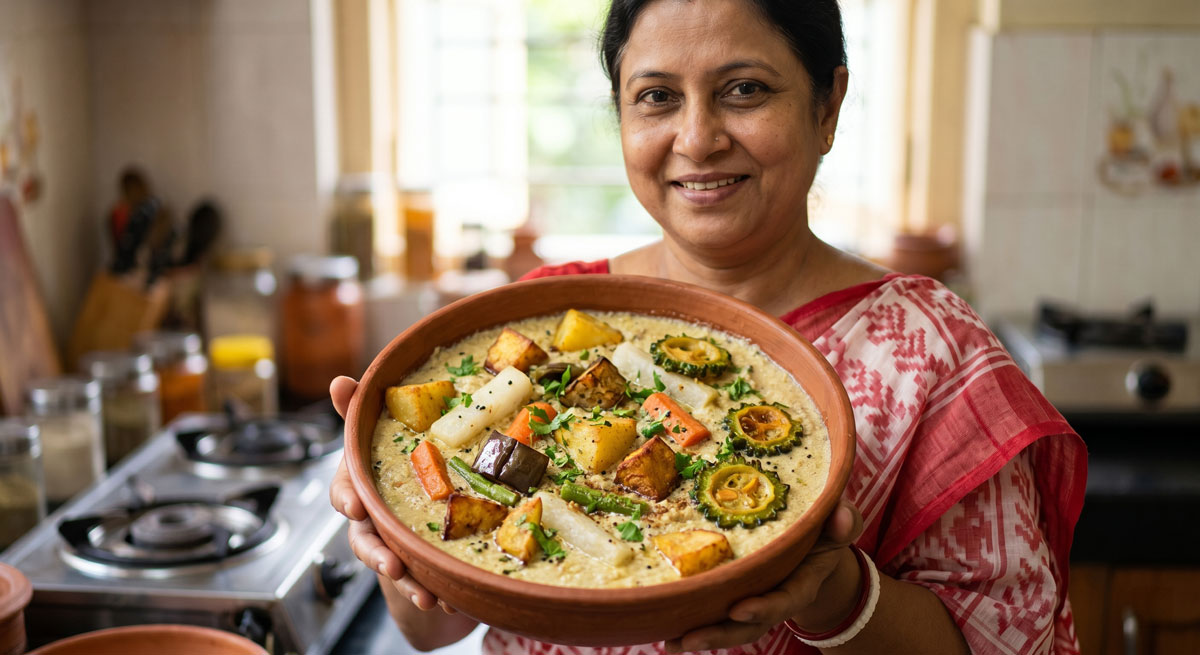
- 2 small green bitter melons (4 oz / 120g total), sliced 0.1-inch (3mm) thick
- 1 tsp (0.17 oz / 5g) salt (for sweating the melon)
- 3 medium all-purpose potatoes (12 oz / 340g), peeled and cut into 1-inch (2.5 cm) cubes
- 1 medium yam (8 oz / 230g), peeled and cut into 0.75-inch (2 cm) cubes
- 2 white icicle salad radishes or peeled carrots (4 oz / 115g), cut diagonally into 0.5-inch (1.5 cm) slices
- 2 small Japanese eggplants (6 oz / 170g), cut into 1-inch (2.5 cm) cubes
- 1.5 cups (8 oz / 230g) green beans, cut into 2-inch (5 cm) pieces and steamed until half-cooked
- Ghee or vegetable oil for deep-frying
The Tempering & Broth:
- 4 tbsp (2 oz / 60g) ghee or a mixture of vegetable oil and unsalted butter
- 1 tsp (0.1 oz / 3g) panch phoran (Bengali five-spice blend)
- 2.5 cups (20 oz / 600g) water or vegetable stock
- 2 tsp (0.33 oz / 10g) salt
- 1 tsp (0.1 oz / 3g) garam masala
- 2 tbsp (0.2 oz / 2g) chopped fresh coriander (for garnish)
Step-by-Step Instructions
Preparation Time: 4 hours (or overnight) Cooking Time: 1 hour Serves: 6
- Combine the 4 tbsp (0.5 oz / 14g) white poppy seeds, 0.5 tbsp (0.25 oz / 7g) black mustard seeds, and 0.66 cups (5.3 oz / 150g) water in a small bowl, cover, and set aside to soak for at least 4 hours or overnight.
- Place the fresh bitter melon slices in a bowl and sprinkle with 1 tsp (0.17 oz / 5g) of salt to draw out the excess bitterness. Toss well and set aside for at least 20 minutes. Afterward, rinse thoroughly with fresh water, drain, and pat completely dry with paper towels.
- Place the soaked seeds along with their soaking water into a blender or food processor fitted with a metal blade. Cover and process for 1 minute. Add the ginger, chilies, and 1 tbsp (0.1 oz / 1g) of the fresh coriander, processing until it forms a smooth paste. Strain this paste through a fine sieve placed over a bowl containing the 0.33 cups (2.7 oz / 80g) of cream or half-and-half. Stir the poppy seed mixture into the cream until well blended and set aside.
- Pour your frying ghee or oil to a depth of 2 inches (5 cm) in a deep-frying pan over moderate heat. When the temperature reaches 360°F (180°C) on a deep-frying thermometer, fry the bitter melons, potatoes, yam, radishes (or carrots), and eggplant in separate batches until they are nearly tender and golden brown. Remove each batch with a large slotted spoon and set aside on paper towels to drain. Remove the pan from the heat.
- Heat 4 tbsp (2 oz / 60g) of ghee or an oil-butter mixture in a 4-quart (4-liter) saucepan over moderate heat. Once hot but not smoking, add the 1 tsp (0.1 oz / 3g) panch phoran and fry until the fenugreek seeds turn a rich golden brown. Pour in about 0.25 cups (2 oz / 60g) of your reserved poppy seed-cream mixture and fry, stirring constantly, until it is absorbed into the fat. Continue adding the mixture in 0.25-cup (2 oz / 60g) increments, stirring until all of it is incorporated. Slowly pour in the 2.5 cups (20 oz / 600g) of water or stock and bring to a boil. Reduce the heat to low and simmer, stirring occasionally, for 10 minutes.
- Add all of the previously fried and steamed vegetables, the remaining 2 tsp (0.33 oz / 10g) salt, and the 1 tsp (0.1 oz / 3g) garam masala into the simmering gravy. Gently stir to combine, cover the pot, and reduce the heat to the lowest possible setting. Cook very gently for 10 to 15 minutes to allow the flavors to meld. Remove the pan from the heat and allow the Bitter Melon Vegetable Stew to rest for 10 minutes before serving. Garnish with the remaining 2 tbsp (0.2 oz / 2g) fresh coriander.
Nutritional Information
Please note: This is an estimation per serving. Actual values may vary based on the exact amount of oil absorbed during the deep-frying process.
- Calories: ~380 kcal
- Carbohydrates: 25.5g
- Protein: 3g
- Fat: 30.5g
Pro Tips
As a chef, I've made this dish countless times. Here are my top secrets to getting that restaurant-quality, authentic Bengali flavor at home:
- Master the Bitterness: Salting the bitter melon is non-negotiable! To draw out even more bitterness, gently squeeze the melon slices after their 20-minute salt bath, just before you rinse them under fresh water.
- Fry in Stages: Resist the temptation to toss all the vegetables into the frying oil at once. Eggplants act like sponges and cook rapidly, while potatoes and yams need more time to crisp up and cook through. Frying in distinct batches ensures every vegetable has the perfect texture.
- Achieve a Silky Paste: Don't skip the soaking time for your white poppy seeds (khas khas). If you rush this step, your gravy will turn out gritty instead of luxuriously smooth. If your blender struggles with small quantities, use a dedicated spice grinder for the soaked seeds before mixing them with the cream.
- Watch the Tempering: Panch phoran gives this dish its soul, but the fenugreek seeds within the blend can turn from golden-brown and fragrant to burnt and overwhelmingly bitter in a matter of seconds. Keep a close eye on the pan and have your poppy seed paste ready to pour immediately to drop the temperature.
Frequently Asked Questions (FAQ)
Can I make Bitter Melon Vegetable Stew without deep-frying the vegetables? Yes. While traditional Bengali shukta relies on deep-frying for its signature rich texture, you can absolutely modify it for a lighter diet. You can pan-fry, roast, or air-fry the vegetables with a light coating of oil until golden and tender. Just note that the final stew will have a slightly different mouthfeel.
What is Panch Phoran and where can I find it? Panch phoran is a classic Bengali five-spice blend made of equal parts whole fenugreek seeds, nigella seeds, cumin seeds, black mustard seeds, and fennel seeds. It is rarely ground and almost always tempered in hot oil or ghee. You can easily find it at Indian grocery stores, buy it online, or mix it yourself at home using the individual spices.
What can I substitute for white poppy seeds (Khas Khas)? White poppy seeds can sometimes be hard to find depending on your region. If you are in a pinch, you can substitute an equal weight of soaked cashew nuts or blanched almonds. Blend them just as you would the poppy seeds. This will yield a beautifully creamy and thick gravy, though the traditional nutty flavor profile will be slightly altered.
How long does Khas Khas Shukta last in the fridge? This vegetable stew stores incredibly well and often tastes even better the next day after the flavors have melded. Keep it in an airtight container in the refrigerator for up to 3 days. When ready to eat, gently reheat it on the stovetop over low heat, adding a small splash of water if the gravy has thickened too much in the fridge.