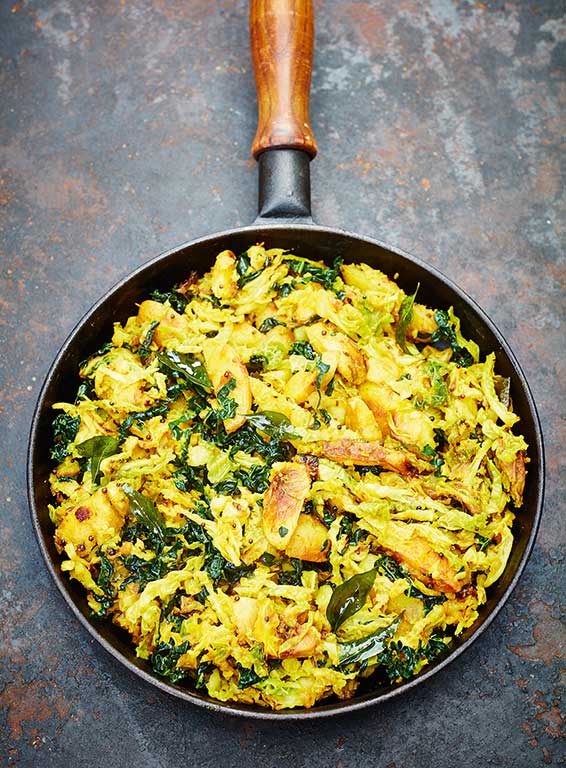
Some vegetables feel like they’re part of your very being, woven into the fabric of family meals and memories. For me, and for so many in regions like Gujarat, those vegetables are cabbage and potatoes. They are humble, yes, but when treated with care, they transform into the ultimate comfort food. There is a simple magic in a plate of soft, buttery cabbage tangled with sweet caramelized onions and perfectly crisp-edged potatoes. This recipe is my homage to that magic—a soulful, everyday sabzi (or ‘shaak’ as we call it) that pairs beautifully with a sharp pickle, cooling yogurt, and warm, fluffy chapatis. It’s a taste of home, no matter where you are.
Ingredients
• 1 teaspoon / 5 ml coriander seeds
• 2 teaspoons / 10 ml cumin seeds
• 3 tablespoons / 45 ml canola oil
• 15 fresh curry leaves
• 1 teaspoon / 5 ml black mustard seeds
• 1 large yellow onion, halved and thinly sliced
• 1¾ pounds / 800g baby potatoes, quartered
• ½ pound / 225g savoy cabbage, finely shredded
• ½ pound / 225g black kale or cavalo nero, finely shredded
• 1¼ teaspoons / 6g salt, or to taste
• ½ teaspoon / 2.5 ml ground red chile
• ¾ teaspoon / 3.5 ml ground turmeric
Instructions
1. Lightly crush the coriander and cumin seeds using a mortar and pestle to release their aroma.
2. Place a large lidded frying pan over medium heat and add the oil. Once hot, add the curry leaves and mustard seeds. Wait for them to crackle and pop.
3. Add the thinly sliced onion to the pan. Cook for about 10 minutes, stirring occasionally, until the onions are soft, golden, and beautifully caramelized.
4. Stir in the crushed coriander and cumin, followed by the quartered potatoes. Cook for 10 minutes, turning the potatoes every few minutes until they develop a crispy, golden-brown exterior.
5. Add a couple of tablespoons of water to the pan, cover with the lid, and cook for another 5 minutes. The steam will help cook the potatoes until they are tender and offer no resistance to the tip of a knife.
6. Add the shredded cabbage and black kale to the pan along with another couple of tablespoons of water. Stir-fry for 3 minutes to combine everything.
7. Sprinkle in the salt, ground red chile, and turmeric. Mix well to ensure everything is evenly coated. Cover the pan with the lid, reduce the heat to low, and cook for a final 4 minutes, or until the cabbage and kale have perfectly wilted but still retain some texture.
8. Serve immediately with a fiery pickle, hot chapatis, and a dollop of yogurt, or as a side to dal and rice.
Nutritional Information
• (per serving)
• Calories: 285 kcal
• Protein: 6g
• Carbohydrates: 34g
• Fat: 14g
• Fiber: 8g
Pro Tips
• For extra crispy potatoes, ensure they are completely dry before adding them to the pan and avoid overcrowding them; cook in batches if necessary.
• Don’t overcook the cabbage and kale; you want them to be tender-crisp and vibrant, not mushy. They will continue to cook in the residual heat.
• Toasting the whole coriander and cumin seeds in a dry pan for a minute before grinding them deeply enhances their aromatic flavor.
• If you can’t find fresh curry leaves, you can omit them. While they add a unique, fragrant note that is hard to replicate, the dish will still be delicious.
FAQ
Q: Can I make this sabzi with different vegetables
A: Absolutely. While cabbage and potatoes are classic, you can easily substitute or add other vegetables. Try adding green peas, carrots, or bell peppers along with the potatoes for more color and nutrients. Adjust cooking times as needed.
Q: How can I add more protein to this vegetarian dish
A: To boost the protein, consider adding a cup of cooked chickpeas or lentils when you add the spices. Another great option is to stir in pan-fried paneer or firm tofu cubes during the last few minutes of cooking.
Q: How should I store and reheat leftovers
A: Store any leftover sabzi in an airtight container in the refrigerator for up to 4 days. For best results, reheat it in a pan over medium-low heat with a splash of water to prevent it from drying out. You can also microwave it.
Q: Is this cabbage and potato recipe vegan
A: Yes, the recipe for the sabzi itself is 100% vegan. It uses oil and plant-based ingredients. To ensure the entire meal is vegan, simply serve it with a plant-based yogurt instead of the traditional dairy yogurt mentioned in the serving suggestions.