Ingredients
- 2.0 cups (16.0 oz / 455g) plain yogurt, OR 1.6 cups (13.3 oz / 375g) yogurt and 0.3 cups (2.6 oz / 80g) sour cream
- 0.75 tsp (0.1 oz / 3.5g) salt
- 0.125 tsp (0.01 oz / 0.5g) white pepper
- 1.0 lb (16.0 oz / 455g) firm ripe tomatoes or cherry tomatoes (about 3-4 medium-sized), stems removed
- 1.0 tbsp (0.5 oz / 15g) vegetable or peanut oil
- 1.0 tsp (0.1 oz / 5g) black mustard seeds
- 1.0 hot green chili, seeded and finely minced (adjust to taste)
- 1.0 to 2.0 sprigs fresh coriander, basil or dill for garnishing
Step-by-Step Instructions
- Combine the 2.0 cups (16.0 oz / 455g) plain yogurt (or the yogurt and sour cream blend), 0.75 tsp (0.1 oz / 3.5g) salt, and 0.125 tsp (0.01 oz / 0.5g) white pepper in a large mixing bowl, whisking vigorously with a fork until the base for your Tamatar Raita is completely smooth and creamy.
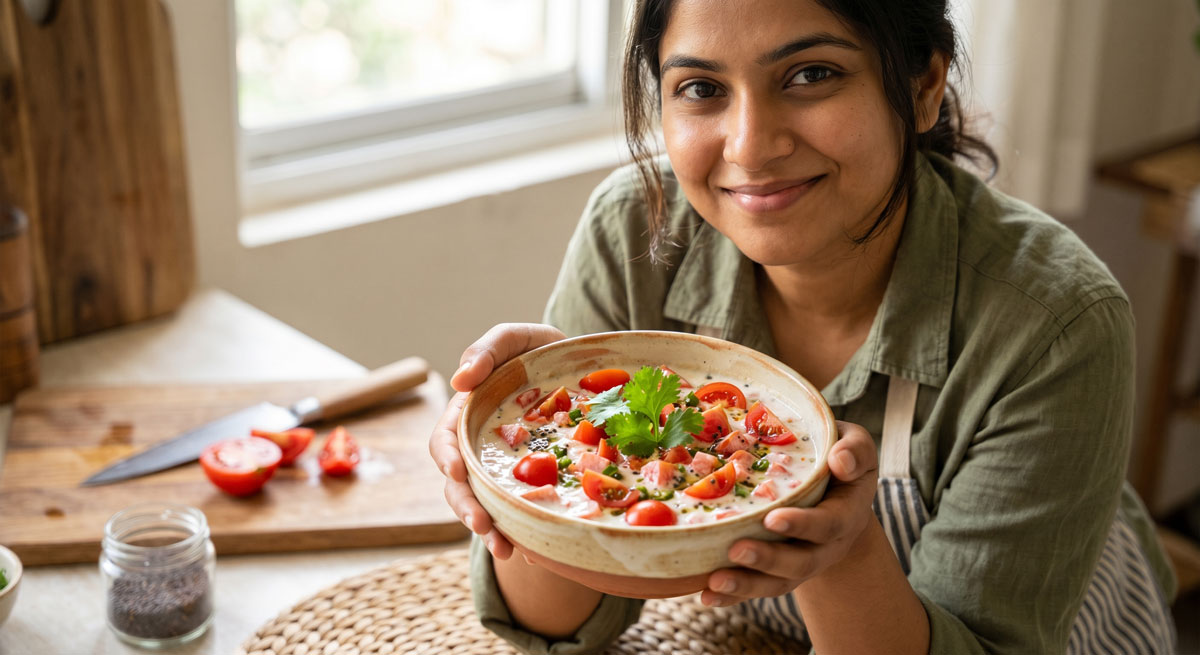
- Wash and dry the 1.0 lb (16.0 oz / 455g) tomatoes, cut them into 0.5-inch cubes (or quarter them if using cherry tomatoes), and gently drop them into the smooth yogurt mixture without stirring, leaving it ready to be covered and refrigerated for several hours or assembled immediately at room temperature.
- Heat the 1.0 tbsp (0.5 oz / 15g) vegetable or peanut oil in a small pan over moderate heat until it is hot but not smoking, then carefully add the 1.0 tsp (0.1 oz / 5g) black mustard seeds and the minced green chili, frying them until the seeds crackle and turn a grayish color.
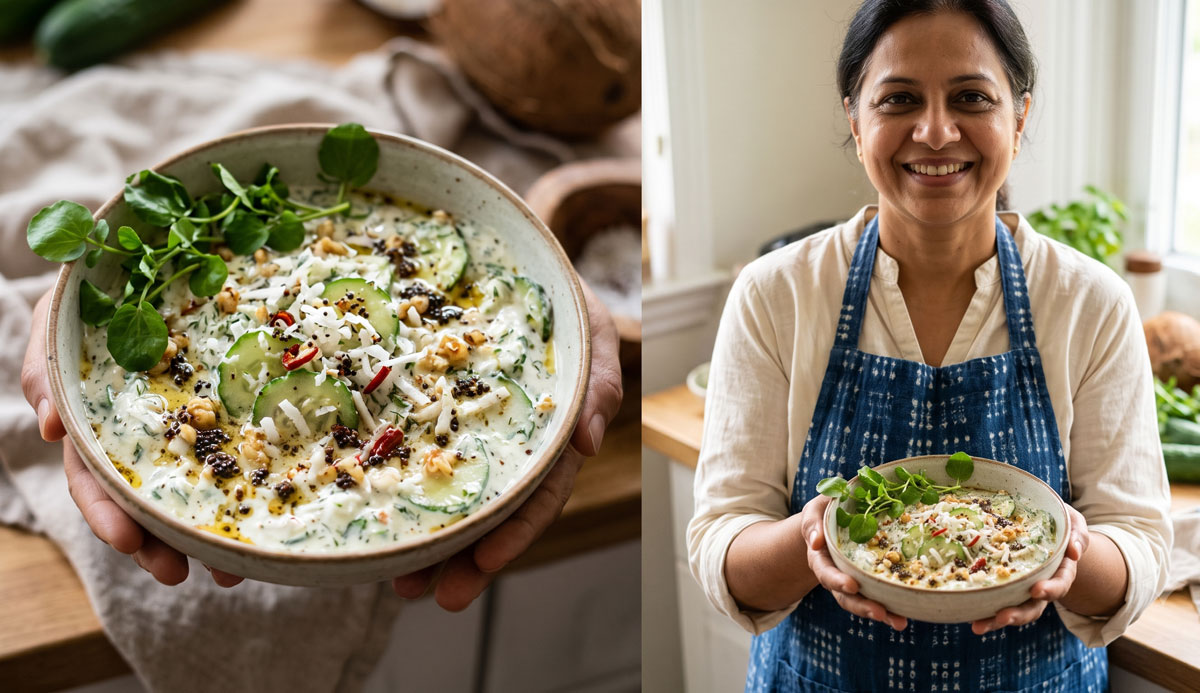
- Pour the hot spiced oil directly into the bowl to temper the Tamatar Raita, gently blend everything together to distribute the flavors, and serve immediately with a beautiful garnish of fresh coriander, basil, or dill sprigs.
Nutritional Information
Approximate nutritional values per serving (based on 5 servings using whole milk yogurt):
- Calories: 100 kcal
- Carbohydrates: 8.5g
- Protein: 4.2g
- Fat: 6.2g
Pro Tips
- De-seed Your Tomatoes: To prevent your Tamatar Raita from becoming too watery, slice the tomatoes in half and gently squeeze out the excess seeds and juice before cubing them. This keeps the yogurt base thick and creamy.
- Nail the Tempering (Tadka): The secret to authentic Indian flavor is in the tempering process. Make sure your oil is hot enough so the mustard seeds crackle instantly, but remove the pan from the heat immediately after they turn gray to prevent them from burning and tasting bitter.
- Temperature Contrast: For the most refreshing experience, chill your whisked yogurt and tomatoes in the refrigerator for at least an hour. Pouring the sizzling hot tempered oil over the ice-cold yogurt right before serving creates an incredible flavor and temperature contrast!
- Whisk for Silkiness: Don't skip whisking the yogurt! Vigorously whisking the plain yogurt (or yogurt and sour cream blend) before adding the tomatoes breaks down any lumps and creates a luxurious, velvety mouthfeel.
Frequently Asked Questions (FAQ)
Can I make Tamatar Raita ahead of time? Yes, you can prepare the base ahead of time. Whisk the yogurt and chop the tomatoes, but keep them in separate airtight containers in the fridge. To maintain the best texture and prevent the yogurt from becoming watery, mix the tomatoes into the yogurt and add the hot oil tempering just before you are ready to serve.
What is the best type of yogurt to use for Tamatar Raita? For the creamiest and most authentic result, use full-fat plain whole milk yogurt (also known as Dahi). If you prefer a thicker consistency, you can use Greek yogurt, but you may need to whisk in a tablespoon or two of water or milk to reach the classic raita consistency.
Why did my Tamatar Raita turn watery, and how can I fix it? Tomatoes hold a lot of water, which naturally releases into the yogurt over time, especially after salt is added. To prevent a watery raita, use firm-fleshed tomatoes, remove the watery seeds before dicing, and only assemble the dish immediately before serving.
What dishes pair well with Tamatar Raita? This cooling Indian tomato yogurt salad is incredibly versatile. It is the perfect accompaniment to spicy dishes like biryani, rich curries, or Dal. Traditionally, it is also highly recommended alongside vegetarian staples like split pea khichari, potato bhaji, and warm flatbreads like roti or naan.