Ingredients
- Chickpea flour: 4 tbsp (0.88 oz / 25g), sifted
- Water or whey: 1.5 cups (12.7 oz / 360g)
- Plain yogurt: 2.5 cups (21.1 oz / 600g), whisked until completely smooth
- Turmeric: 0.5 tsp (0.05 oz / 1.5g)
- Ground coriander: 2 tsp (0.1 oz / 3g)
- Paprika: 0.25 tsp (0.02 oz / 0.5g)
- Garam masala: 0.5 tsp (0.04 oz / 1g)
- Salt: 1 tsp (0.2 oz / 6g)
- Honey (optional): 1 tsp (0.25 oz / 7g)
- Paparhs/Pappadams: 3 large or 4 small plain wafers (1.5 oz / 42g), cut into 0.5-inch wide ribbons or 1-inch squares
- Dried red chili: 0.5 to 1 whole dried red chili (0.01 oz / 0.2g)
- Whole cloves: 4 cloves (0.01 oz / 0.2g)
- Cinnamon stick: 1 piece, about 1-inch (0.05 oz / 1.5g)
- Black mustard seeds: 0.5 tsp (0.05 oz / 1.5g)
- Ghee or unsalted butter: 2 tbsp (1.0 oz / 28g)
- Fresh coriander or parsley: 2 tbsp (0.1 oz / 3g), chopped
Step-by-Step Instructions
- Place the 4 tbsp (0.88 oz / 25g) of sifted chickpea flour into a 1-quart bowl. Slowly pour in 4 tbsp (2.0 oz / 60g) of the measured water or whey, whisking vigorously to form a smooth, lump-free paste. Gradually pour in the remaining water and the 2.5 cups (21.1 oz / 600g) of whisked plain yogurt, stirring continuously to blend the liquids. Stir in the 0.5 tsp (0.05 oz / 1.5g) turmeric, 2 tsp (0.1 oz / 3g) ground coriander, 0.25 tsp (0.02 oz / 0.5g) paprika, 0.5 tsp (0.04 oz / 1g) garam masala, 1 tsp (0.2 oz / 6g) salt, and the 1 tsp (0.25 oz / 7g) honey if using.
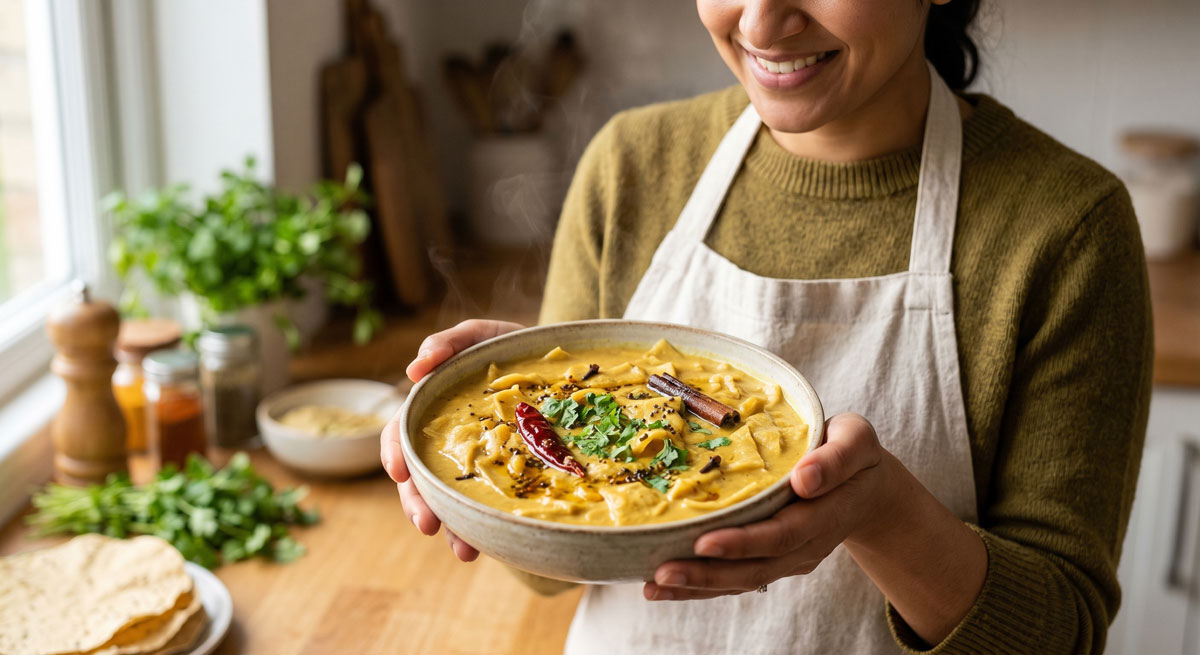
- Transfer the blended yogurt mixture into a heavy-bottomed 2-quart saucepan. Place the pan over moderate heat and bring to a gentle boil, stirring constantly so the yogurt does not split. Once boiling, reduce the heat to low and allow the Paparh Karhi to simmer for 12 minutes, giving it a stir every few minutes. Remove the pan from the heat, scatter half of the cut paparh ribbons (approx 0.75 oz / 21g) into the sauce, and stir gently until they begin to soften. Fold in the remaining paparh and cover the saucepan with a lid.
- Heat a small frying pan over moderate heat for 1 minute to prepare the tempering. Toss in the 0.5 to 1 dried red chili, 4 cloves, 1-inch cinnamon stick, and 0.5 tsp (0.05 oz / 1.5g) black mustard seeds. Dry roast these spices by shaking the pan for about 0.5 minutes until fragrant. Add the 2 tbsp (1.0 oz / 28g) of ghee or butter to the pan, roasting until the butter froths and the mustard seeds begin to crackle and pop. Immediately pour this hot, spiced ghee over the Paparh Karhi and quickly cover the pan with the lid to trap the aromas. Let it sit for 2 to 3 minutes, then gently stir in the 2 tbsp (0.1 oz / 3g) of fresh chopped coriander before serving.
Nutritional Information
Please note that these are approximate values per serving (based on 5 servings) and can vary slightly depending on the exact brand of ingredients and whether you use full-fat or low-fat yogurt.
- Calories: 175 kcal
- Carbohydrates: 15 g
- Protein: 7 g
- Fat: 10 g
Chef’s Pro Tips for the Perfect Paparh Karhi
Achieving the perfect texture and flavor balance in your Paparh Karhi is easy if you follow a few essential kitchen secrets:
- Whisk the Yogurt Thoroughly: To prevent your Paparh Karhi from splitting or looking grainy, ensure your 2.5 cups (21.1 oz / 600g) of yogurt is whisked until completely smooth before you add it to the chickpea flour. Using room-temperature yogurt also drastically reduces the risk of curdling when it hits the heat.
- Control Your Heat: Always cook your Paparh Karhi on moderate to low heat. Rapid boiling can cause the yogurt base to separate. Continuous stirring until it reaches its first gentle boil is crucial for a silky, luxurious sauce.
- Timing the Papad: The paparh ribbons cook extremely fast. Do not add them while the karhi is still actively boiling on the stove, or they will dissolve into mush. Add them off the heat, letting the residual warmth soften them perfectly while retaining a slight bite.
- Mastering the Tadka (Tempering): The final step of adding spiced ghee (tadka) is what brings this dish to life. Ensure your ghee or butter is hot enough that the 0.5 tsp (0.05 oz / 1.5g) of mustard seeds crackle instantly, but be careful not to burn the dried chili and spices, as burnt spices will impart a bitter flavor to the finished dish.
Frequently Asked Questions About Paparh Karhi
What is the best type of papad to use for Paparh Karhi? For the most balanced flavor, plain South Indian pappadams or mild cumin-flavored North Indian paparhs work best. Heavily spiced wafers, especially those loaded with garlic or excessive chilies, can easily overpower the delicate, mellow yogurt base of your Paparh Karhi.
Why did my Paparh Karhi curdle and how can I prevent it? Curdling happens when cold yogurt hits high heat too quickly, or if there isn't enough chickpea flour to stabilize it. To prevent this in your Paparh Karhi, use room-temperature yogurt, whisk the mixture vigorously until completely lump-free, and stir continuously over moderate heat until it reaches a gentle simmer.
Can I store and reheat leftover Paparh Karhi? While you can refrigerate the yogurt base for up to 3 days, it is highly recommended to consume Paparh Karhi immediately after making it. As it sits, the paparh (lentil wafers) will continue to absorb liquid and eventually dissolve, changing the texture from satisfyingly chewy to overly mushy. If you want to prep ahead, make the yogurt sauce and temper it, but wait to add the papad pieces until right before serving.
Can I make a vegan version of Paparh Karhi? Yes, you can easily adapt this Paparh Karhi recipe for a vegan diet! Substitute the plain dairy yogurt with a neutral-tasting, unsweetened plain plant-based yogurt (cashew or almond yogurt works beautifully) and swap the ghee for coconut oil or a vegan butter alternative when roasting your whole spices.