Essential Ingredients
To achieve the correct texture, precise measurements are critical.
- Fresh Khoa (Milk Fudge): 1.5 cups (12.0 oz / 340 g) — Note: This will yield approximately 1.25 cups (10.0 oz / 285 g) of finished danedhar.
- Ghee or Neutral Oil (for greasing): 0.1 tbsp (0.05 oz / 1.5 g) or 0.1 tsp (0.01 oz / 0.5 g)
Step-by-Step Instructions
Preparation time: 30 minutes Cooking time: 4–5 hours
- Preheat your oven to 275°F (135°C) and prepare a wire cake rack by lightly greasing it with 0.1 tbsp (0.05 oz / 1.5 g) of ghee or 0.1 tsp (0.01 oz / 0.5 g) of oil to prevent sticking.
- Take 1.5 cups (12.0 oz / 340 g) of fresh khoa and press the milk fudge firmly to shape it into a flat cake about 6 inches (15 cm) long and 0.5 inches (1.5 cm) thick.
- Place the shaped milk fudge carefully onto the prepared cake rack and bake it slowly in the preheated oven for 4.0 to 5.0 hours, checking periodically until it completely dries and hardens.
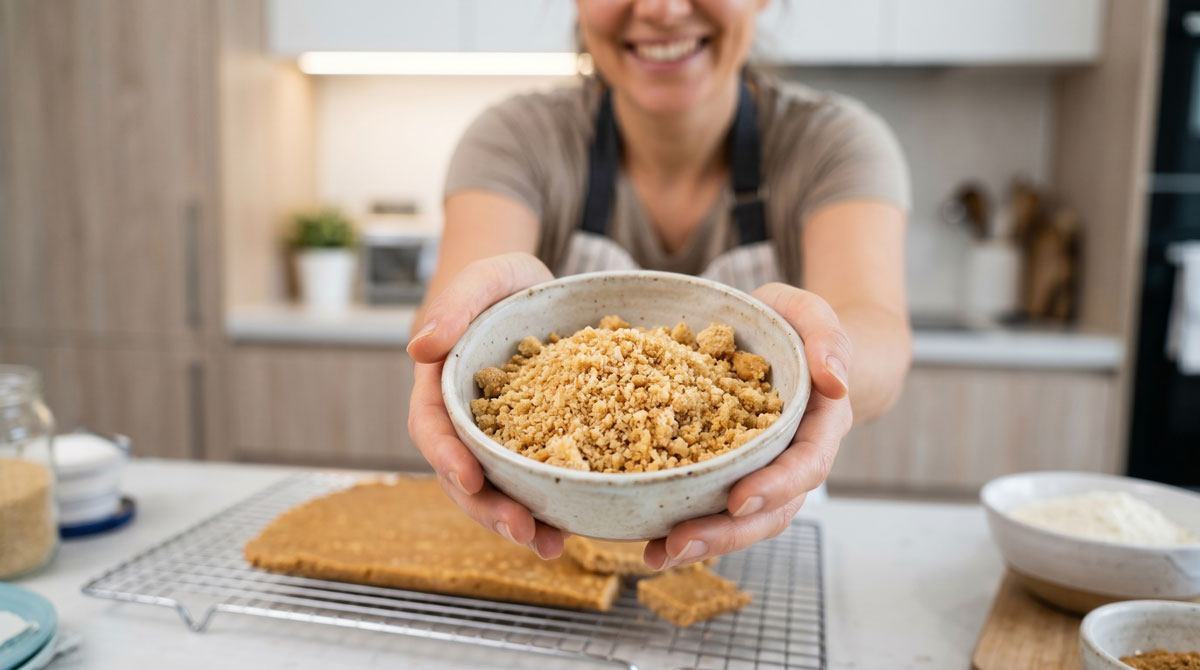
- Remove the fully baked danedhar from the oven and allow it to cool completely to room temperature directly on the wire rack.
- Grate or shred the hardened cake using a box grater to yield about 1.25 cups (10.0 oz / 285 g) of fine danedhar, ready to be sprinkled over your favorite rice pilaf or sweet desserts.
- Transfer any unused shredded danedhar into an airtight container and store it safely in the refrigerator for up to 7 days.
Approximate Nutritional Information
Note: The following values are approximate and based on a standard 1-ounce (28g) serving of the finished grated recipe.
- Serving Size: 1 ounce (28g)
- Calories: 110 kcal
- Total Fat: 6g
- Total Carbohydrates: 9g
- Protein: 5g
Chef's Pro Tips
Achieving the ideal texture for your grated milk fudge requires a bit of culinary finesse. Here are my top secrets for getting the best results every time:
- Monitor the Oven Temperature: Danedhar requires a gentle, slow bake. Do not be tempted to turn the heat up past 275°F (135°C) to speed up the process, or the milk solids will scorch and turn bitter rather than perfectly dehydrating.
- Maintain Uniform Thickness: When shaping your khoa, ensure the flat cake is exactly 0.5 inches (1.5 cm) thick from edge to edge. Uneven spots will lead to inconsistent drying, leaving you with a cake that is burnt on the edges and soft in the middle.
- Cool Completely Before Grating: This is the most crucial step! Attempting to grate the baked milk fudge while it is even slightly warm will result in a sticky, clumpy paste. Let it cool completely to room temperature on the wire rack so it yields that beautiful, distinct crumb.
- Maximize Shelf Life: While your freshly grated danedhar will keep well in the refrigerator for up to 7 days, you can easily freeze it. Place it in a tightly sealed freezer bag, push out all the air, and freeze for up to 3 months to always have some on hand for garnishing.
Frequently Asked Questions (FAQ)
What is the difference between standard khoa and danedhar? Khoa is a soft, moist milk fudge created by simmering whole milk until the water content evaporates. Danedhar is simply the dehydrated evolution of that ingredient—khoa that has been shaped, slow-baked until completely hard, and then grated into coarse, granular crumbs.
Can I use store-bought khoa to prepare danedhar? Yes, you can absolutely use commercial block khoa to save time. Just ensure you are purchasing plain, unsweetened khoa (mawa) rather than pre-sweetened Indian sweets like peda or burfi, which will melt and burn in the oven due to the sugar content.
Is danedhar strictly used for Indian desserts? Not at all! Its rich, toasted, slightly caramelized milk flavor makes it an incredibly versatile ingredient. While it is fantastic rolled onto sweet Khoa-Flavored Cheese Balls, it acts beautifully as a savory crust for fried cubed potatoes or sprinkled as a garnish over a spiced rice pilaf.
Why is my baked danedhar shattering instead of grating smoothly? If your milk fudge cake shatters into dust or crumbles completely before you can grate it, it was likely baked a little too long, or the initial khoa was too dry and lacked enough fat. Don't throw it away—you can still use those toasted crumbles as a rustic, delicious topping!