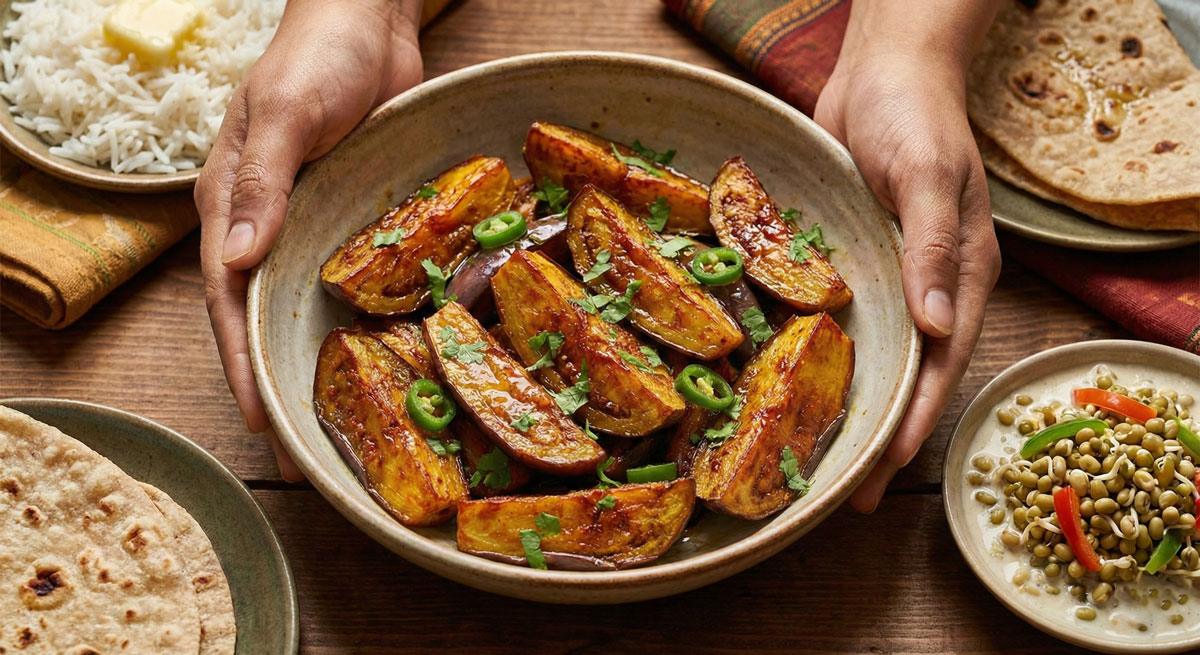
If you’re looking for a side dish that steals the show, you have to try these Vegetarian Butter Soft Eggplant Wedges. Also known traditionally as Bhona Baigan Bhaji, this recipe is a total classic that dates all the way back to 1967 San Francisco. There’s something magical about how the simple turmeric and salt marinade transforms the eggplant into something incredibly buttery and tender. Whether you call it Eggplant Pukki or just the best fried eggplant you’ve ever had, trust me—you’ll want to serve these piping hot right out of the pan!
This classic Bengali-style recipe, known as Bhaji or Eggplant Pukki, was shared by Srila Prabhupada during his 1967 cooking classes in San Francisco. The key to this dish is serving it piping hot immediately after frying. For the most authentic flavor, fresh ghee is recommended, though avocado oil is an excellent second choice due to its high smoke point and health benefits.
Prep Time: 5 minutes Salting Time: 15 to 30 minutes Cook Time: 15 minutes Servings: 6 to 8
Ingredients
-
1.5 tbsp Turmeric powder
-
1.5 tbsp Salt
-
3 tbsp Water
-
1.25 lbs (20 oz or 570 g) Baby white or purple eggplants (approx. 8 to 10 count) OR 1 medium-sized eggplant
-
Ghee, Avocado oil, or Olive oil (sufficient quantity for shallow frying)
Instructions
- Prepare the Marinade: In a large mixing bowl, combine 1.5 tbsp of turmeric, 1.5 tbsp of salt, and 3 tbsp of water to create a paste.
- Cut the Vegetables: If using baby eggplants, cut them in half lengthwise. If using a large eggplant, cut it into wedges approximately 2.5 inches long and 1.5 inches wide.
- Marinate: Toss the eggplant pieces thoroughly in the turmeric-salt mixture until well coated. Set them aside to rest for 15 to 30 minutes. This allows the salt to draw out excess moisture.
- Drain and Dry: Transfer the eggplant to a colander lined with paper towels to drain the watery turmeric liquid. Pat the pieces dry to ensure they fry properly rather than steam.
- Heat the Oil: In a large heavy-bottomed frying pan, pour in enough ghee or oil to reach a depth of 0.5 inches. Place over moderately high heat.
- Fry: When the oil is hot and nearly reaching its smoking point, carefully place a single layer of eggplant pieces into the pan. Do not overcrowd.
- Cook Until Tender: Fry the wedges, turning them on all sides, until they turn a rich reddish-brown color and are fork-tender. Note that the skin side will cook faster than the cut sides. Avoid over-frying to prevent the skin from becoming tough.
- Serve: Remove the pieces with a slotted spoon and drain on fresh paper towels. Serve immediately while piping hot.
Serving Suggestions
This dish pairs perfectly with buttered rice, cracked wheat, buckwheat, or a mixed grain pilaf. It complements a meal featuring sprouted urad bean dal, panir cheese with summer squash, and fresh flatbreads.
Nutritional Information
Note: The calorie and fat content can vary significantly depending on how much oil or ghee the eggplant absorbs during frying.
Per Serving (1/8th of the recipe):
-
Calories: 145 kcal
-
Total Fat: 12g
-
Saturated Fat: 7g (assuming Ghee; lower if using Avocado/Olive oil)
-
Total Carbohydrates: 6g
-
Dietary Fiber: 3g
-
Net Carbohydrates: 3g
-
Protein: 1g
-
Sodium: 800mg
-
Dietary Fit: Keto-friendly, Gluten-Free, Vegetarian, Paleo (if using Ghee or Avocado oil).
💡 Pro Tips for Perfect Eggplant Wedges
-
Don’t Skip the Salting: This is the most crucial step! Salting the eggplant draws out moisture and collapses the air pockets inside the vegetable. This prevents the eggplant from acting like a sponge and soaking up too much oil, ensuring a creamy, not greasy, texture.
-
Pat Them Bone Dry: After rinsing or draining the turmeric marinade, use extra paper towels to get the wedges as dry as possible. Water causes the oil to splatter and lowers the frying temperature, which leads to soggy eggplant.
-
Watch Your Oil Temperature: The oil needs to be shimmering and hot (just before smoking) before you drop the wedges in. If the oil is too cool, the eggplant will absorb it instantly. If it’s too hot, the outside will burn before the inside turns “butter soft.”
-
Single Layer Only: Resist the urge to crowd the pan. Frying in a single layer ensures the heat distributes evenly and the eggplant actually fries rather than steams in its own moisture.
-
Skin-Side Safety: The skin cooks much faster than the white flesh. Watch the skin side carefully; if you over-fry it, the skin can become tough and chewy rather than tender.
-
The “Piping Hot” Rule: As mentioned in the original notes, this dish loses its magic if it sits too long. Serve it immediately from the pan for that melt-in-your-mouth experience.
-
Oil Choice Matters: For the most authentic, nutty flavor, Ghee is unbeatable. However, if you want a lighter option that still handles high heat beautifully, Avocado Oil is your best bet.
Frequently Asked Questions
Can I make this recipe Vegan? Yes! While the traditional recipe calls for Ghee (clarified butter) to get that authentic nutty flavor, you can easily substitute it with Avocado oil or high-quality Olive oil to keep it 100% plant-based and Vegan.
Why do I need to soak the eggplant in turmeric and salt? This step serves two purposes. First, the salt draws out excess moisture, which prevents the eggplant from absorbing too much oil during frying. Second, the turmeric acts as an antiseptic and provides a warm, earthy base flavor and beautiful golden color.
How do I stop my eggplant from getting soggy and greasy? The secret is oil temperature. If your oil is not hot enough, the eggplant will act like a sponge. Make sure your oil is shimmering (around 350°F to 375°F) before adding the wedges. Also, ensure you have patted the eggplant slices completely dry after the salting step.
Can I make Bhona Baigan Bhaji in an Air Fryer? While deep or shallow frying is traditional, you can adapt this for the Air Fryer. Coat the marinated and dried wedges generously with oil and air fry at 400°F (200°C) for 10-12 minutes, shaking the basket halfway through. The texture will be slightly drier than the fried version but still delicious.
Is this recipe Keto-friendly? Absolutely. Eggplant is a low-carb vegetable, and because this recipe relies on healthy fats like Ghee or Avocado oil, it fits perfectly into a Keto or Low-Carb diet. It is also naturally Gluten-Free and Paleo-friendly.
Can I store leftovers and reheat them later? This specific dish, known as Eggplant Pukki, is really meant to be eaten immediately while piping hot. If you do have leftovers, the texture will soften significantly. The best way to reheat them is in a toaster oven or air fryer for a few minutes to try and crisp the outside skin again; microwaving is not recommended as it will make them mushy.
Do I need to peel the eggplant? No, do not peel the eggplant. The skin holds the soft flesh together. Without the skin, the wedges would likely fall apart and turn into a mash during the frying process. Just make sure to wash the skin thoroughly before cutting.
I hope you enjoy making this slice of culinary history as much as I do. These Vegetarian Butter Soft Eggplant Wedges truly live up to their name—meltingly tender on the inside, perfectly spiced on the outside, and satisfying enough to be a main event. It’s amazing how a simple turmeric marinade and the right frying technique can elevate a humble vegetable into something so luxurious. Whether you’re pairing it with a full Indian feast or just need a quick, Keto-friendly side dish, this recipe is a keeper. Give it a try tonight, and don’t forget to leave a comment below to let me know how it turned out!