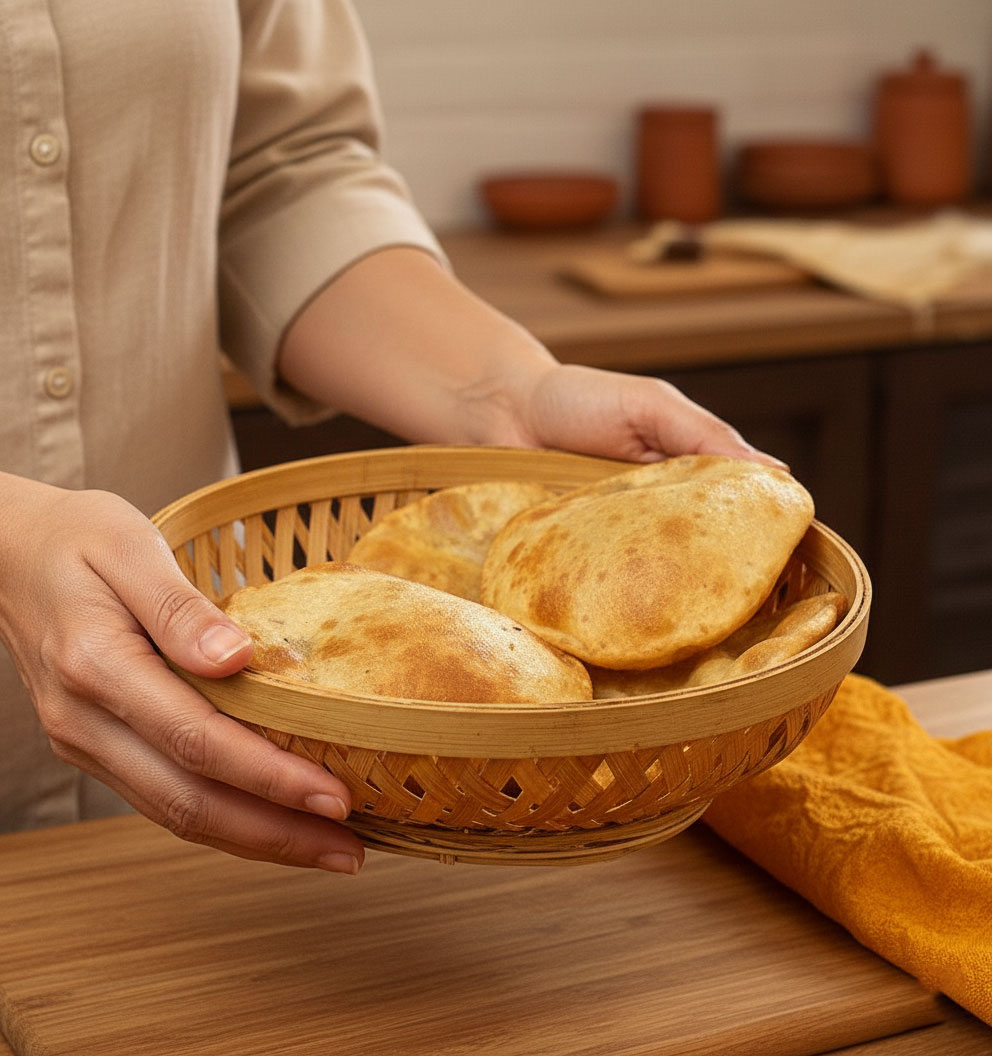

There’s nothing quite like the aroma of freshly fried Methi Poori filling the kitchen! These incredible, puffed-up breads are a festival on a plate—crisp on the outside, yet soft and layered on the inside. Infused with the earthy flavor of fenugreek (methi) and a warm blend of Indian spices, each bite is a pure delight. While traditional with methi, this recipe is wonderfully versatile; fresh spinach or a mix of your favorite herbs work just as beautifully. Serve them hot with curry, pickles, or a simple bowl of yogurt, and watch them disappear!
Ingredients
• 📜
• Yields: 16 pooris / Prep time: 25 minutes / Resting time: 30 minutes – 3 hours / Cook time: 30 minutes
• For the Greens Purée
• Fresh Greens: 1 cup / 50g lightly packed fresh fenugreek leaves, spinach, or finely chopped mixed herbs
• Water for cooking greens: 2 tbsp / 30 ml, if using fenugreek or spinach
• Green Chilies: 1-2, seeded
• Plain Yogurt: 2 tbsp / 30 ml, room temperature
• Melted Ghee or Vegetable Oil: 2 tbsp / 30 ml
• For the Dough
• Flour: 2.25 cups / 280g total, using either 100% chapati flour (atta) OR a mix of 1.25 cups whole wheat pastry flour and 1 cup all-purpose flour
• Lukewarm Water: 0.33 cup / 80 ml, or as needed
• Ground Coriander: 1 tbsp / 15 ml
• Garam Masala: 0.5 tbsp / 7.5 ml
• Turmeric Powder: 0.25 tsp / 1.25 ml
• Salt: 1 tsp / 5 ml
• Frying Oil: Ghee or vegetable oil, for deep frying
Instructions
1. 🧑🍳
2. Prepare the Greens Purée: If using fenugreek or spinach, cook the washed greens with 2 tbsp of water in a covered saucepan for 2-3 minutes until just softened. Drain well and cool. If using soft herbs, skip the cooking. Add the greens, green chilies, yogurt, and 2 tbsp of melted ghee to a blender and blend until completely smooth.
3. Make the Dough: In a large bowl, whisk together the flour(s), ground coriander, garam masala, turmeric, and salt. Pour in the green purée and begin to mix, slowly adding the lukewarm water until a firm, non-sticky dough forms. You may not need all the water.
4. Knead and Rest: Turn the dough onto a clean surface and knead for 8-10 minutes until it is silky smooth and pliable. Form it into a ball, lightly grease the surface with oil, and place it in a bowl. Cover with a damp cloth and let it rest at room temperature for at least 30 minutes or up to 3 hours.
5. Shape the Pooris: Briefly knead the rested dough and divide it into 16 equal pieces. Roll each piece into a smooth ball, keeping them covered with a damp cloth. Lightly grease your rolling surface and pin with oil (do not use flour). Roll one ball into a 5-inch / 12.5 cm circle. Repeat with the remaining balls, placing the rolled discs on a plate without overlapping.
6. Heat the Oil: Pour oil to a depth of at least 3 inches / 7.5 cm in a wok or deep pan. Heat over moderately-high heat to 365°F / 185°C. To test, a small piece of dough should sizzle and rise to the surface immediately.
7. Fry the Pooris: Carefully slide one poori into the hot oil. As it floats to the top, use the back of a slotted spoon to gently press it down, encouraging it to puff up like a balloon. Fry for 20-30 seconds until light golden.
8. Flip and Drain: Flip the poori and fry the other side for another 20-30 seconds. Remove with the slotted spoon, allowing excess oil to drip off, and transfer to a paper-towel-lined tray. Repeat with the remaining pooris, ensuring the oil stays hot.
9. Serve Immediately: Pooris are best enjoyed hot and puffed. Serve right away with your favorite curry or chutney.
Nutritional Information
• 🥗 Nutritional Info
• Approximate values per poori
• Calories: 120 kcal
• Carbohydrates: 15g
• Protein: 2g
• Fat: 6g
• Sodium: 150mg
Pro Tips
• 💡
• The dough should be firm and stiff, not soft like chapati dough. This prevents the pooris from absorbing too much oil.
• Always use a drop of oil, not dry flour, for rolling out the pooris. Flour will burn in the hot oil, spoiling the taste and color.
• To get that perfect puff, gently press the poori down into the oil with the back of a spoon as it starts to rise to the surface.
• Maintain a consistent oil temperature between 355-375°F / 180-190°C. If the oil is too cool, the pooris will be oily; if it’s too hot, they will burn before puffing.
FAQ
Q: Can I make this methi poori recipe vegan
A: Yes, you can easily make this recipe vegan. Simply substitute the plain yogurt with a plant-based yogurt like coconut or soy yogurt, and use vegetable oil instead of ghee for both the dough and for frying.
Q: How do I store leftover methi poori
A: Methi pooris are best enjoyed fresh and hot to appreciate their puffed texture. However, you can store leftovers in an airtight container at room temperature for up to 24 hours. They will lose their crispness but will still be delicious. You can reheat them briefly on a tawa (griddle) or in an oven.
Q: What vegetarian dishes pair well with methi poori
A: Methi poori is incredibly versatile. For a complete vegetarian meal, serve it with classic Indian dishes like Aloo Matar (potato and pea curry), Chana Masala (chickpea curry), or a simple dal. It also pairs wonderfully with plain yogurt, raita, or your favorite Indian pickle (achar).
Q: Can I use dried fenugreek (kasuri methi) instead of fresh
A: While fresh methi provides the best flavor and color, you can use dried fenugreek (kasuri methi) in a pinch. Soak 3-4 tablespoons of kasuri methi in a little warm water for 15 minutes, then drain and add it directly to the flour mixture. You will not need to make a purée in this case, so you can add the yogurt, chilies, and oil directly to the dough.