If you’ve ever struggled with chapatis that turn out dry or stiff, you’ve come to the right place. This recipe is a total game-changer! The secret ingredient is fresh, homemade chenna (a soft, unpressed cheese similar to paneer or ricotta) that you make right in the pot. This enriches the dough, creating a pillowy-soft, pliable texture that results in the most tender, melt-in-your-mouth chapatis you’ve ever had. They are wonderfully wholesome and the perfect companion to your favorite curries, soups, and dals. Let’s get cooking!
Ingredients
• 0.75 cup / 180 ml whole milk
• 1 tsp / 5 ml fresh lemon juice
• 2.25 cups / 295 g chapati flour (atta), or a mix of 1.25 cups / 160 g whole wheat flour and 1 cup / 120 g all-purpose flour
• 0.5 tsp / 2 ml salt (optional)
• Extra chapati or whole wheat flour for dusting
• Melted butter or ghee for brushing (optional)
Instructions
1. Make the Chenna: Pour the milk into a saucepan and bring it to a full, rolling boil. Remove from the heat and immediately stir in the lemon juice. Within a minute, the milk will separate into white curds (chenna) and a yellowish liquid (whey). If it doesn’t, return it to very low heat for a moment until it does.
2. Form the Dough: Without draining, add half of the flour directly into the hot pot with the curds and whey. Use a sturdy spoon to mix vigorously until a thick, smooth paste forms. Let it cool for a few minutes until it’s comfortable to handle.
3. Knead to Perfection: Transfer the warm mixture to a clean work surface. Add the salt (if using) and gradually knead in the remaining flour. Knead for about 8 minutes, until the dough is medium-stiff, pliable, and silky smooth. *For a food processor, let the chenna cool for 3-4 minutes, pour it into the processor bowl, pulse to break up the curds, then add the flour and salt with the machine running until a ball forms.
4. Rest the Dough: Shape the dough into a ball, place it on your work surface, and cover it with an inverted bowl. Let it rest for at least 30 minutes or up to 3 hours. A longer rest yields a softer chapati. The dough can also be refrigerated for up to 24 hours; just bring it to room temperature before using.
5. Shape the Chapatis: Briefly knead the rested dough and divide it into 12 equal portions. Roll each into a smooth ball and keep them covered with a damp cloth. Working with one ball at a time, flatten it into a 2-inch / 5 cm disc, dip it in dusting flour, and roll it out into a thin, 6-inch / 15 cm circle.
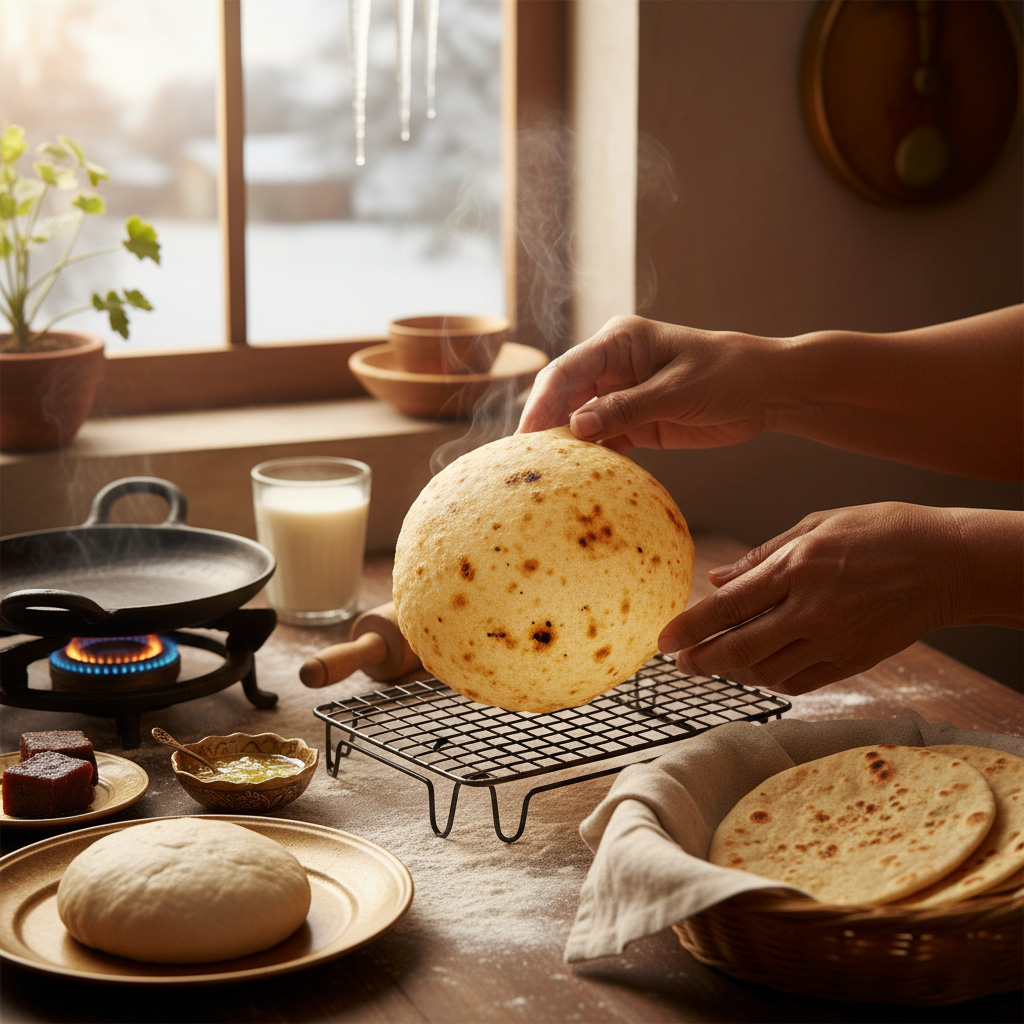
6. Cook the Chapatis: Preheat a cast-iron skillet or tava over moderately low heat for 3-5 minutes. Slap a rolled chapati between your palms to remove excess flour and place it on the hot surface. Cook for about 1 minute, until small bubbles appear and the underside has light brown spots.
7. Puff them Up: Flip the chapati and cook for another 30 seconds. Now, either use tongs to place it directly over a high gas flame until it puffs up like a balloon (a few seconds per side), or press gently on the edges with a folded towel on the skillet to trap steam and encourage it to puff.
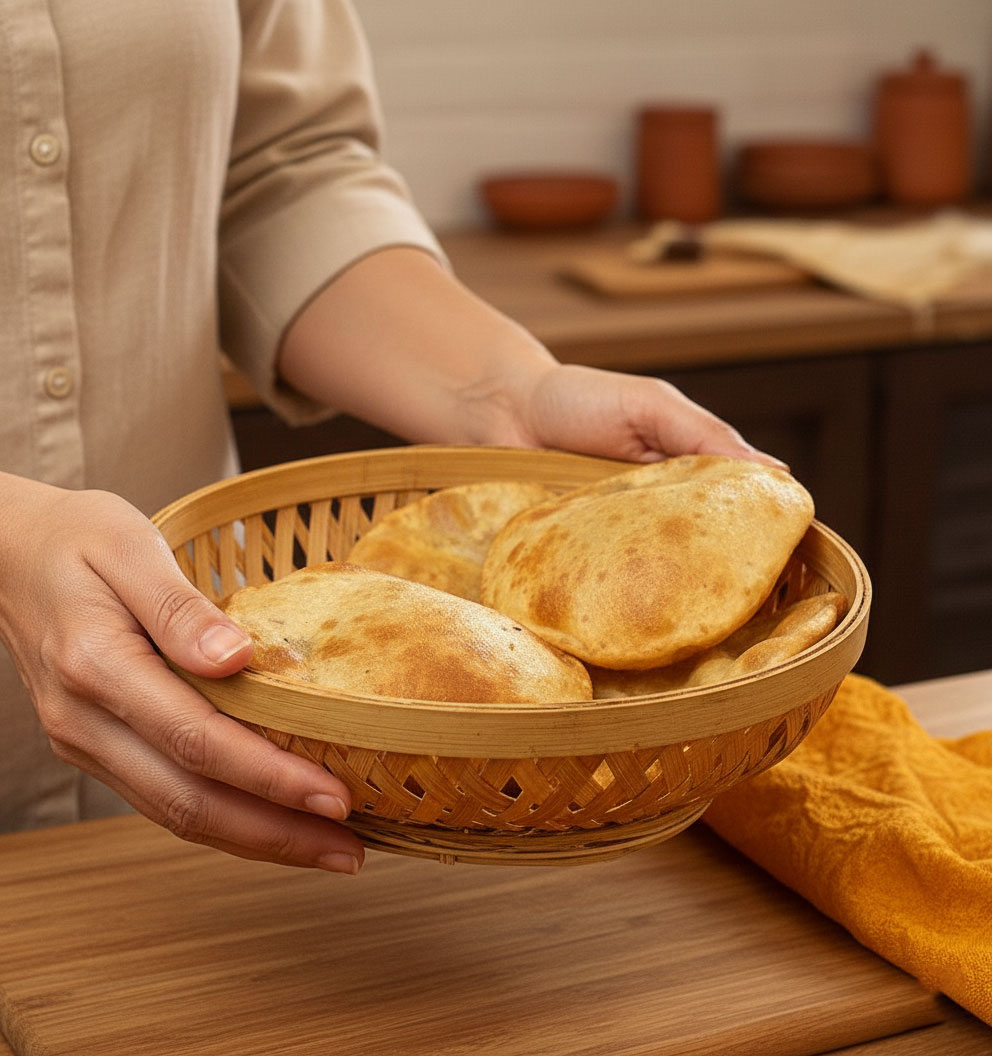
8. Serve and Store: Transfer the hot chapati to a cloth-lined basket to keep it warm and soft. Brush with melted butter or ghee, if desired. Repeat with the remaining dough. Serve immediately for the best experience.
Nutritional Information
• A Wholesome Choice
• Protein-Packed: The addition of homemade chenna from whole milk gives these chapatis a wonderful boost of protein, making them more satisfying and nutritious than standard flatbread.
• Rich in Fiber: Using whole wheat chapati flour (atta) ensures you get a healthy dose of dietary fiber, which is great for digestion.
• All-Natural: Made with simple, wholesome , this recipe is free from preservatives and additives.
Pro Tips
• for Perfect Chapatis
• For the softest texture, allow the dough to rest for the full 3 hours at room temperature. The extended resting time makes a noticeable difference.
• Use just enough dusting flour to prevent sticking. Too much flour can make the final chapatis tough and dry.
• A properly preheated tava or skillet is crucial. If it’s not hot enough, the chapatis won’t cook quickly and won’t puff up properly.
• To keep chapatis soft for later, stack them as they are cooked and wrap them completely in a clean kitchen towel. The trapped steam will keep them moist.
FAQ
Q: Can I make this chapati recipe vegan
A: This recipe’s signature softness relies on milk-based chenna. For a vegan alternative, you would need a different recipe. You could try making a standard chapati dough using warm water or unsweetened plant-based milk and adding a tablespoon of vegan yogurt or neutral oil to help soften the dough, though the final texture will be different.
Q: How does this recipe add extra protein to a vegetarian meal
A: The protein boost comes from the homemade chenna. By curdling whole milk and incorporating the milk solids (casein and whey protein) directly into the dough, these chapatis offer significantly more protein than traditional recipes made with just flour and water. This makes them a more filling and nutritious component of your vegetarian meal.
Q: What is the best way to store these chapatis to keep them soft
A: To keep them soft for a few hours, stack the cooked chapatis and wrap them completely in a clean kitchen towel. The trapped steam maintains their moisture. For longer storage, allow them to cool completely, then store the stack in an airtight container or zip-top bag in the refrigerator for up to 2 days. Reheat on a dry, hot tava or skillet for a few seconds per side.