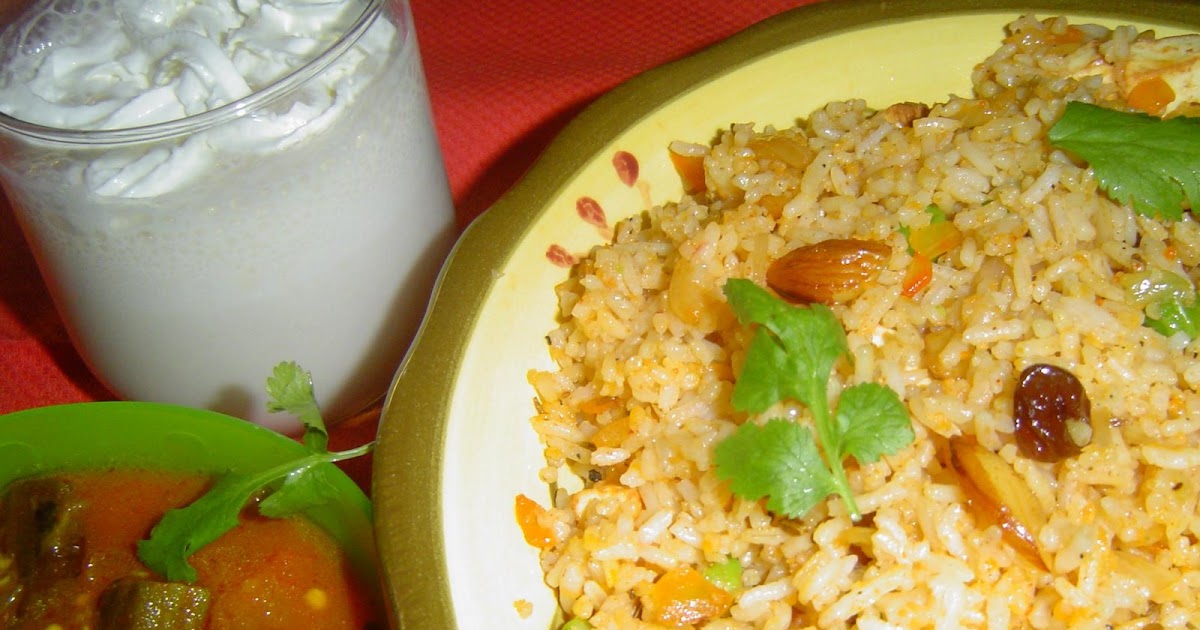
In the heart of Central London, near the British Museum, there is a stately four-story building that in 1969 became the first temple of the International Society for Krishna Consciousness (ISKCON) in England. At the official opening ceremonies, Srila Prabhupada introduced this particular version of pushpanna . At this important event, covered by the BBC and other media and attended by thousands of guests, the temple kitchen distributed hundreds of servings of this delicacy .
Pushpanna is the consummate rice pilaf of Bengali cuisine, and although time-consuming, it is not difficult to prepare. Though the balance of flavors may vary, top-quality ingredients are a must: the best saffron, nuts and basmati rice give this dish its characteristic richness and elegance. The resulting dish has an aristocratic appearance and flavor, making it especially appropriate tor weddings, special holiday feasts or important dinners. For a festive menu, try this pilaf with Cauliflower Kofta and Seasoned Tomato Gravy . Add a bowl of Mellow Karhi with Spicy Paparh Noodles . For vegetables try Char-Flavored Eggplant and Green Peas, Bengali Spinach and Fried Bitter Melon with Ground Almonds . Accompany with a yogurt dish such as Shredded Cucumbers in Smooth Mint-Flavored Yogurt or Sliced Bananas in Smooth Tart Cream . Piping-hot pooris or pakoras can be added as a fried item. Dessert could be simple fresh fruit and Lemon-Lime Cheese Fudge or Heart-Shaped Cheesecakes with Saffron Frosting .
Preparation time (after assembling ingredients): 30 minutes
Cooking time: 30 minutes
Serves: 8 to 10
• 1¼ cups (105 g) basmati or other long-grain white rice
• freshly made chenna cheese ( page 315 ) made from 6 cups (1.5 liters) milk (about 7½ ounces/215 g)
• 1 tablespoon (15 ml) all-purpose flour
• ¼ cup (30 g) slivered or sliced raw almonds
• ¼ cup (35 g) raw cashew bits or halves
• 2 tablespoons (30 ml) blanched raw pistachio nuts, split in half
• ¼ cup (25 g) dried coconut cut into ribbons
• 3 tablespoons (45 ml) raisins or currants
• 3 tablespoons (45 ml) melted butter or ghee
• 1 teaspoon (5 ml) turmeric
• 1½ tablespoons (22 ml) milk
• ¼ teaspoon (1 ml) high-quality saffron threads
• ghee or vegetable oil for shallow-frying
• 6 whole cloves
• 2-inch (5 cm) piece of cinnamon stick
• 2 large black or 4 large green cardamom pods
• 1 whole dried red chili (or as desired)
• 1½ teaspoons (7 ml) cumin seeds
• 1 teaspoon (5 ml) coriander seeds
• ¼ teaspoon (1 ml) kalonji , if available
• ½ teaspoon (2 ml) yellow asafetida powder ( hing) *
• 3 tablespoons (45 ml) sugar or equivalent sweetener
• 2 teaspoons (10 ml) salt
• 2¾–3 cups (650–710 ml) water
• two 4-inch (10 cm) pieces of edible gold or silver foil for garnishing, if available
* This amount applies only to yellow Cobra brand. Reduce any other asafetida by three-fourths .
1. If basmati rice is used, clean, wash, soak and drain as explained on this blog .
2. Place the warm chenna cheese on a countertop, break it apart and press it with absorbent towels to extract any excess moisture. Knead with your palms until the cheese is creamy and smooth. Knead in the flour. With the help of a spatula, scrape all of the smooth cheese into one round mass. Wash and dry your hands and the countertop. Place a dry plate nearby. Rub a film of oil on your hands. Divide the cheese into 5 equal portions and then roll 10 smooth round pellets per portion, making a total of 50 cheese balls. Set aside on the plate.
3. Place the almonds, cashews, pistachios, coconut and raisins or currants in individual mounds on another plate and set aside.
4. Transfer the drained rice to a bowl. Add 1 tablespoon (15 ml) of the melted butter or ghee and the turmeric to the rice. Mix with your fingertips until all of the rice grains are coated with turmeric and ghee . Set aside.
5. Heat the milk in a serving spoon, transfer it to a small cup and soak the saffron threads in the hot milk until you cook the rice.
6. In the meantime, heat ghee or vegetable oil to a depth of 2 inches (5 cm) in a deep frying pan over moderately low heat. When the oil reaches about 325°F (160°C), fry one by one the mounds of nuts and coconut until each batch turns a nice golden brown. Fry the raisins until they turn plump and a few shades lighter. Remove each batch with a slotted spoon and place all of the ingredients in a medium-sized bowl. Raise the heat to moderate. Divide the cheese pellets into two batches and gently slip them into the hot ghee or oil, cooking one batch at a time. Let them cook for ½ minute, then constantly move the cheese balls with a chopstick until they rise to the surface. Continue frying, but now use a slotted spoon, and fry until they are a rich golden brown on all sides. Remove with the slotted spoon and set aside in a bowl.
7. Remove the ghee or oil from the heat, put 4 tablespoons (60 ml) of it in a heavy 3-quart/liter nonstick saucepan and set over moderate heat until it is hot but not smoking. Drop in the cloves, cinnamon stick, cardamom pods, chili, cumin seeds, coriander seeds and kalonji . Fry until the cumin seeds turn brown. Stir in the asafetida powder and then quickly add the turmeric-coated rice, sweetener and salt. Stir-fry for 2–3 minutes. Add the water, raise the heat to high and quickly bring to a boil.
8. Pour in the fried nuts, raisins, and coconut and the saffron milk and stir to mix. Reduce the heat to very low, cover with a tight-fitting lid and gently simmer without stirring for 20–25 minutes or until the rice is tender and fluffy and all of the water has been absorbed.
9. Remove from the heat and let the rice sit, covered, for 5 minutes to allow the fragile grains to firm up. Add the remaining 2 tablespoons (30 ml) of melted butter or ghee and the fried chenna cheese balls. Gently fluff the rice with a fork to mix all of the ingredients.
10. The rice should be served on a warmed serving platter or on individual plates and, if desired, the top can be garnished regally with sheets of special edible gold or silver foil.