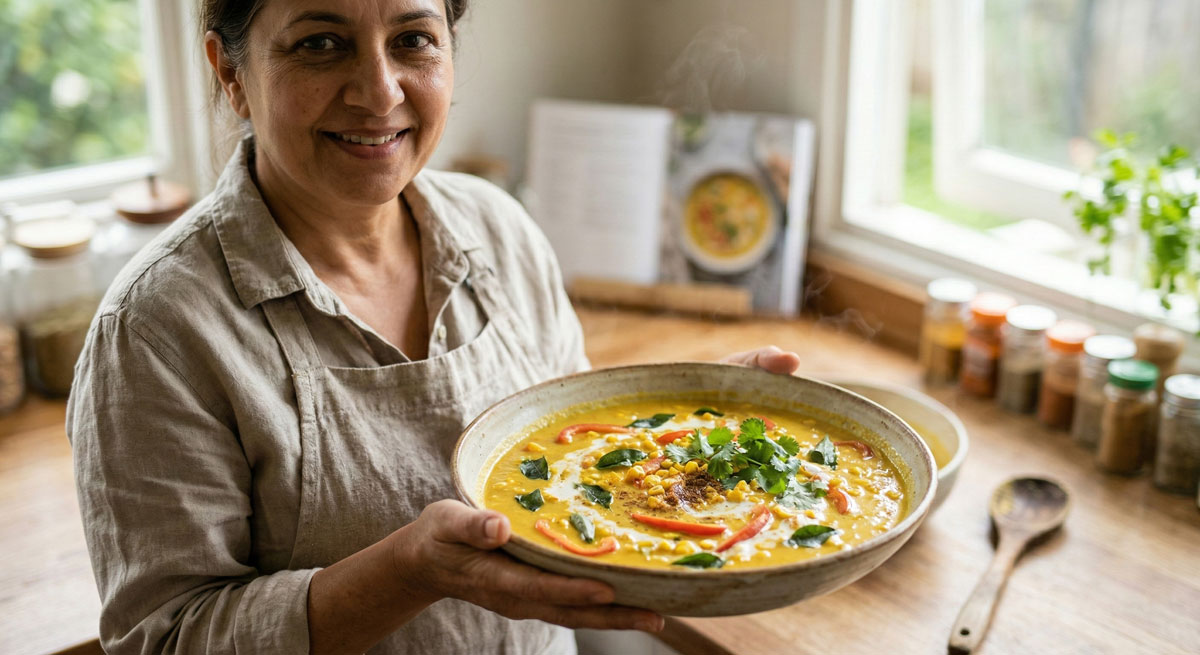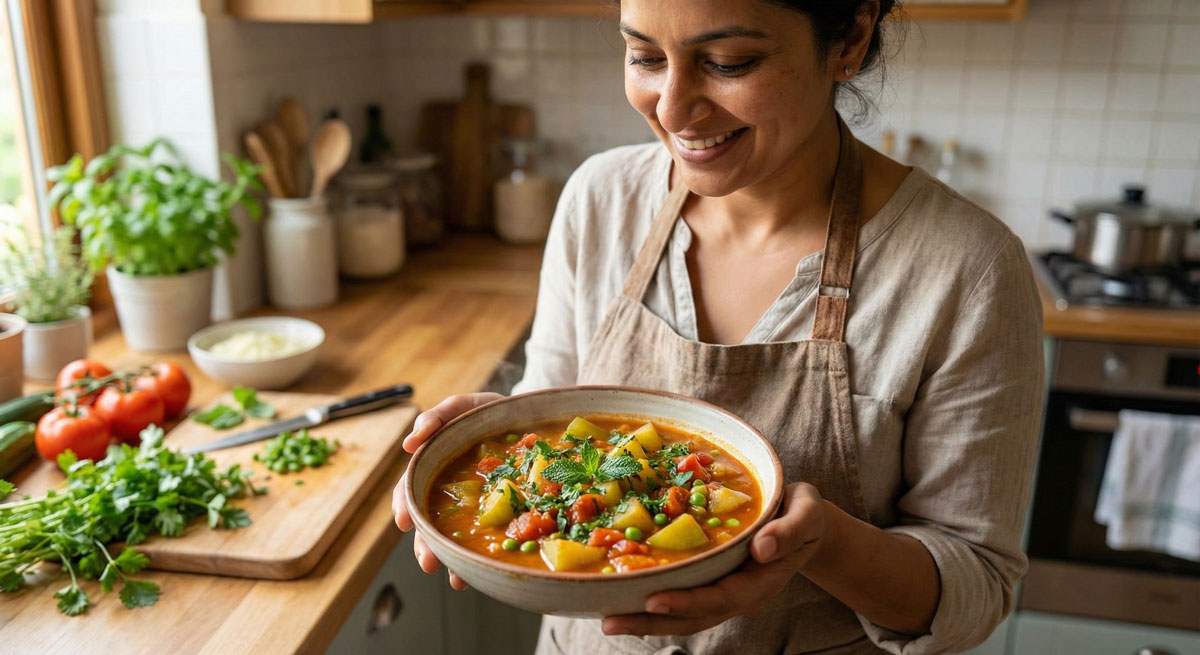
You find inspiration in the most unexpected places. For me, it was 30,000 feet in the air on a flight over India. The airline served a dal so rich, so fragrant, and so deeply satisfying that I knew I had to recreate it. My version combines two powerhouse legumes—earthy whole mung beans and creamy whole red lentils—with a bold spice blend typically reserved for meat dishes. The result is a surprisingly robust and complex dal that’s become a staple in my kitchen. It’s perfect for a grand festive dinner with all the trimmings or a simple, comforting weeknight meal with just a side of rice and yogurt. Let’s get cooking!
Ingredients
• ¾ cup / 150g whole mung beans
• ¾ cup / 150g whole red lentils, sabut masoor
• 1 teaspoon / 5g salt, or more to taste
• 5 tablespoons / 75ml olive or peanut oil
• 1 2-inch / 5cm cinnamon stick
• 2 bay leaves
• 5 cardamom pods
• 1 medium onion, about 7 oz / 200g, peeled and finely chopped
• 1 3-inch / 7.5cm piece of fresh ginger, peeled and finely grated
• 5 cloves garlic, peeled and crushed
• 3 tablespoons / 45ml tomato purée
• 1 tablespoon / 15g ground coriander
• 2 teaspoons / 10g ground cumin
• 1 teaspoon / 5g ground turmeric
• ½–1 teaspoon red chili powder, to taste
• 1 teaspoon / 5g garam masala
• Dollop of ghee or butter, optional
Instructions
1. First, prepare the legumes. Pick over and wash the mung beans and red lentils in a sieve. Transfer them to a large, heavy-based pan with 7 cups / 1.7 liters of water. Bring to a rolling boil for 2 minutes. Turn off the heat, cover the pan, and let it stand for 1 hour. After an hour, bring the water back to a boil, then reduce the heat to low, cover, and simmer gently for 1.5 hours, or until the beans are completely tender. Stir in the salt and set aside.
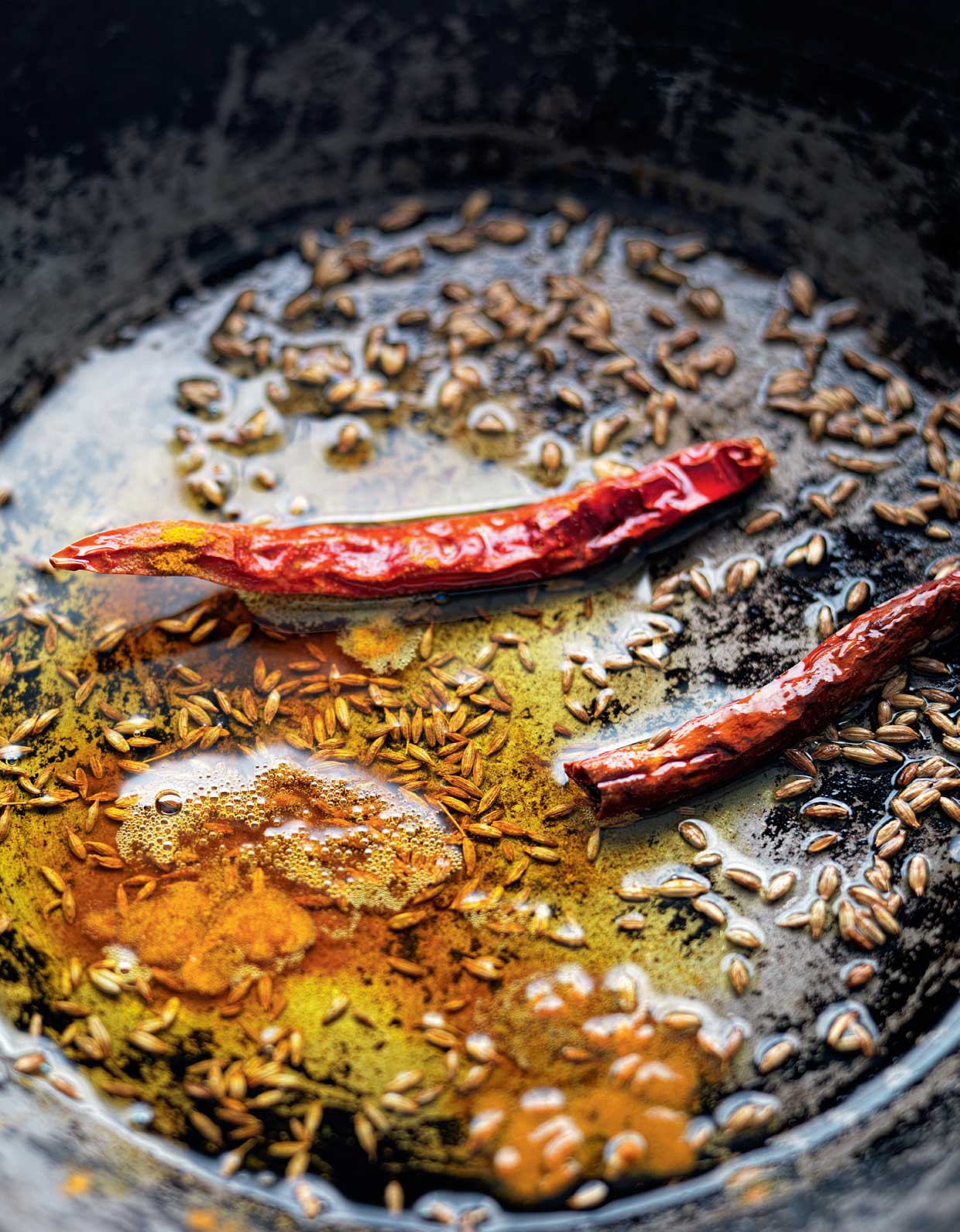
2. While the dal simmers, prepare the spice base (tarka). Heat the oil in a medium frying pan over medium-high heat. Once hot, add the cinnamon stick, bay leaves, and cardamom pods and stir for 30 seconds until fragrant. Add the finely chopped onion and fry for 7-8 minutes until the edges start to brown. Stir in the grated ginger and crushed garlic and cook for another 2 minutes. Add the tomato purée, ground coriander, cumin, turmeric, and chili powder, stirring constantly for 2 minutes. Pour in 1 cup / 240 ml of water, stir to combine, and let it simmer gently for 5 minutes to form a thick paste. Remove and discard the whole spices (cinnamon, bay leaves, cardamom), then stir in the garam masala.
3. Pour the finished spice paste into the pot of cooked lentils and beans. Stir everything together until well combined. Taste for seasoning and add more salt if needed. If you prefer a thinner dal, stir in a little hot water until you reach your desired consistency. To serve, ladle the dal into bowls and finish with a dollop of ghee or butter, if desired.
Nutritional Information
• Nutritional Info
• High in plant-based protein and dietary fiber, promoting satiety and digestive health.
• An excellent source of essential minerals like iron, magnesium, and folate.
• Naturally gluten-free and can be easily made vegan.
Pro Tips
• For easier handling, place the whole spices (cinnamon, bay leaves, cardamom) in a small muslin bag or tea infuser before adding them to the pan.
• Adjust the dal’s consistency to your liking. Aim for a thicker dal when serving with flatbreads and a thinner, more soup-like consistency for serving with rice.
• To make this recipe fully vegan, simply omit the optional ghee or butter at the end, or use a plant-based butter.
• For a faster cooking time, you can soak the mung beans and lentils in water overnight. This can reduce the simmering time significantly.
FAQ
Q: Is this whole lentil and mung bean dal a good source of protein
A: Yes, this dal is an excellent source of plant-based protein. Both whole mung beans and whole red lentils are protein powerhouses, making this a deeply satisfying and nutritious meal perfect for a vegetarian or vegan diet.
Q: How can I make this dal recipe completely vegan
A: This recipe is easily made vegan as the dal itself is naturally plant-based. Simply omit the optional final dollop of ghee or butter, or replace it with your favorite plant-based butter or a drizzle of olive oil to serve.
Q: Can I use different lentils or beans in this recipe
A: While the combination of whole mung beans and red lentils creates a unique texture, you can substitute them. Brown lentils or split chickpeas (chana dal) would work well. Be aware that cooking times will vary, so adjust the simmering until your chosen legumes are completely tender.
Q: How should I store leftover dal and can it be frozen
A: Store leftover dal in an airtight container in the refrigerator for up to 4 days. For longer storage, this dal freezes beautifully. Cool it completely, then freeze in portions for up to 3 months. Thaw and reheat gently on the stovetop, adding a splash of water if it has thickened.