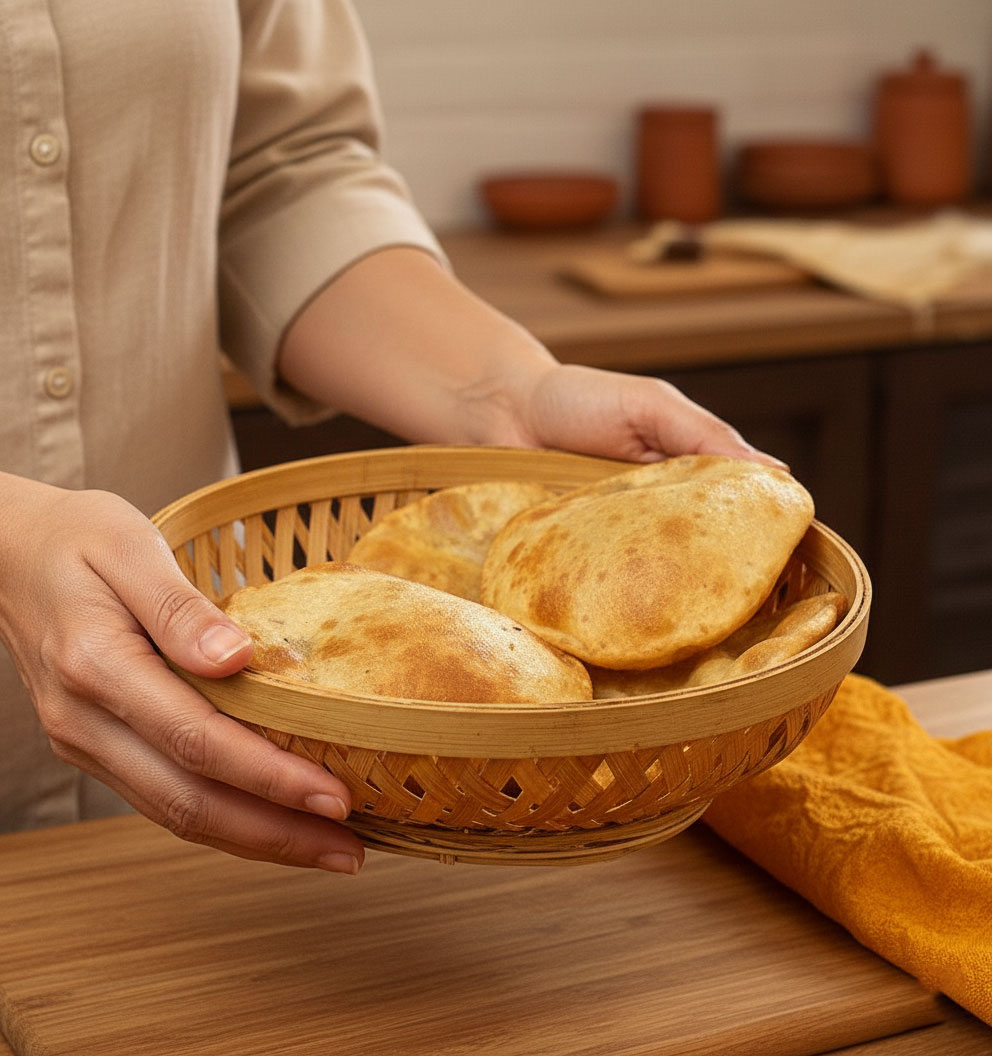

There’s nothing quite like the satisfaction of tearing into a warm, flaky, homemade paratha. This layered Indian flatbread is a culinary masterpiece, with a crispy exterior giving way to soft, buttery layers inside. While it might seem intimidating, creating these beautiful spirals of dough is a surprisingly simple and rewarding process. Perfect for mopping up a rich dal, serving alongside your favorite sabzi, or even enjoying with a simple cup of chai, this recipe will make you a flatbread pro in no time. Let’s get rolling!
Ingredients
• 1½ cups / 180g whole wheat flour (atta)
• 1½ cups / 180g all-purpose flour, plus more for dusting
• 1 teaspoon / 6g salt
• ¾ cup / 180ml warm water, more as needed
• 4 tablespoons / 57g melted butter or ¼ cup / 60ml neutral oil, plus more for brushing
Instructions
1. In a food processor or large bowl, combine the whole wheat flour, all-purpose flour, and salt. If using a food processor, turn it on and slowly stream in ¾ cup of warm water. Process for about 30 seconds, adding more water one tablespoon at a time, until a soft, slightly sticky dough ball forms. If mixing by hand, make a well in the center of the flour, add the water, and mix until a shaggy dough forms, then knead on a floured surface for 5-7 minutes until smooth.
2. Transfer the dough to a clean surface, knead for a minute, and form it into a smooth ball. Cover with plastic wrap or a damp cloth and let it rest at room temperature for at least 30 minutes, or up to 2 hours. This step is crucial for a soft, pliable dough.
3. Divide the rested dough into 8 to 12 equal portions and roll each into a ball. On a lightly floured surface, roll one ball into a thin 4-inch disk. Brush the surface generously with melted butter or oil.
4. Roll the oiled disk up tightly like a cigar. Then, take the cigar-shaped dough and coil it into a spiral, tucking the end underneath, similar to a cinnamon bun. Gently press the coil flat. Repeat with all remaining dough balls.
5. Heat a cast-iron skillet, tawa, or griddle over medium heat. Take one of the flattened coils and roll it out again on a floured surface into a 6-7 inch circle. Don’t press too hard, as you want to preserve the layers.
6. Place the paratha on the hot skillet and cook for about 1-2 minutes, until you see small bubbles form and the underside has light brown spots. Flip it over.
7. Brush the top (the just-cooked side) with more melted butter or oil. Cook for another 1-2 minutes, then flip again. The side you just oiled should now be face down. Cook until it’s golden brown and crisp, about 30-60 seconds. Press gently with a spatula to help it puff up.
8. Transfer the cooked paratha to a plate lined with a cloth napkin or into a tortilla warmer to keep it soft. Repeat with the remaining dough, stacking the finished parathas to keep them warm. Serve immediately.
Nutritional Information
• Nutrition Information (per paratha, approx.)
• Calories: 175 kcal
• Carbohydrates: 28g
• Protein: 5g
• Fat: 5g
• Sodium: 290mg
• Fiber: 3g
Pro Tips
• for Perfect Parathas
• Resting the dough is non-negotiable! A well-rested dough is softer, more elastic, and much easier to roll out without tearing, which helps maintain the flaky layers.
• Be generous when brushing the dough with butter or oil before coiling. This fat layer is what separates the dough as it cooks, creating that signature flaky, layered texture.
• Maintain a consistent medium heat on your skillet. If the heat is too low, the parathas will become dry and hard. If it’s too high, they will burn on the outside before cooking through on the inside.
• For a delicious variation, make Spinach Paratha. Simply blanch 1 pound of fresh spinach, squeeze out all excess water, and chop finely. Add the spinach and a squeeze of lemon juice to the food processor with the flour in Step 1 and proceed with the recipe, adjusting water or flour as needed.
• To keep parathas soft after cooking, stack them on top of each other and wrap them in a clean kitchen towel. The trapped steam will ensure they stay tender until you’re ready to serve.