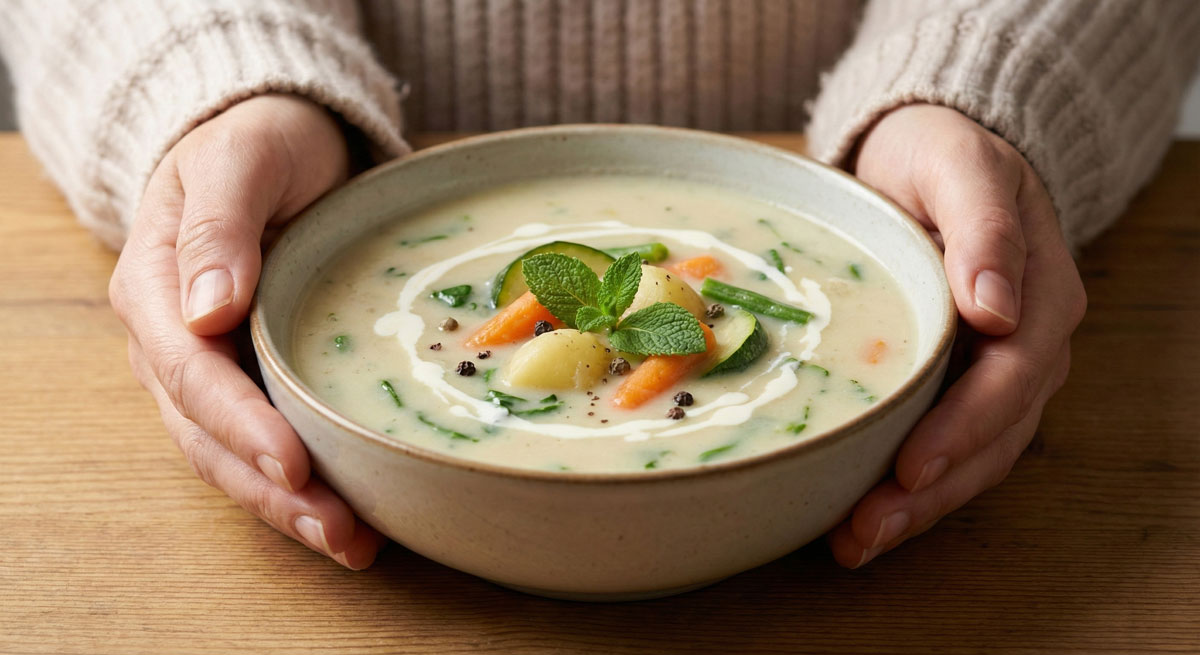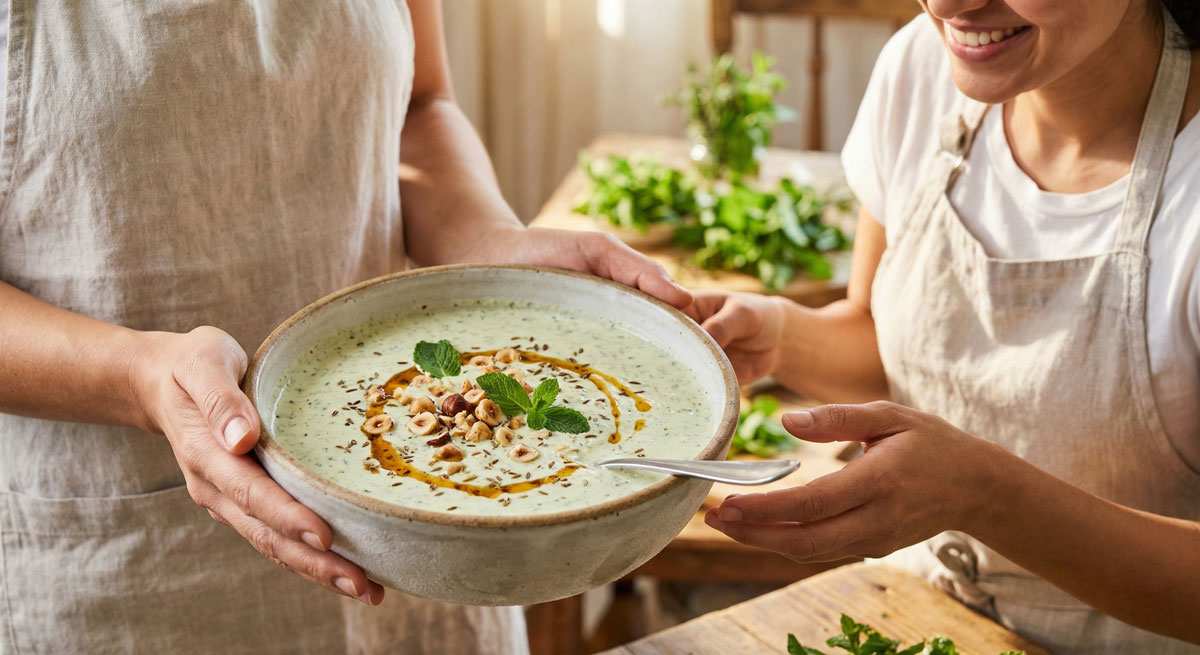
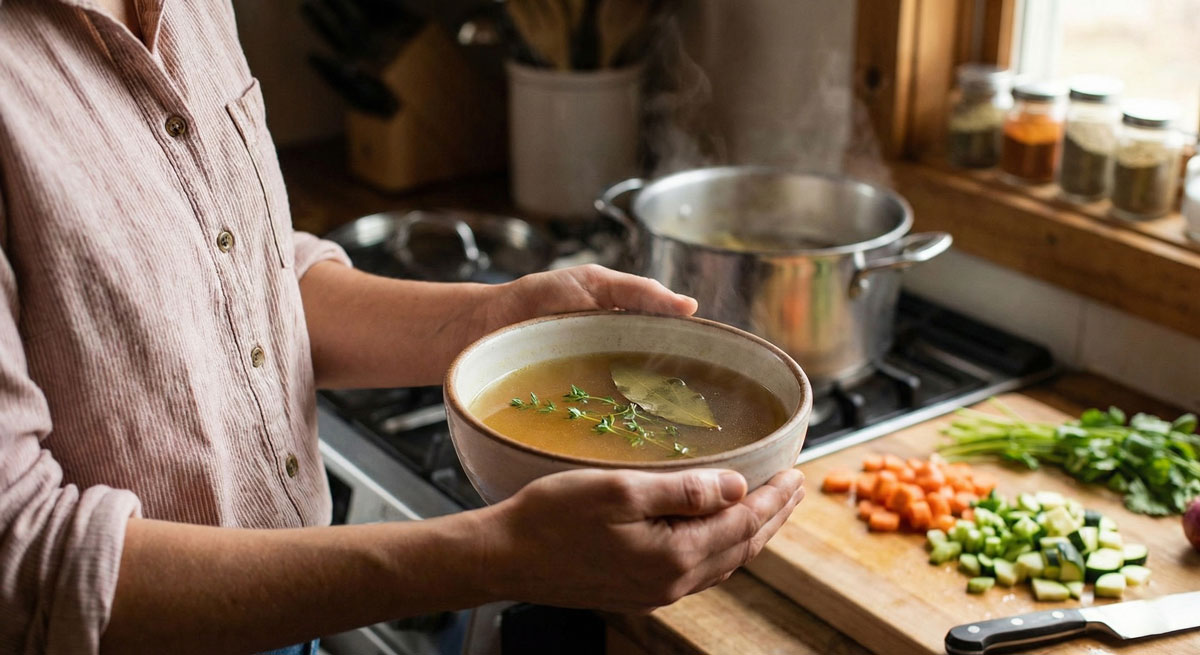
There’s a special kind of magic in turning humble vegetable scraps into shimmering “liquid gold.” As a chef who lives by the “waste not, want not” philosophy, I’ve fallen completely in love with the ancient Vedic tradition of making **Seasoned Vegetable Stock**, or **Akhnir Jhol**. This isn’t just a random collection of leftovers; it’s a mindfully crafted, slow-simmered elixir that truly honors the principle of “Annam Brahma” (Food is God). Whether you need a rich **vegetarian broth substitute** or a **healthy homemade stock** to elevate your everyday soups and dals, this technique is a revelation. By gently sweating root vegetables in ghee before simmering, we unlock a profound depth of flavor that no store-bought cube or carton can ever hope to replicate.
Ingredients
• for Vedic Vegetable Stock
• Ghee: 2 tbsp / 30 ml ghee or unsalted butter
• Carrots: 3 large, approx. 0.5 lb / 225g, scraped and coarsely chopped
• Celery: 3 large stalks with leaves, approx. 0.3 lb / 150g, coarsely chopped
• Potato: 1 medium, approx. 6 oz / 170g, cut into 0.5-inch cubes
• Turnip: 1 large, approx. 0.5 lb / 225g, coarsely chopped
• Tomatoes: 2 overripe, approx. 0.6 lb / 300g, coarsely chopped
• Water: 12 cups / 2.8 liters, cold
• Bay Leaf: 1 small cassia or bay leaf
• Coriander Seeds: 2 tbsp / 10g, whole
• Cumin Seeds: 1 tsp / 3g, whole
• Black Peppercorns: 0.5 tsp / 1.5g
• Fresh Ginger: 0.5-inch piece, scraped and thinly julienned
• Cloves: 3 whole
• Salt: 2 tsp / 11g, adjust to taste
Instructions
1. How to Make Akhnir Jhol (Vedic Stock)
2. Yields: About 10 cups / 2.5 liters | Prep time: 10 minutes | Cook time: 1 hour 30 minutes
3. Sweat the Vegetables: Place a large, heavy-bottomed stockpot over moderately low heat. Add the ghee or butter. Once melted, add the chopped carrots, celery, potato, and turnip. Cook slowly for 15 minutes, stirring occasionally. This crucial “sweating” process coaxes out the vegetables’ natural sweetness and builds the foundation of your stock’s flavor.
4. Add Liquid and Aromatics: Pour in the 12 cups of cold water. Add the chopped tomatoes, bay leaf, coriander seeds, cumin seeds, black peppercorns, ginger, cloves, and salt. Stir everything together and increase the heat to high, bringing the mixture to a rolling boil.
5. Simmer Gently: As soon as the stock boils, immediately reduce the heat to low. The liquid should maintain a gentle, lazy simmer. Partially cover the pot and let it simmer for 1 hour and 15 minutes to slowly extract all the wonderful flavors.
6. Strain the Stock: Remove the pot from the heat. Carefully pour the stock through a fine-mesh sieve set over a large bowl or container. Gently press the cooked vegetables with the back of a spoon to release every last drop of flavorful liquid.
7. Cool and Store: Let the stock cool to room temperature. Use it within 4-5 days (stored in the fridge) or pour it into ice cube trays and freeze for future use. Once frozen, transfer the cubes to a freezer-safe bag for easy access.
Nutritional Information
• Estimates per 1 cup / 240ml serving.
• Calories: 35 kcal
• Total Fat: 2.5g
• Total Carbohydrates: 3g
• Protein: 0.5g
• Sodium: 460mg
Pro Tips
• for the Best Homemade Stock
• Don’t Rush the Sweat: The initial 15-minute slow cook in ghee is non-negotiable. It builds a deep, caramelized flavor base that water alone can’t achieve.
• Always Start with Cold Water: Adding cold water to the warm vegetables allows for a slower, more gentle extraction of flavors, resulting in a clearer and more aromatic stock.
• Simmer, Never Boil: A rapid, rolling boil will make your stock cloudy and muddy its flavor. A gentle, barely-there simmer is the key to a pristine, golden liquid.
• Freeze into Flavor Bombs: Pour cooled stock into ice cube trays. These frozen cubes are perfect for dropping into pans to deglaze, enriching rice dishes, or adding a quick flavor boost to any sauce.
FAQ
Q: Can I make this vegetable stock vegan
A: Absolutely. To make this a completely vegan vegetable broth, simply substitute the ghee with a high-quality vegetable oil like coconut oil or avocado oil. The crucial ‘sweating’ process will still build that deep, foundational flavor.
Q: What other vegetable scraps can I use in this stock
A: This recipe is perfect for using up scraps. Feel free to add onion peels (for color), leek tops, mushroom stems, or parsnip peels. For the best flavor, avoid cruciferous vegetables like broccoli, cabbage, or cauliflower, as they can become bitter during a long simmer.
Q: How long does this homemade vegetable stock last
A: You can store this stock in an airtight container in the refrigerator for 4-5 days. For longer-term storage, pour the cooled stock into ice cube trays. Once frozen, transfer the cubes to a freezer bag. They will last for several months and are perfect for adding a quick flavor boost to any dish.
Q: Is this stock a good source of vegetarian protein
A: This stock is primarily a flavor base and is not a significant source of protein, containing about 0.5g per cup. To create a protein-rich meal, use this delicious Akhnir Jhol as the liquid for cooking lentils, beans, quinoa, or a hearty dal.