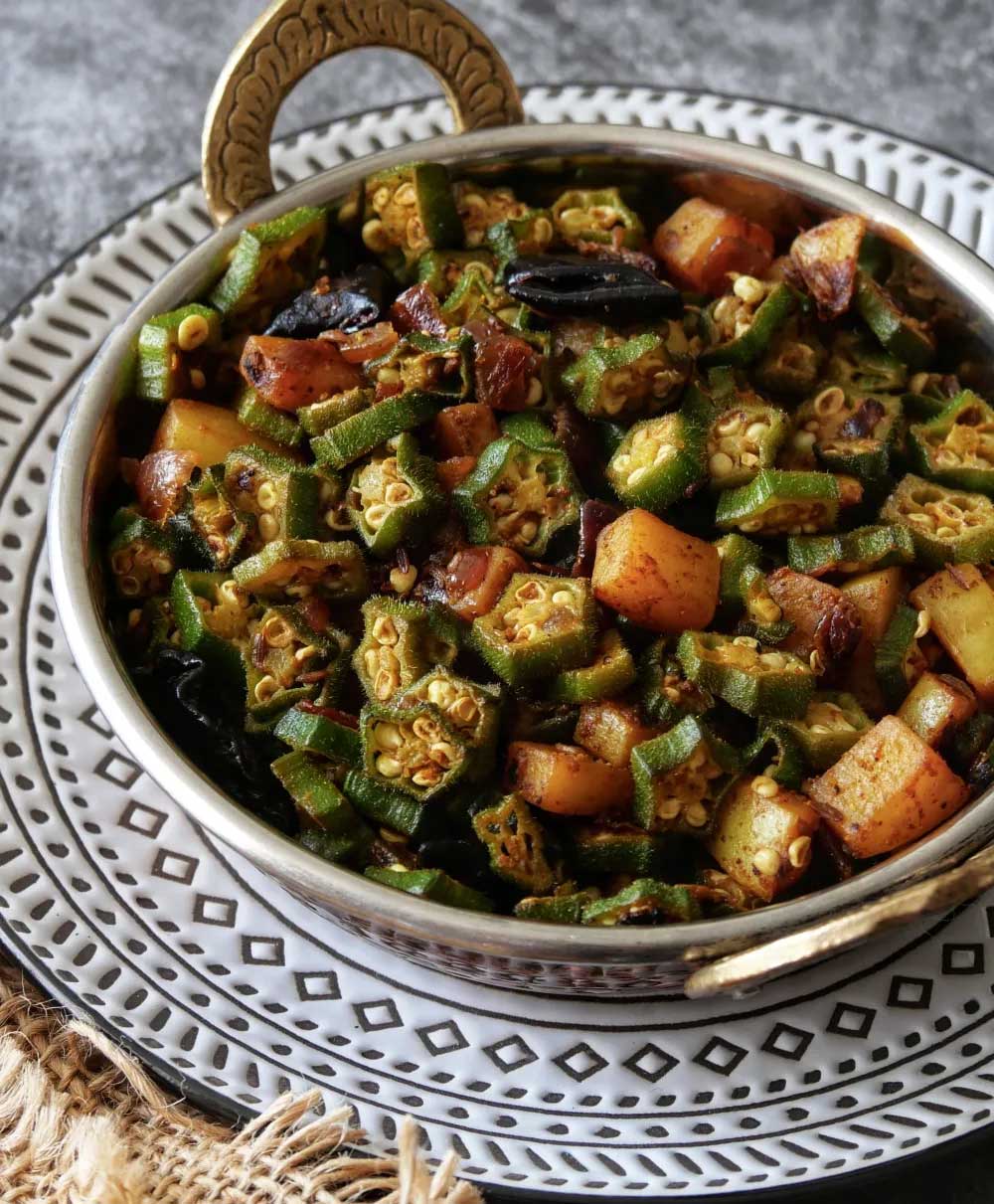
Let’s take a culinary trip to the stunning Konkan coast of India! This region, known for its lush landscapes and pristine beaches, also boasts a cuisine that’s beautifully simple yet bursting with flavor. One of my absolute go-to comfort dishes from this area is this humble okra stir-fry, or Bhindi Sabzi. It’s a perfect example of how everyday Konkani cooking turns simple vegetables into something truly special. It’s quick, easy, and a delightful taste of coastal India you can make right in your own kitchen. This dish pairs beautifully with fluffy basmati rice or warm roti. Serve it alongside a simple lentil dish, like Tadka Dal, and a cooling cucumber raita for a complete, wholesome meal.
Ingredients
• (Serves 3)
• ¾ lb / 340g okra, small tender pods are best
• 3 tablespoons / 45 ml olive or peanut oil
• 1 teaspoon / 5 ml urad dal
• ½ teaspoon / 2.5 ml whole brown mustard seeds
• ½ teaspoon / 2.5 ml whole cumin seeds
• 1 small hot green chili, slit in half lengthwise, or ¼ teaspoon red chili powder
• 10–15 fresh curry leaves, lightly crushed
• 1 medium onion, about 6½ oz / 185g, peeled and chopped
• ¼ teaspoon / 1.25 ml ground turmeric
• ½ teaspoon / 2.5 ml salt, or to taste
• 1 tablespoon / 15 ml fresh lemon juice
Instructions
1. First, prep the okra. Wipe each pod with a damp cloth and spread them on a towel to air-dry completely. This is key to preventing a slimy texture. Trim off the tops and tails, then slice the pods crosswise into ½-inch / 1.25 cm pieces.
2. Place a large frying pan or sauté pan over medium-high heat and add the oil. Once the oil is hot, add the urad dal. Fry for about 30-45 seconds until it just begins to turn a light golden color.
3. Immediately add the mustard seeds and cumin seeds. As soon as the mustard seeds start to pop (this will only take a few seconds), add the slit green chili (or chili powder), crushed curry leaves, and the chopped onion. Be careful, as the curry leaves will splutter.
4. Sauté the onions, stirring frequently, for about 6 minutes, or until they soften and just start to brown at the edges.
5. Stir in the ground turmeric, cook for 10 seconds, then add the chopped okra to the pan. Lower the heat to medium-low and gently stir-fry for 5-6 minutes, allowing the okra to cook without a lid.
6. Add the salt and lemon juice, and stir gently to combine. Sprinkle 1-2 tablespoons of water over the okra to create a little steam.
7. Lower the heat to low, cover the pan, and cook for another 5-6 minutes, or until the okra is tender but still has a slight bite. Check once during cooking, adding another splash of water only if it seems to be sticking. Taste and adjust salt if needed before serving.
Nutritional Information
• This Konkani Okra Stir-Fry is not only delicious but also naturally vegan and gluten-free. Okra is a fantastic source of dietary fiber, which aids in digestion, and is rich in Vitamin C and Vitamin K. This simple preparation keeps it light and relatively low in calories, making it a healthy addition to any meal.
Pro Tips
• For slime-free okra, ensure the pods are completely dry before you chop them. Washing them and letting them air-dry for an hour is key.
• Choose small, bright green, and tender okra pods. They are less fibrous, cook faster, and have a better flavor.
• Don’t cover the pan for the initial stir-frying period. Cooking the okra uncovered allows moisture to escape, further preventing any sliminess.
• The urad dal adds a wonderful crunch and nutty flavor that is characteristic of South Indian cooking. Don’t skip it, but watch it carefully as it can go from golden to burnt very quickly.
FAQ
Q: How can I add more protein to this vegetarian okra stir-fry
A: To make this a more protein-rich dish, you can add a handful of roasted peanuts or cashews in the last few minutes of cooking for a delicious crunch. For a complete meal, serve it alongside a high-protein lentil dish like Tadka Dal or a chickpea curry.
Q: Is this Konkani okra recipe a complete vegetarian meal
A: This bhindi sabzi is a fantastic vegetable side dish. To turn it into a balanced, complete vegetarian meal, pair it with a whole grain like basmati rice or roti, and a dedicated protein source such as a simple dal, paneer curry, or a cooling raita made with protein-rich Greek yogurt.
Q: How should I store leftover bhindi sabzi
A: Store any leftovers in an airtight container in the refrigerator for up to 3 days. To reheat, gently warm it in a non-stick pan over low heat until heated through. This helps retain some of its texture better than a microwave.