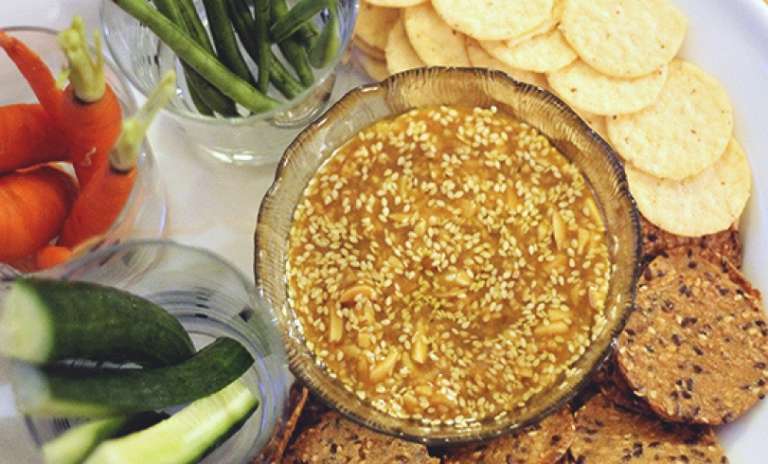
I’ll never forget when the brilliant Japanese chef Yumiko Kano first showed me this incredible sauce. She simply dressed some blanched green beans with it, and I was instantly hooked. This isn’t just a sauce; it’s a versatile, umami-packed secret weapon for your kitchen. I now drizzle it on everything from grilled eggplant and mushrooms to steamed kale and broccoli. It’s divine as a dip for raw veggies, a topping for sliced tomatoes, or spooned generously over a warm bowl of rice or soba noodles. Prepare to be obsessed!
Ingredients
• 1 cup shelled walnuts (120 g)
• 1/4 cup light or white miso (60 g)
• 1-inch piece fresh ginger (2.5 cm)
• 1 teaspoon soy sauce (5 ml), optional
• Water, as needed for thinning
Instructions
1. Finely grate the ginger over a small bowl. Place the grated ginger into a fine-mesh strainer and press firmly with the back of a spoon to extract about 1 teaspoon of pure ginger juice. Discard the pulp.
2. Combine the ginger juice, walnuts, miso, and optional soy sauce in a high-speed blender.
3. Blend on high until the mixture is completely smooth and creamy, stopping to scrape down the sides of the blender as needed.
4. Check the consistency. If the sauce is too thick, add a teaspoon of water or soy sauce at a time and blend again until it reaches your desired thickness.
5. Serve immediately or transfer to an airtight container and refrigerate for up to 3 days.
Nutritional Information
• Recipe Facts
• Yields: About 1 cup
• Servings: 4
• Prep Time: 15 minutes
• Cuisine: Japanese-Inspired
• Key Benefits: Rich in Omega-3s, Plant-Based Protein, Source of Probiotics (from miso)
Pro Tips
• Quick Tahini Version: For a nut-free, no-blend option, simply whisk 1/2 cup tahini with 1/2 cup water, the ginger juice, and miso until smooth.
• Nut & Seed Swaps: This recipe is fantastic with other unsalted roasted nuts like cashews or almonds, or seeds like pumpkin or sunflower.
• Serving Versatility: Don’t just stop at vegetables! Use this as a creamy pasta sauce, a dip for spring rolls, or a flavor-packed spread for sandwiches and wraps.
• Ginger Juice Hack: If you don’t have a fine-mesh strainer, grate the ginger onto a piece of cheesecloth or a clean kitchen towel and squeeze the juice out.
FAQ
Q: Can I make this miso sauce without nuts
A: Absolutely! For a delicious nut-free version, follow the ‘Quick Tahini Version’ pro-tip. Simply whisk together 1/2 cup of tahini with 1/2 cup of water, the ginger juice, and miso until you have a smooth, creamy sauce. Sunflower or pumpkin seeds are also great nut-free alternatives to walnuts in the blender.
Q: How long can I store this vegan miso dressing
A: You can store the sauce in an airtight container in the refrigerator for up to 3 days. It may thicken slightly when chilled, so you might want to let it sit at room temperature for a few minutes or whisk in a teaspoon of water to reach your desired consistency before serving.
Q: How can I make this recipe gluten-free
A: To ensure this sauce is completely gluten-free, use a certified gluten-free miso paste (many chickpea or rice-based misos are) and substitute the optional soy sauce with tamari or a gluten-free soy sauce alternative. Always check the labels on your ingredients to be certain.
Q: Is this walnut miso sauce a good source of plant-based protein
A: Yes, this sauce is a great way to add plant-based protein and healthy fats to your meals. The walnuts are a primary source of protein, while miso, a fermented soybean product, also contributes to the protein content.