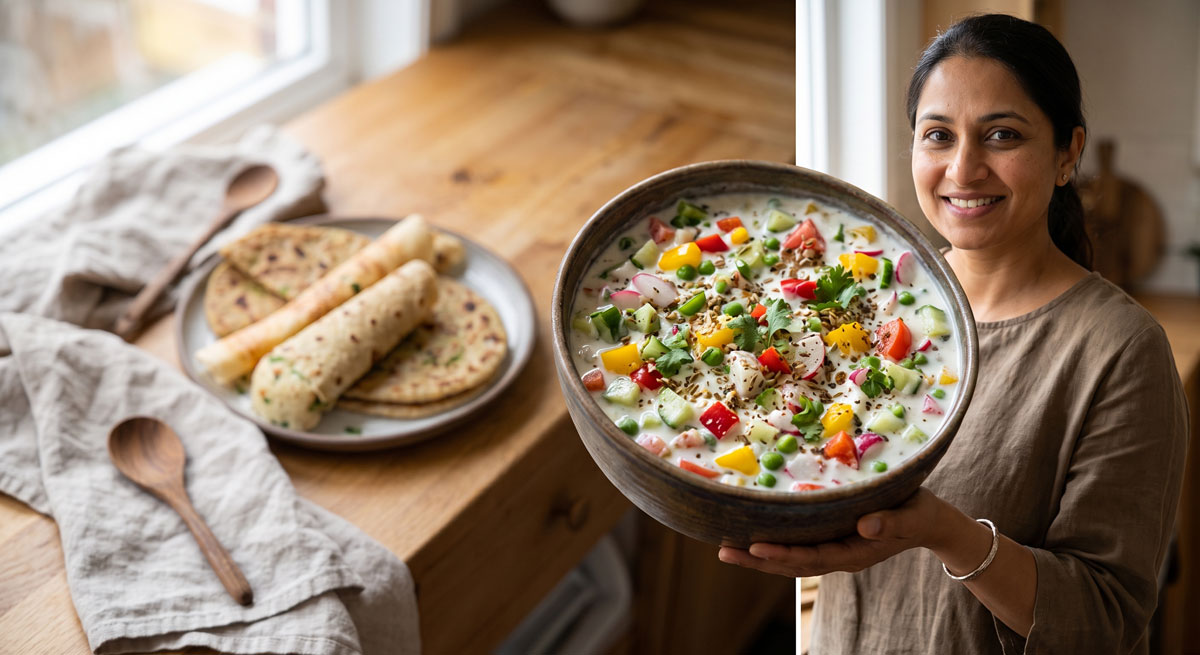
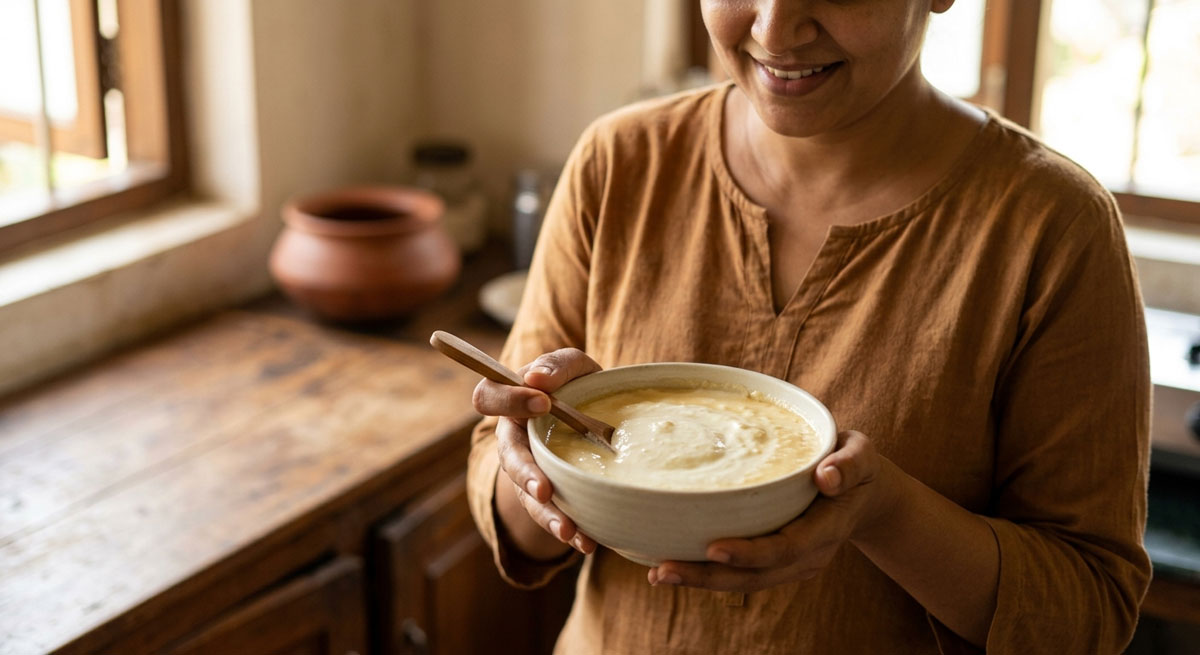
Ingredients
- 1 qt (32 fl oz / 946 ml) fresh whole cow’s milk
- 3 tbsp (1.5 oz / 45 g) plain yogurt starter (homemade or commercial), smooth
- Optional for firmer body:
- 0.5 cup (2.3 oz / 65 g) non-instant, non-fat dry milk powder
- 0.33 cup (2.6 fl oz / 80 ml) milk, room temperature
How to Make Perfect Homemade Yogurt DAHI Every Time
- If you are using the optional dry milk powder for a firmer, spoonable yogurt texture, combine 0.5 cup (2.3 oz / 65 g) of non-instant, non-fat dry milk powder with 0.33 cup (2.6 fl oz / 80 ml) of room-temperature milk in a blender. Process this mixture until it is lump-free and frothy, then set it aside.
- In a heavy-bottomed, 3 qt (or 3-liter) stainless steel saucepan, bring the 1 qt (32 fl oz / 946 ml) of whole milk to a quick boil. You must stir the milk constantly with a whisk to prevent it from scorching or sticking to the pan.
- Once the milk boils, immediately remove it from the heat. Allow the milk to cool to a temperature of 118°F (48°C). If you are pressed for time, you can quickly cool the milk by half-submerging the pan in a sink filled with cold tap water until it reaches the desired temperature.
- While the milk is cooling, prepare your vessel by rinsing a 1.5–2-quart (1.5–2-liter) glass, ceramic, or sterilized container with boiling water to sterilize it, then drying it thoroughly.
- When the boiled milk has cooled to approximately 115°F (46°C), transfer 0.5 cup (4 fl oz / 118 ml) of this milk into your sterilized container. Add 3 tbsp (1.5 oz / 45 g) of your smooth plain yogurt starter and whisk these two ingredients together until the mixture is perfectly smooth.
- Pour all of the remaining cooled milk, along with the prepared powdered milk mixture (if using), into the container with the starter. Whisk thoroughly to ensure all components are well blended. The target temperature of the entire milk mixture should now be near 112°F (44°C), which is the ideal starting point for setting your yogurt.
- Immediately cover the container with a clean towel or a tight-fitting lid and place it into a warm, draft-free environment maintained between 85°F–110°F (29°C–43°C). Good warm nooks include an oven with just the pilot light on, an oven preheated to 200°F (95°C) for 1.5 minutes and then turned off, or inside a well-insulated styrofoam cooler warmed by a closed jar of hot water. Ensure the environment is not too hot, as this will sour the yogurt before it sets, nor too cold, which will prevent it from setting entirely.
- Allow the dahi to set undisturbed for 4–10 hours. You should check the consistency after 5–6 hours; it should be thick and firm, knowing that it will set considerably more once refrigerated. The longer you let it ferment after it is firm, the stronger and more tart the flavor will become.
- As soon as the dahi is set to your liking, refrigerate the container, covered. Your Homemade Yogurt DAHI is best consumed within 3 days, although it will remain perfectly safe to eat for 4–5 days, after which it may be used in cooked recipes.
Approximate Nutritional Information
Note: The following estimates are per serving (1 cup / 8 oz / 240 ml), based on the standard recipe using whole cow's milk and excluding the optional dry milk powder.
- Calories: 150
- Carbohydrates: 12g
- Protein: 8g
- Fat: 8g
Chef’s Pro Tips
As a chef, I know that fermenting dairy at home can feel intimidating, but mastering it comes down to a few basic principles. Here are my top tips for ensuring your Homemade Yogurt DAHI comes out perfectly thick and creamy every time:
- Prioritize Milk Quality: For the most authentic, custard-like texture found in Vedic kitchens, stick to high-quality fresh whole milk. Skim or low-fat milk will yield a much thinner, watery product unless you heavily fortify it with milk powder.
- Monitor Temperatures Closely: The most common point of failure is temperature. If the milk is too hot (above 120°F / 49°C), it will kill the live bacteria in your starter. If it is too cold (below 100°F / 38°C), the bacteria will remain dormant and the yogurt will not set. A digital kitchen thermometer is your best friend here.
- Use a Fresh, Active Starter: Your dahi is only as good as the starter you use. Ensure your commercial or homemade starter is fresh, plain, and specifically lists "live active cultures" on the label. A sour or old starter will pass those exact traits onto your new batch.
- Do Not Disturb the Incubation: Once you have mixed your milk and starter and placed the container in its warm nook, leave it completely alone. Moving, shaking, or stirring the container during the 4–10 hour setting phase will break the delicate protein bonds forming, resulting in a separated or grainy texture.
Frequently Asked Questions (FAQ)
These questions are perfect for your AIOSEO FAQ Schema to capture long-tail search queries and win rich snippets on Google!
Why is my Homemade Yogurt DAHI runny or watery? Runny dahi usually happens for one of three reasons: the milk was too hot and killed the starter culture, the incubation environment was too cold for the bacteria to multiply, or the container was bumped and disturbed during the setting process. If you want a thicker result without using additives, make sure to boil the milk for a few extra minutes to evaporate some of the water content before cooling it.
Can I make Homemade Yogurt DAHI with low-fat or skim milk? Yes, you can, but it will lack the rich, custard-like consistency of traditional Vedic yogurt. If you must use low-fat or skim milk, I highly recommend using the optional step in the recipe to blend in non-instant, non-fat dry milk powder. This adds the necessary body and a touch of sweetness without adding butterfat.
How long will my Homemade Yogurt DAHI stay fresh in the refrigerator? For the best mild flavor and creamy texture, it is best to consume your freshly set dahi within 3 days. It will remain safe to eat for up to a week when stored in an airtight container, but the live bacteria will continue to ferment slowly, causing the yogurt to become progressively more tart and sour.
What is the best starter to use if I don't have homemade dahi on hand? If you are starting from scratch, head to a health food store or delicatessen and look for a high-quality, whole-milk plain yogurt. Brands like Brown Cow or those found in glass jars often work beautifully. Ensure there are no added thickeners (like gelatin or pectin), no sweeteners, and that the label explicitly states it contains live, active cultures.