A Sweet, Flaky Treat for a Festive Morning!
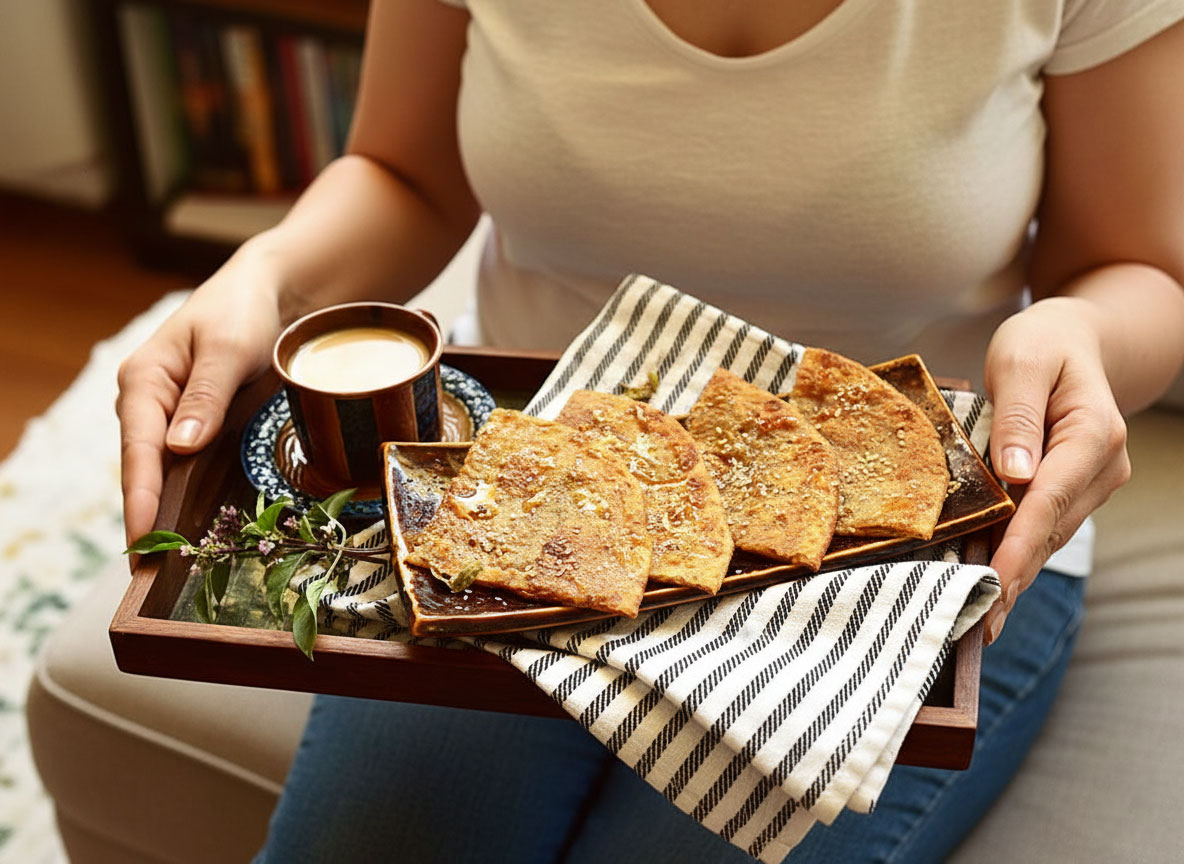
Imagine waking up to the aroma of warm, toasty flatbread and melting, caramel-like sugar. That’s the magic of Meetha Paratha, a sweet stuffed flatbread that turns any breakfast into a special occasion. This traditional treat features flaky, golden layers of dough wrapped around a rich, molten filling of jaggery—an unrefined cane sugar with deep molasses notes.
While jaggery is classic, this recipe is wonderfully versatile. Don’t have any on hand? No problem! Grated maple sugar, date sugar, or even your favorite fruit jam make for an equally delicious center. It’s a simple, comforting recipe that’s perfect for a weekend brunch, a festive celebration, or whenever you need a sweet, satisfying treat.
Ingredients
• For the Dough
• 4 cups / 520 g chapati flour (Alternatively: 2.67 cups / 335 g whole wheat flour mixed with 1.33 cups / 155 g unbleached white flour)
• 0.5 tbsp / 9 g salt
• 0.33 cup / 73 g melted unsalted butter or ghee
• 1.33 cups / 320 ml warm water, about 100°F / 38°C
• For the Filling
• 1 cup / 155 g shredded jaggery, grated maple sugar, or date sugar
• (Alternatively: 1 cup / 155 g of your favorite jam, jelly, or preserves)
• For Cooking & Assembly
• 0.67 cup / 146 g ghee or vegetable oil
• Extra chapati or wheat flour for dusting
• A small bowl of water for sealing
Instructions
1. Make the Dough
2. In a large bowl, whisk together the flour(s) and salt.
3. Drizzle in the melted butter or ghee. Use your fingertips to rub it into the flour until the mixture resembles coarse breadcrumbs.
4. Gradually pour in the warm water while mixing, until a rough dough forms. Add more water, a teaspoon at a time, if needed to create a medium-stiff dough.
5. Transfer the dough to a lightly floured surface and knead for 10 minutes until it becomes silky smooth and elastic.
6. Rest the Dough
7. Form the dough into a ball, lightly coat it with oil or ghee, and place it back in the bowl.
8. Cover the bowl and let the dough rest at room temperature for at least 30 minutes, or up to 3 hours. This step is crucial for a soft, pliable dough.
9. Portion and Roll the Dough
10. After resting, give the dough a brief knead and divide it in half. Roll each half into a log and cut it into 10 equal pieces, giving you 20 pieces total.
11. Roll each piece into a smooth ball and keep them covered with a damp cloth.
12. Take one ball, flatten it slightly, and dip both sides in dusting flour. Roll it out into a thin circle, about 6 inches (15 cm) in diameter.
13. Repeat with all 20 dough balls, placing the rolled circles on waxed paper in a single layer.
14. Assemble the Parathas
15. Place one dough circle on your work surface. Lightly brush the outer ½-inch edge with water.
16. Spread about 1.5 tablespoons of your chosen filling evenly over the center, leaving the wet border clear.
17. Carefully lay a second dough circle on top. Gently press from the center outwards to remove any air pockets.
18. Press the edges firmly to seal the paratha completely. Trim any very uneven edges with a pizza cutter if desired.
19. Repeat to assemble all 10 parathas, keeping them separated on waxed paper.
20. Cook the Parathas
21. Preheat a griddle or heavy-bottomed skillet over medium heat.
22. Lightly brush the griddle with ghee or oil. Carefully place one paratha on the hot surface and cook for about 1 minute.
23. Drizzle a teaspoon of ghee or oil over the top and around the edges. Continue cooking for another 1-2 minutes.
24. Flip the paratha. Cook for 2 more minutes, or until both sides are golden brown with crisp, reddish spots. The paratha should puff up in places.
25. Gently press down on the paratha with a spatula to encourage even cooking and puffing.
26. Serve
27. Serve the parathas hot and fresh off the griddle.
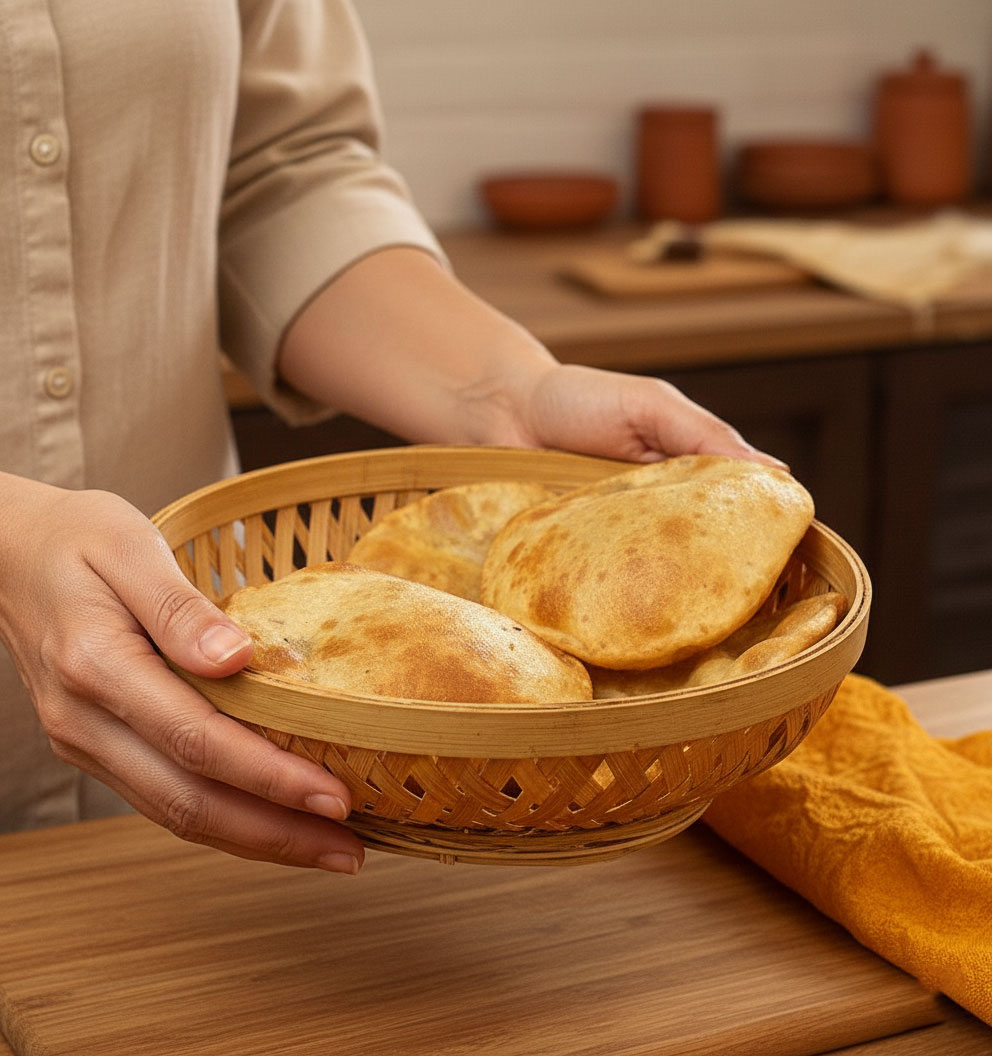
28. To keep them warm while cooking the entire batch, stack them in a cloth-lined basket or container.
Nutritional Information
• Approximate values per paratha, based on jaggery filling. Actual values may vary.
• Calories: 385 kcal
• Carbohydrates: 55 g
• Protein: 8 g
• Fat: 15 g
Pro Tips
• To prevent the sweet filling from leaking, ensure a tight seal. After pressing the edges together, you can gently crimp them with the tines of a fork for extra security and a decorative touch.
• Maintain a consistent medium heat. If the pan is too hot, the paratha will burn before the filling melts and the inside cooks. If it’s too cool, the paratha will become tough instead of soft and flaky.
• If using a runny jam, mix in a teaspoon of cornstarch or fine breadcrumbs. This will help thicken the filling as it heats, preventing it from oozing out during cooking.
• For the softest parathas, don’t skip the resting time. Allowing the dough to rest relaxes the gluten, making it much easier to roll thinly without it shrinking back.
FAQ
Q: Can I make this meetha paratha recipe vegan
A: Yes, this recipe is easily adapted to be vegan. For the dough, simply use melted vegetable oil or a vegan butter substitute instead of ghee or dairy butter. Use vegetable oil for cooking the parathas as well. The jaggery, maple sugar, and date sugar fillings are naturally vegan, and most fruit jams are too.
Q: Why is my sweet filling leaking out during cooking
A: A leaking filling is usually caused by an improper seal. Ensure you brush the edges of the dough with water and press them together firmly. For extra security, you can crimp the edges with a fork. If you’re using a runny jam, the recipe suggests mixing in a teaspoon of cornstarch to help thicken it and prevent it from oozing out.
Q: How do I store and reheat leftover parathas
A: Store cooked parathas in an airtight container at room temperature for up to 2 days or in the refrigerator for 3-4 days. To reheat, place them on a warm griddle or skillet for a minute on each side until soft. You can also wrap them in a damp paper towel and microwave for 20-30 seconds.
Q: Is this sweet paratha a good source of vegetarian protein
A: Each paratha provides about 8 grams of protein, primarily from the whole wheat flour. While it contributes to your daily intake, it is more of a carbohydrate-rich treat. To create a more protein-balanced vegetarian meal, consider serving it with a side of yogurt, a glass of milk, or a savory lentil dish.