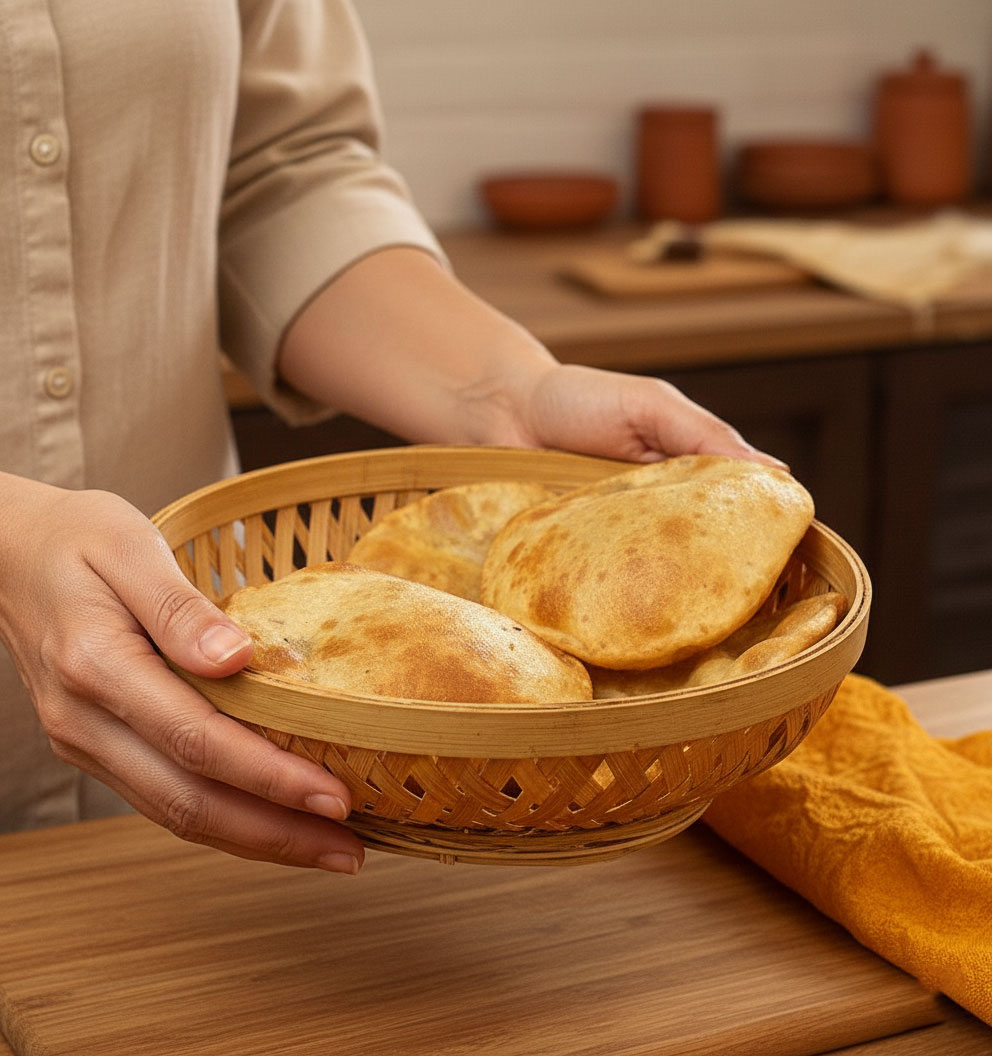
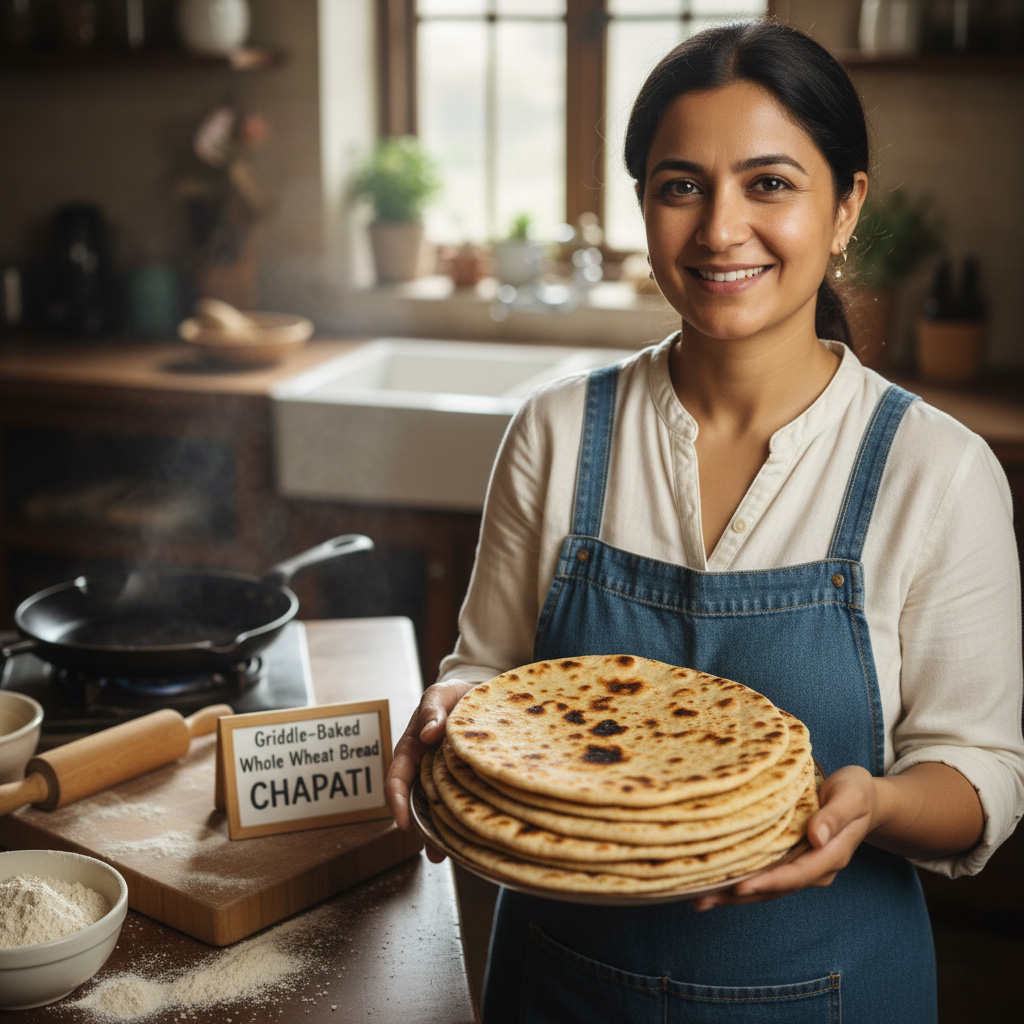
There’s nothing quite like the warm, comforting aroma of a fresh chapati puffing up on the stove. This simple, unleavened Indian flatbread, also known as roti, is the perfect vessel for scooping up rich dals and fragrant curries. Made with just a handful of pantry staples, the magic lies in the technique. Watching a flat disc of dough transform into a soft, airy balloon is one of the most satisfying kitchen moments! Don’t worry if your first few aren’t perfectly round—practice makes perfect, and even the ‘imperfect’ ones are incredibly delicious. Let’s get kneading!
Ingredients
• 2¼ cups / 295g Chapati flour (atta), or a mix of 1½ cups whole wheat flour and ¾ cup all-purpose flour
• ⅔ cup / 160ml warm water, plus more as needed
• 1 tbsp / 15ml melted ghee or butter (optional, for a softer dough)
• ½ tsp / 2ml salt (optional, to enhance flavor)
• Extra chapati flour for dusting
• Melted ghee or butter for brushing (optional)
Instructions
1. In a large mixing bowl, whisk together the chapati flour and optional salt. If using, add the melted ghee and rub it into the flour with your fingertips until it resembles coarse crumbs.
2. Gradually pour in the warm water while mixing with your other hand. Mix until a shaggy dough forms, adding more water one teaspoon at a time if needed to bring it all together.
3. Transfer the dough to a clean work surface and knead for 8-10 minutes. The final dough should be smooth, elastic, and soft to the touch but not sticky.
4. Form the dough into a ball, place it back in the bowl, and cover with a damp cloth. Let it rest at room temperature for at least 30 minutes, or up to 3 hours, to allow the gluten to relax.
5. After resting, knead the dough briefly for 30 seconds. Divide it into 14 equal portions and roll each into a smooth ball. Keep the dough balls covered to prevent them from drying out.
6. Place a flat griddle or tava over medium-high heat to preheat.
7. Take one dough ball, flatten it into a disc, and lightly dredge both sides in the dusting flour. Roll it out into a thin, even circle about 6 inches in diameter, using minimal dusting flour.
8. Gently slap the rolled chapati between your palms to shake off excess flour and place it on the hot griddle. Cook for about 1 minute, or until small bubbles appear on the surface.
9. Flip the chapati and cook the second side for about 30 seconds, until light brown spots appear.
10. To puff the chapati, use tongs to carefully lift it off the griddle and place it directly over a high-heat gas flame. It should puff up into a balloon within seconds. Quickly flip it once and remove.
11. If using an electric stove, return the chapati to the griddle after the second flip. Use a clean, folded kitchen towel to gently press down on the edges, encouraging it to puff up.
12. Immediately transfer the hot chapati to a cloth-lined container. Brush with melted ghee, if desired, and keep covered. Repeat with the remaining dough balls and serve warm.
Nutritional Information
• (per chapati)
• Calories: 85 kcal
• Carbohydrates: 16g
• Protein: 3g
• Fat: 1g
• Sodium: 85mg
• Fiber: 2g
Pro Tips
• for Perfect Chapatis
• The dough should be soft and pliable, like an earlobe. If it’s too dry, add water by the teaspoon; if too sticky, add a pinch of flour during kneading.
• Don’t skip the resting period! This step is crucial for relaxing the gluten, which results in softer chapatis that are easier to roll without shrinking back.
• Roll the chapati evenly from the center outwards, rotating it as you go. An evenly rolled chapati traps steam better, which is the secret to a perfect puff.
• Ensure your griddle (tava) is properly preheated over medium-high heat. If the heat is too low, the chapati will become dry and stiff.
FAQ
Q: Can I make this chapati recipe vegan
A: Yes, absolutely! This recipe is easily made vegan. Simply omit the optional melted ghee or butter in the dough. For brushing the finished chapatis, use a plant-based butter, coconut oil, or a neutral vegetable oil. They will be just as soft and delicious.
Q: What is the best flour for soft chapatis
A: For the most authentic and softest chapatis, Indian whole wheat flour, known as ‘atta’, is the best choice because it’s very finely milled. If you cannot find atta, the recipe’s recommended mix of whole wheat flour and all-purpose flour is an excellent substitute that creates a soft, pliable dough.
Q: How do I store leftover chapatis to keep them soft
A: To keep leftover chapatis soft, allow them to cool completely, then stack them and wrap them in a clean kitchen towel before placing them in an airtight container or zip-top bag. They can be stored at room temperature for 24 hours or in the refrigerator for 2-3 days. Reheat on a warm griddle or for a few seconds in the microwave.
Q: Why are my chapatis not puffing up
A: The most common reasons for chapatis not puffing are: the dough is too stiff (it should be very soft), it wasn’t rested long enough, or the heat is too low. Ensure your griddle (tava) is very hot and you roll the chapati evenly to trap the steam inside, which is what causes the perfect puff.