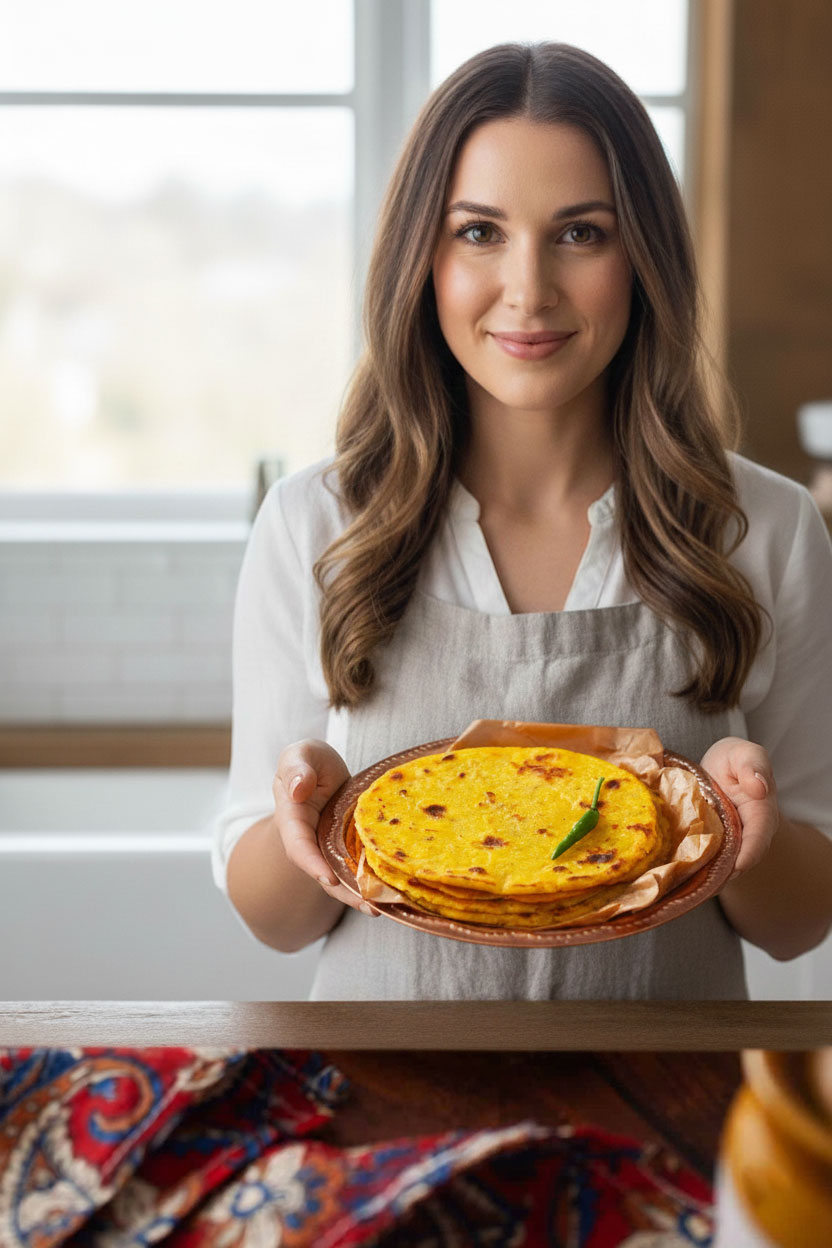
Transport yourself to the vibrant fields of Punjab with a bite of this incredibly soft and sweet Makki di Roti. Forget the dry, crumbly corn flatbreads you might have tried before. Our secret? Fresh corn pulp, which infuses every bite with moisture and a delicate sweetness that perfectly complements the nutty whole wheat and earthy cornmeal. This isn’t just a recipe; it’s a taste of tradition, a perfect partner for a hearty bowl of Sarson ka Saag, and a guaranteed way to warm your soul. Let’s get kneading!
Ingredients
• For the Dough
• 1.75 cups / 420 ml water
• 3 tbsp / 45 ml vegetable oil or butter, divided
• 1 cup / 145 g fine yellow cornmeal
• Pulp and juice from 1 large ear of fresh corn, about 3-4 tbsp
• 1.33 cups / 175 g whole wheat flour (atta), plus extra for dusting
• 1 tsp / 6 g salt
• 1 tbsp / 12.5 g sugar
• 0.25 tsp / 0.5 g cayenne pepper
• For Cooking and Serving
• Melted butter or ghee, for brushing
Instructions
1. Make the Cornmeal Porridge: In a small saucepan, bring the water to a boil. Turn off the heat, stir in half the oil (1.5 tbsp), and whisk in the cornmeal until smooth. Cover, reduce the heat to the lowest setting, and let it steam for 4-5 minutes. Stir in the remaining oil (1.5 tbsp) and set aside to cool completely.
2. Prepare the Fresh Corn: Slice down the center of each kernel row on your ear of corn. Using the back of your knife, scrape down the cob to extract all the sweet pulp and juice into a bowl.
3. Mix the Dough: In a large mixing bowl, combine the whole wheat flour, salt, sugar, and cayenne. Add the fresh corn pulp and the cooled cornmeal mixture. Mix until a shaggy dough forms, then turn it out onto a clean surface.
4. Knead to Perfection: Knead the dough for about 5 minutes until it becomes smooth, pliable, and medium-soft. If it’s too sticky, add a sprinkle of flour; if too dry, add a teaspoon of water at a time.
5. Rest the Dough: Form the dough into a ball, place it in a bowl, and cover. Let it rest at room temperature for at least 30 minutes or up to 3 hours. This step is crucial for a soft, easy-to-roll roti!
6. Divide and Shape: Gently knead the rested dough for a moment and divide it into 16 equal portions. Roll each portion into a smooth ball and keep them covered with a damp cloth to prevent them from drying out.
7. Roll Out the Rotis: Preheat a cast-iron skillet or tawa over medium-low heat. Take one dough ball, flatten it into a 2-inch disc, and lightly dust with flour. Roll it into a thin, 6-inch circle, using minimal flour to prevent sticking.
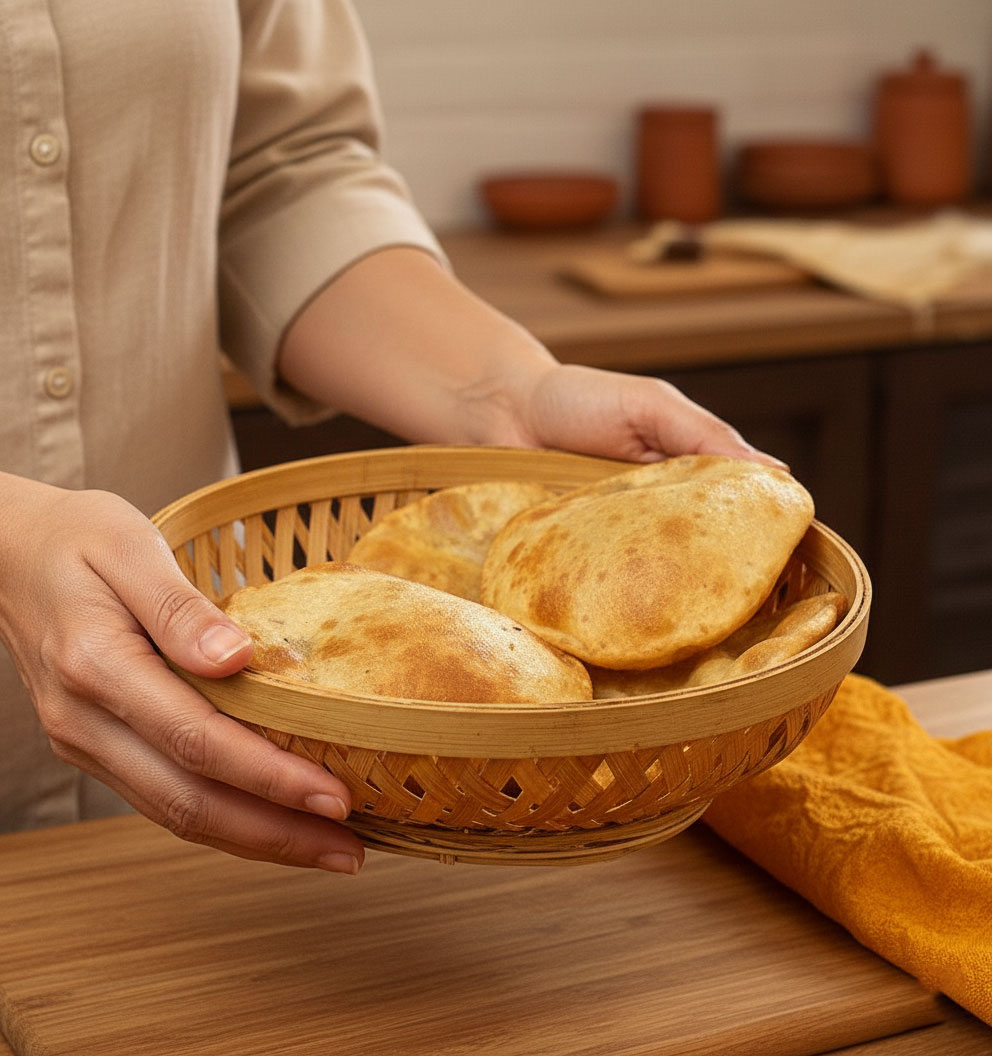
8. Cook the Flatbreads: Slap the roti between your hands to shake off excess flour and place it on the hot skillet. Cook for about 90 seconds until you see small bubbles and the color lightens. Flip and cook for another 90 seconds on the other side. It should puff up beautifully! Gently press with a folded cloth to encourage puffing.
9. Serve Warm: Transfer the cooked roti to a cloth-lined container to keep it warm and soft. Brush generously with melted butter or ghee, if you like. Repeat with the remaining dough and serve immediately.
Nutritional Information
• Serving Size: 1 flatbread
• Calories: 95 kcal
• Carbohydrates: 16 g
• Protein: 2 g
• Fat: 2.5 g
• Fiber: 2 g
Pro Tips
• for Perfect Makki di Roti
• For easier rolling, place the dough ball between two sheets of parchment paper or inside a zip-top bag (with the sides cut open) and roll it out. This prevents sticking and cracking.
• The dough should be soft and pliable, like play-doh. If it feels stiff, knead in a teaspoon of warm water; if too sticky, add a dusting of whole wheat flour.
• Don’t skip the resting time! This allows the flour and cornmeal to fully hydrate, making the dough much more flexible and the final rotis incredibly soft.
• Maintain a consistent medium-low heat. If the skillet is too hot, the roti will burn on the outside before cooking through. If it’s too cool, it won’t puff up.
FAQ
Q: Can I make this Makki di Roti recipe vegan
A: Yes, this recipe is easily made vegan. Simply use vegetable oil or a plant-based butter in the dough instead of dairy butter. For serving, brush the warm rotis with melted vegan butter or a neutral oil instead of ghee.
Q: What vegetarian dishes pair well with this roti for a complete meal
A: While the classic pairing is Sarson ka Saag, this versatile roti is delicious with any protein-rich vegetarian curry. Try it with Dal Makhani (creamy black lentils), Chana Masala (chickpea curry), or a paneer dish to create a balanced and hearty meal.
Q: How do I store and reheat leftover Makki di Roti
A: Store cooked and cooled rotis in an airtight container lined with a cloth or in a zip-top bag. They will stay soft at room temperature for a day or in the refrigerator for 2-3 days. To reheat, warm them on a dry skillet (tawa) over medium-low heat for about 30 seconds per side until soft and pliable again.
Q: Is this recipe gluten-free
A: This specific recipe is not gluten-free as it uses whole wheat flour (atta) to make the dough pliable and easy to roll. For a gluten-free version, you would need to omit the wheat flour, which would result in a more traditional but harder-to-handle dough.