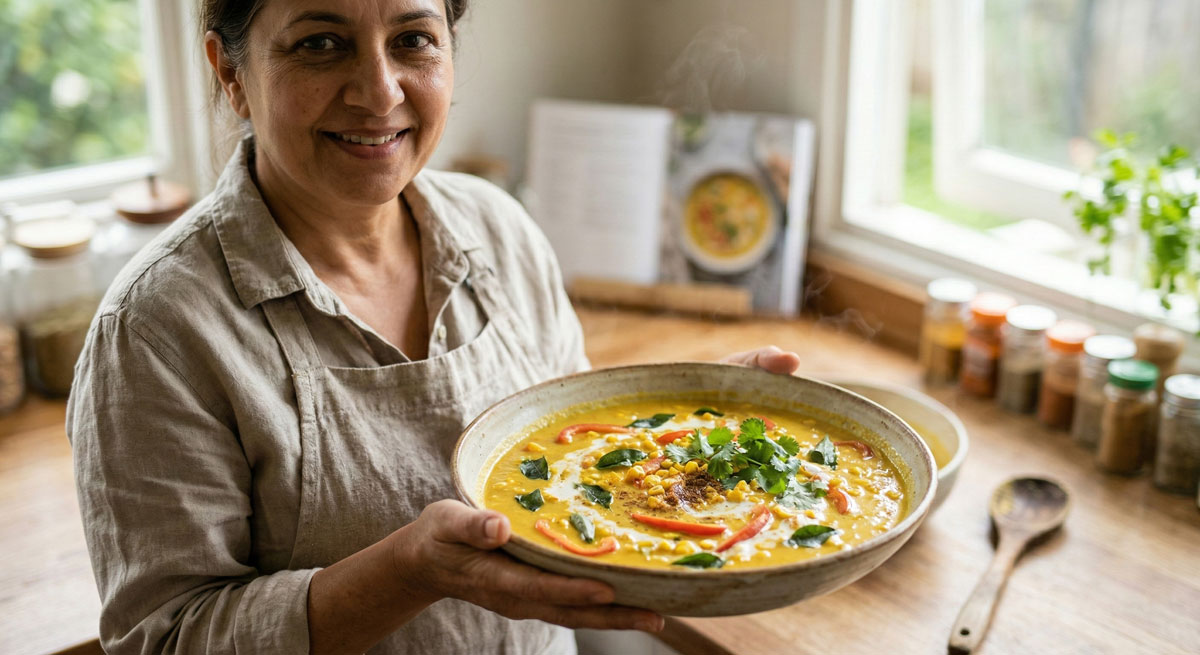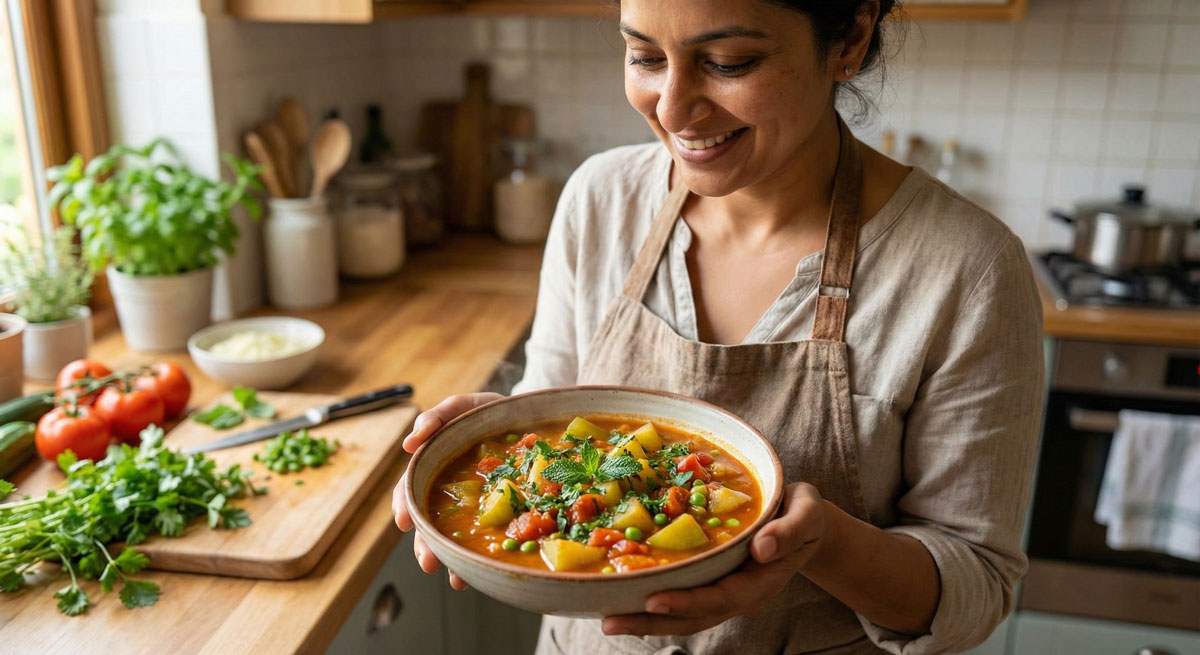
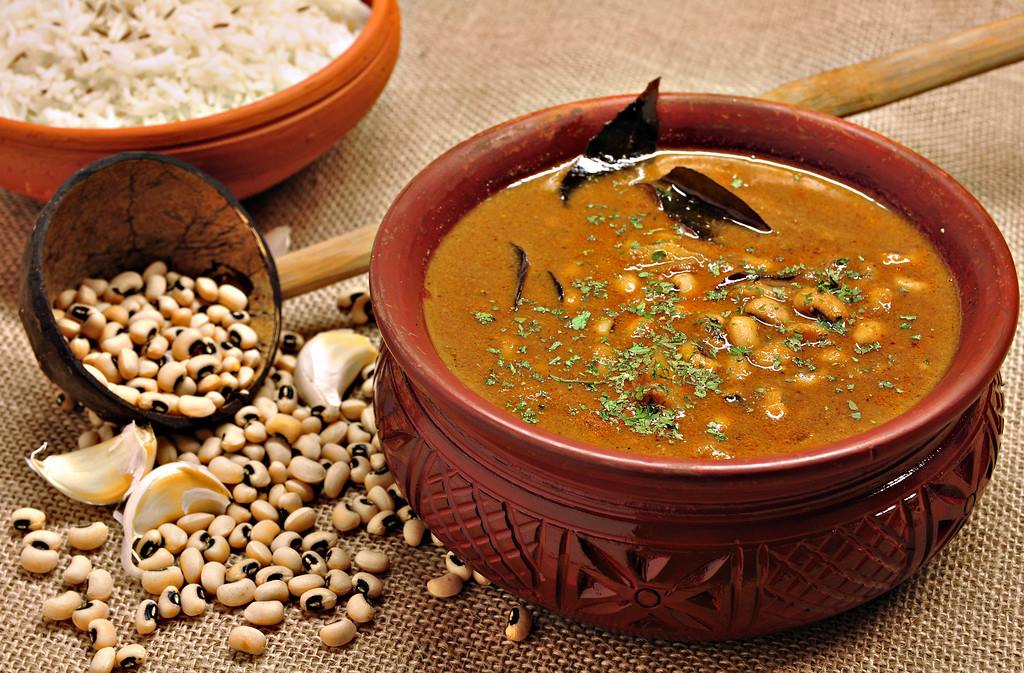
On a trip to Goa, I stumbled upon the incredible Highway Gomatak restaurant. It was there that the wonderful head chef, Shashikala Potnis, and her daughter-in-law, Sanjali, generously shared their family secrets with me. This Goan Black-Eyed Pea Curry, or *Alsande Tonak*, is one of those treasures. It’s a creamy, aromatic, and deeply satisfying dish that transports me right back to their bustling, love-filled kitchen. Now, I’m so excited to share this authentic taste of Hindu Goan cuisine with you!
Ingredients
• 2¼ cups / 450g dried black-eyed peas, washed and soaked overnight
• 3 medium onions, peeled
• 1 well-packed cup / 100g fresh grated coconut, or defrosted if frozen
• 5 tablespoons / 75ml olive or peanut oil
• 4–5 medium tomatoes / 680g, peeled and finely chopped
• ¾–1 teaspoon red chili powder
• 2 tablespoons ground coriander
• ¾ teaspoon ground turmeric
• 2 teaspoons salt, or to taste
• 2 teaspoons garam masala
• 6¾ cups / 1.6 liters water, divided
Instructions
1. Drain the soaked peas, place them in a large pan with 6 cups of water, and bring to a boil. Skim any froth from the surface, then reduce the heat to low, partially cover, and simmer for 45–60 minutes, or until the peas are tender. Set aside in their cooking liquid.
2. While the peas are cooking, prepare the coconut paste. Roughly chop one of the onions and add it to a blender with the grated coconut and ¾ cup of water. Blend until you have a very smooth paste, scraping down the sides as needed.
3. Finely chop the remaining two onions. Heat the oil in a heavy-bottomed pan over medium-high heat. Once hot, add the chopped onions and fry, stirring frequently, until they begin to brown at the edges.
4. Add the peeled and chopped tomatoes to the pan. Continue to fry, breaking them down with your spoon, until they soften into a dark, thick paste and the oil begins to separate at the edges.
5. Tip in the coconut paste from the blender. Stir well, scraping the bottom of the pan. Add the chili powder, ground coriander, and turmeric. Cook for 7–8 minutes over medium heat, stirring often, until the mixture is fragrant and lightly browned.
6. Pour in the cooked peas along with all their cooking liquid. Stir in the salt and garam masala. Bring the curry to a gentle simmer and cook, uncovered, for 15–20 minutes, allowing the flavors to meld and the gravy to thicken. Stir occasionally.
Nutritional Information
• Calories: 465 kcal
• Protein: 18g
• Carbohydrates: 58g
• Fiber: 16g
• Fat: 19g
• Note: Approximate values per serving.
Pro Tips
• For a richer, more authentic flavor, use fresh or frozen grated coconut rather than the dry, desiccated kind.
• Don’t rush the process of frying the onions and tomatoes. Developing this deep, caramelized base is the secret to a flavorful curry.
• The curry will thicken as it sits. When reheating, you can add a splash of hot water to bring it back to your desired consistency.
• Serve this curry with steamed rice or traditional Goan breads like *pao* or *chapati* to soak up the delicious gravy.
FAQ
Q: Is this Goan black-eyed pea curry a good source of plant-based protein
A: Absolutely! Black-eyed peas are a fantastic source of plant-based protein and fiber. A single serving of this Alsande Tonak provides approximately 18g of protein, making it a hearty and satisfying meal for any vegetarian or vegan diet.
Q: Can I use other beans or lentils in this curry
A: Yes, this Goan curry base is very versatile. While black-eyed peas are traditional for Alsande Tonak, you can easily substitute them with other legumes like chickpeas, kidney beans, or even brown lentils. Just be sure to adjust the cooking time accordingly until your chosen legume is tender.
Q: How can I store this vegetarian curry and does it freeze well
A: This curry stores beautifully and the flavors even deepen overnight. Keep it in an airtight container in the refrigerator for up to 4 days. It also freezes very well. Let it cool completely, then freeze in portions for up to 3 months. Thaw overnight in the fridge and reheat gently, adding a splash of water to loosen the gravy if needed.
Q: Is this Alsande Tonak recipe vegan
A: Yes, this recipe is naturally vegan! It uses olive or peanut oil and contains no dairy or other animal products, making it a perfect choice for a fully plant-based meal.