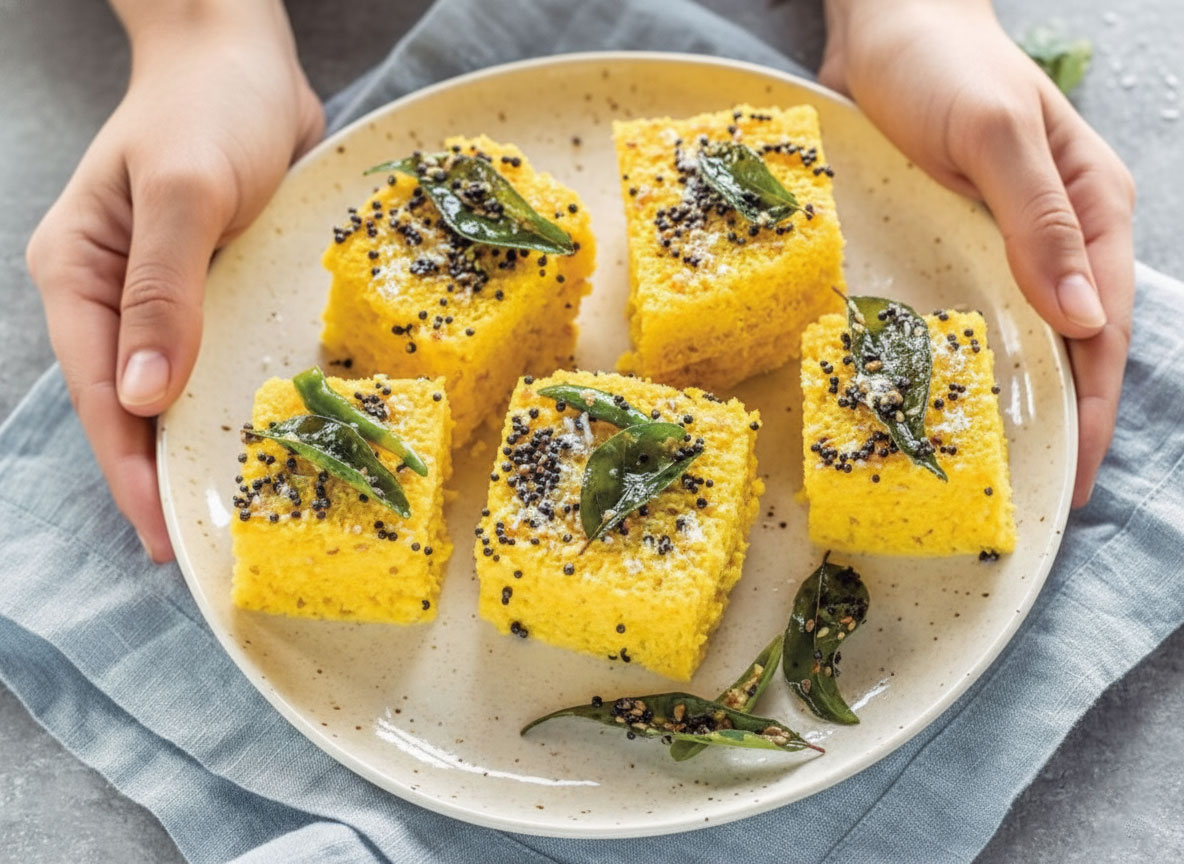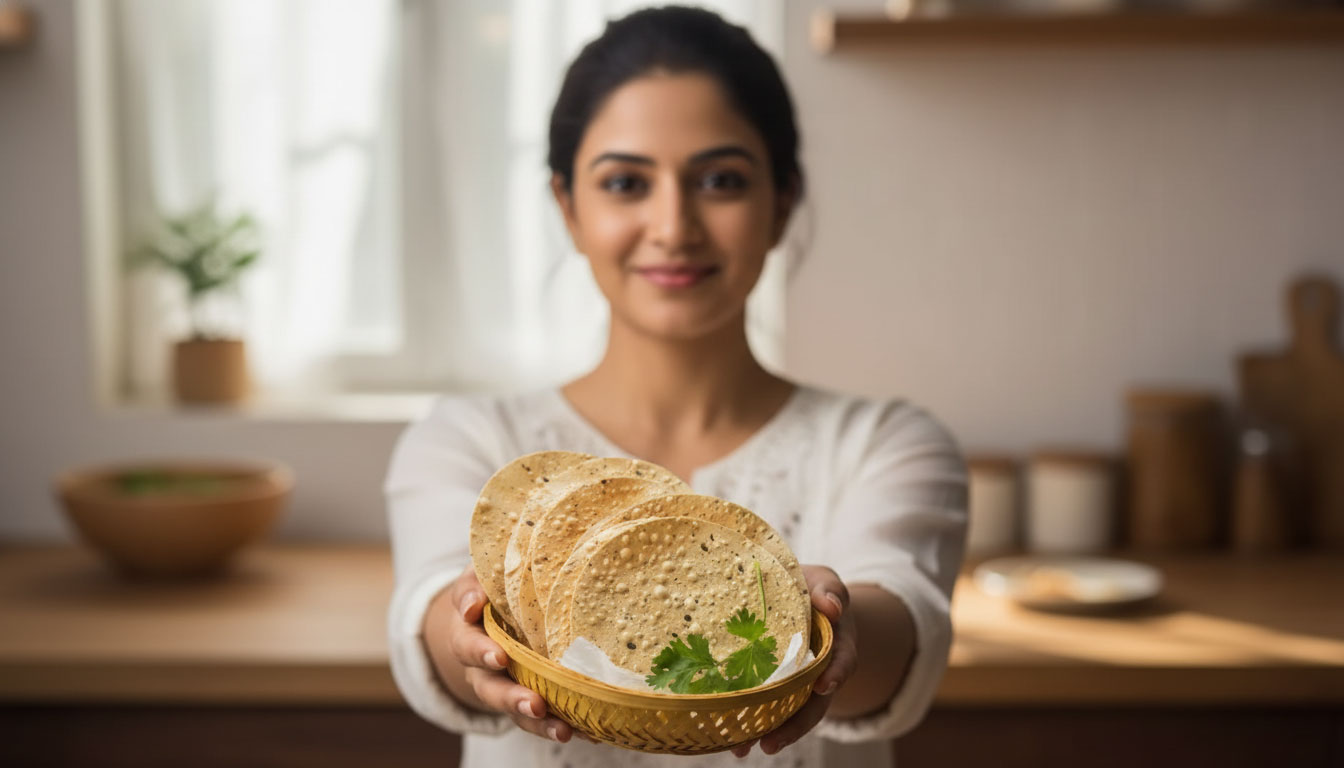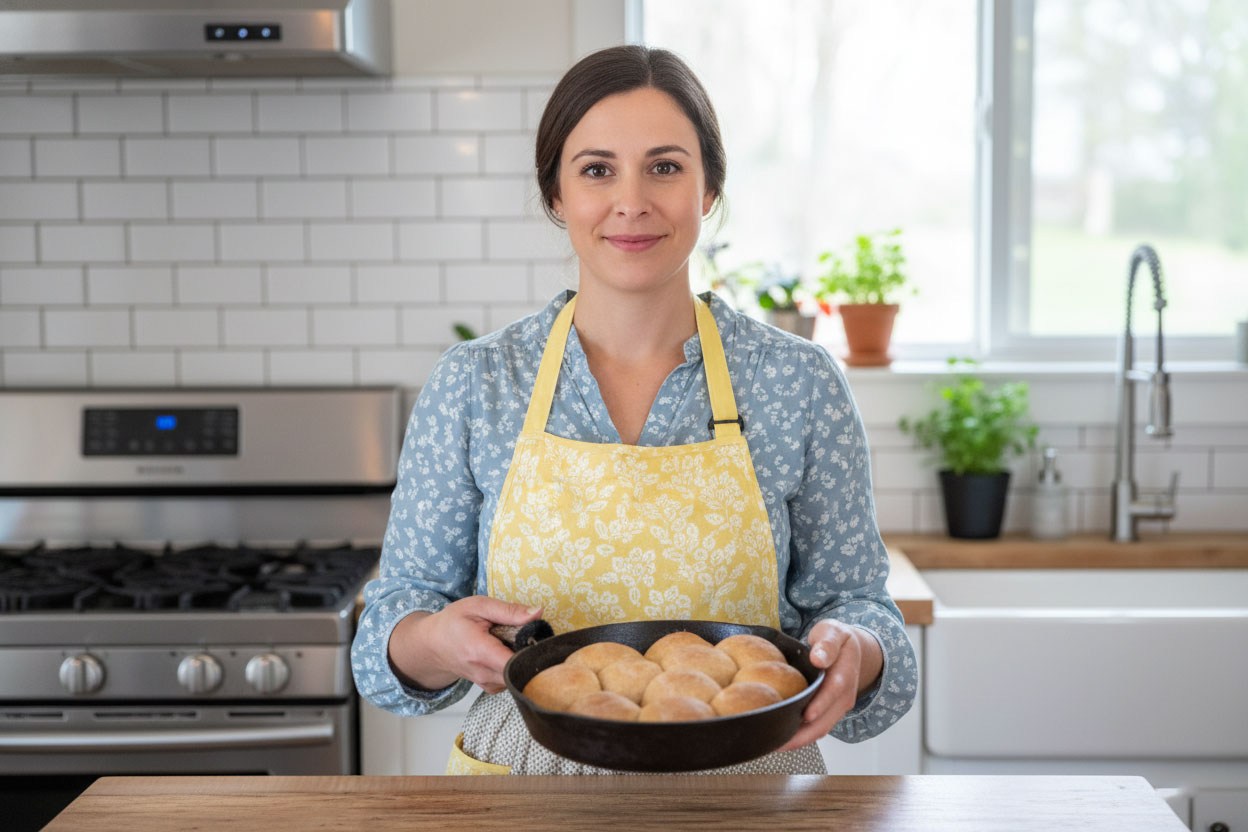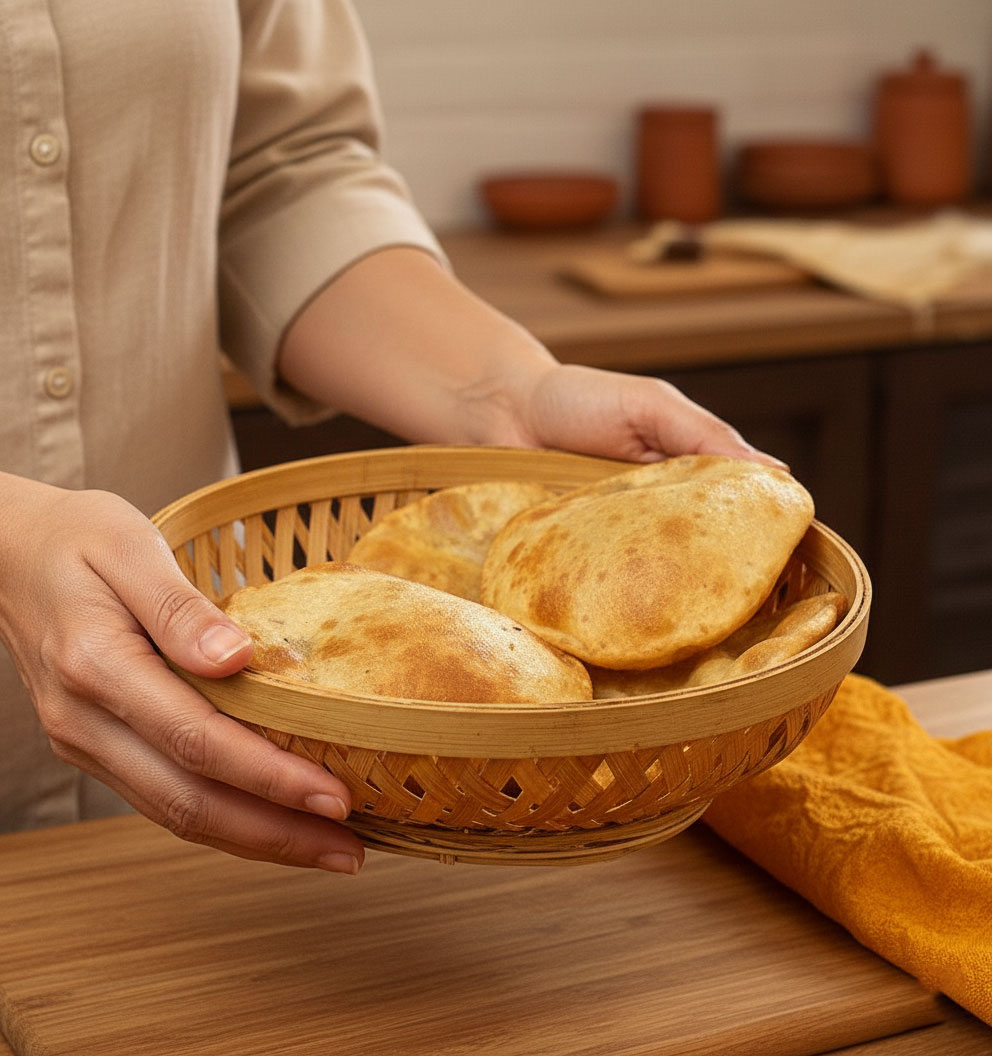
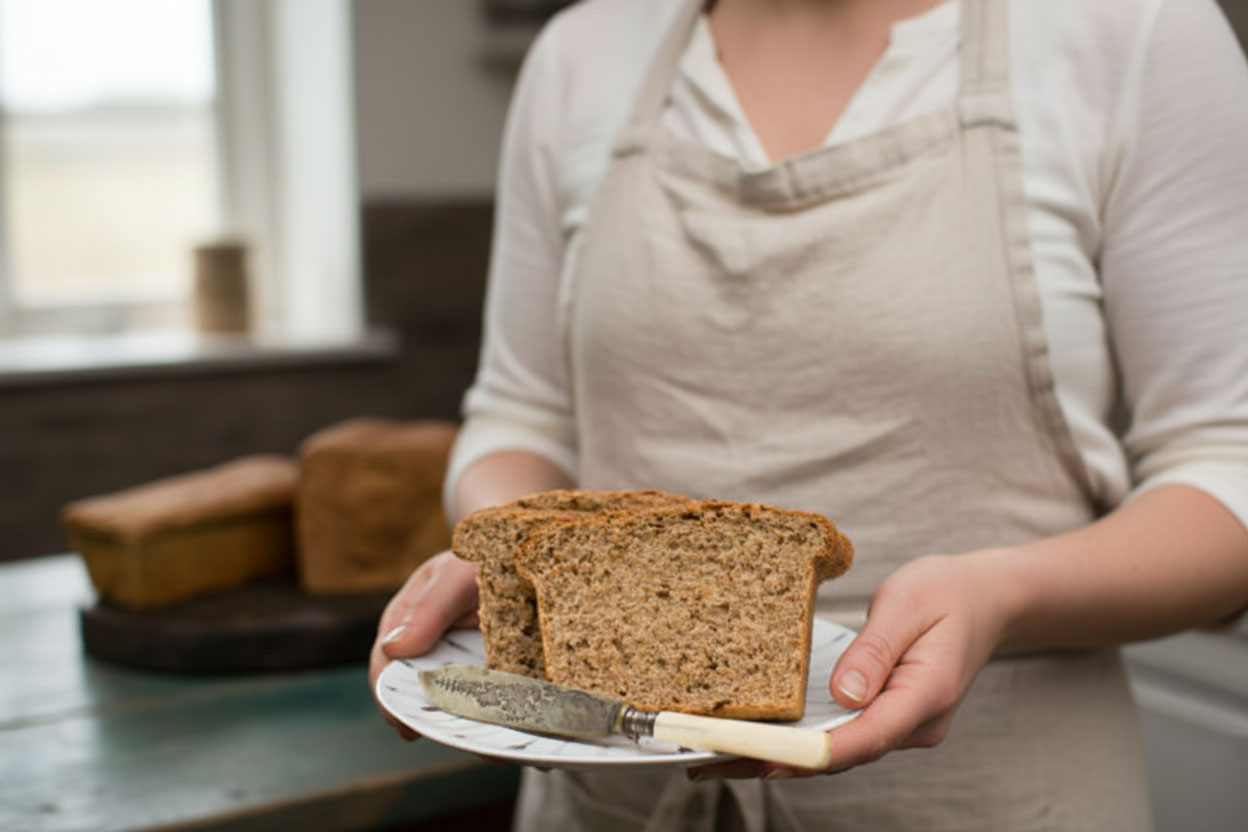
There’s nothing quite like the magic of a phulka puffing up into a perfect, steamy balloon. This recipe takes that magic to a whole new level by starting with the grain itself—whole wheat berries. We’ll soak and grind them to create a dough that’s unbelievably fresh, nutty, and wholesome. Yes, it takes a little planning, but the reward is the softest, most flavorful flatbread you’ve ever tasted. It’s a game-changer!
Ingredients
• 1 cup / 230 g whole soft wheat berries (or rye, oat, or triticale berries)
• 3 cups / 395 g sieved chapati flour (atta), plus more for dusting
• Alternative: 3 cups / 355 g unbleached all-purpose flour
• 0.25 cup / 35 g milk powder or powdered buttermilk
• 2 tbsp / 30 ml melted butter or ghee, plus more for brushing
• 1 tsp / 5 ml salt (optional)
• 0.67 cup / 160 ml warm water (approx. 100°F / 38°C), plus more as needed
• Special Equipment
• Food processor with a steel blade
• Heavy griddle (tava) or cast-iron skillet
• Tongs
• Gas stovetop or a high-heat electric burner
• A clean, cloth-lined basket to keep phulkas warm
Instructions
1. Directions
2. First, prepare the wheat berries. For an overnight soak, place the berries in a bowl, cover with hot water, and let them sit for 8 hours. For a quicker method, cover the berries with boiling water and let them stand for 4 hours.
3. After soaking, transfer the berries and their water to a saucepan. Simmer uncovered for 10 minutes. Drain them well and spread them on a paper towel to cool completely.
4. Place the cooled, cooked berries and 0.5 cup / 65 g of the flour into a food processor. Process for 2 to 3 minutes until the mixture becomes a very fine powder.
5. Add the remaining flour, milk powder, melted butter (or ghee), and salt to the food processor. Pulse a few times to combine everything.
6. With the machine running, slowly stream in the warm water. Process for about 45 seconds, until a smooth, elastic dough forms and pulls away from the sides. If the dough seems too dry, add more water 1 tsp at a time. If it’s too wet, add flour 1 tbsp at a time.
7. Form the dough into a ball, place it on your counter, and cover it with an inverted bowl. Let it rest for at least 30 minutes and up to 3 hours. A longer rest makes for softer phulkas!
8. Lightly knead the rested dough and divide it into 18 to 20 equal portions. Roll each piece into a smooth ball and keep them covered with a damp cloth to prevent drying out.
9. Preheat your griddle (tava) over moderately low heat.
10. Take one ball of dough, flatten it slightly, and dip both sides in dusting flour. Roll it out into a thin, even circle about 8 inches / 20 cm in diameter.
11. Gently place the rolled dough on the hot griddle. Cook for about 1 minute, until you see small bubbles forming and the top surface looks lighter.
12. Using tongs, flip the phulka and cook the other side for another 30 seconds.
13. Now for the magic puff! If using a gas stove, remove the griddle and turn a burner to high. Hold the phulka with tongs about 2 inches over the open flame. It will puff up within seconds. Quickly flip to lightly char both sides. If using an electric stove, place the phulka directly on a preheated high-heat burner coil to puff.
14. Immediately transfer the puffed phulka to your cloth-lined basket. Brush with melted butter or ghee if you like. Repeat with the remaining dough and serve warm.
Nutritional Information
• Nutritional Highlights
• Rich in dietary fiber from whole wheat berries, promoting digestive health.
• A wonderful source of complex carbohydrates for sustained energy.
• Contains essential minerals like manganese and phosphorus.
• Made with wholesome, unprocessed for a truly nourishing meal.
Pro Tips
• The final dough should be soft and pliable, like an earlobe. Don’t be afraid to add a teaspoon of water or flour to get the consistency just right.
• Resting the dough is not optional! This step is crucial for developing gluten, which makes the phulkas easier to roll and incredibly soft.
• For perfectly round phulkas, apply even pressure with your rolling pin and give the dough a quarter turn after each roll.
• Ensure your griddle (tava) is properly preheated. If it’s too cool, the phulka won’t cook properly; if it’s too hot, it will burn before it has a chance to puff.
FAQ
Q: Can I make this phulka recipe vegan
A: Absolutely. To make this recipe vegan, simply replace the dairy milk powder with a plant-based alternative like soy or coconut milk powder, or you can omit it. Use a neutral vegetable oil or vegan butter instead of dairy butter or ghee for both the dough and for brushing.
Q: What vegetarian dishes pair well with this phulka
A: These wholesome phulkas are the perfect companion for a wide variety of vegetarian dishes. They are excellent for scooping up lentil dals like dal tadka, chickpea curries (chana masala), or any vegetable stir-fry (sabzi). They also pair beautifully with yogurt-based raita and pickles.
Q: Is this whole wheat berry phulka a good source of protein
A: Yes, using whole wheat berries provides a good base of plant-based protein and fiber. To create a complete protein meal, which is important in a vegetarian diet, pair these phulkas with protein-rich dishes like lentil soup (dal), bean curries, or paneer preparations.
Q: What is the best way to store these homemade phulkas
A: To keep phulkas soft, store them wrapped in a clean cloth inside an airtight container at room temperature for up to 2 days. For longer storage, you can freeze them. Stack the cooled phulkas with a piece of parchment paper between each one, place them in a freezer-safe bag, and freeze for up to a month. Reheat on a griddle or directly over a flame.