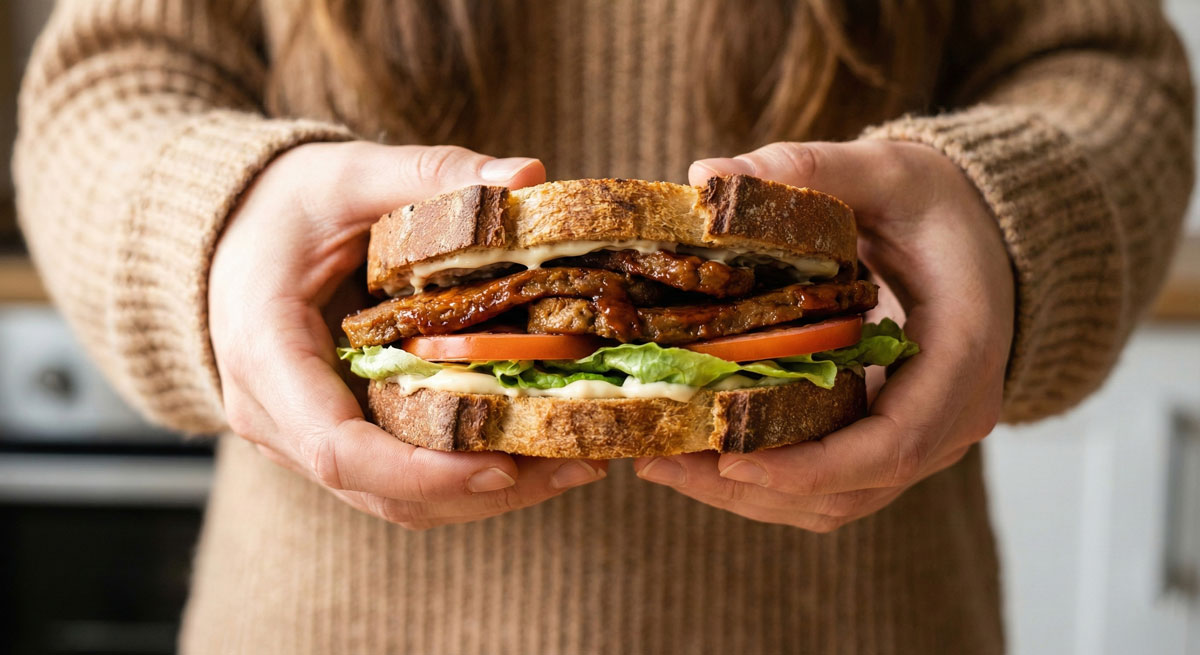
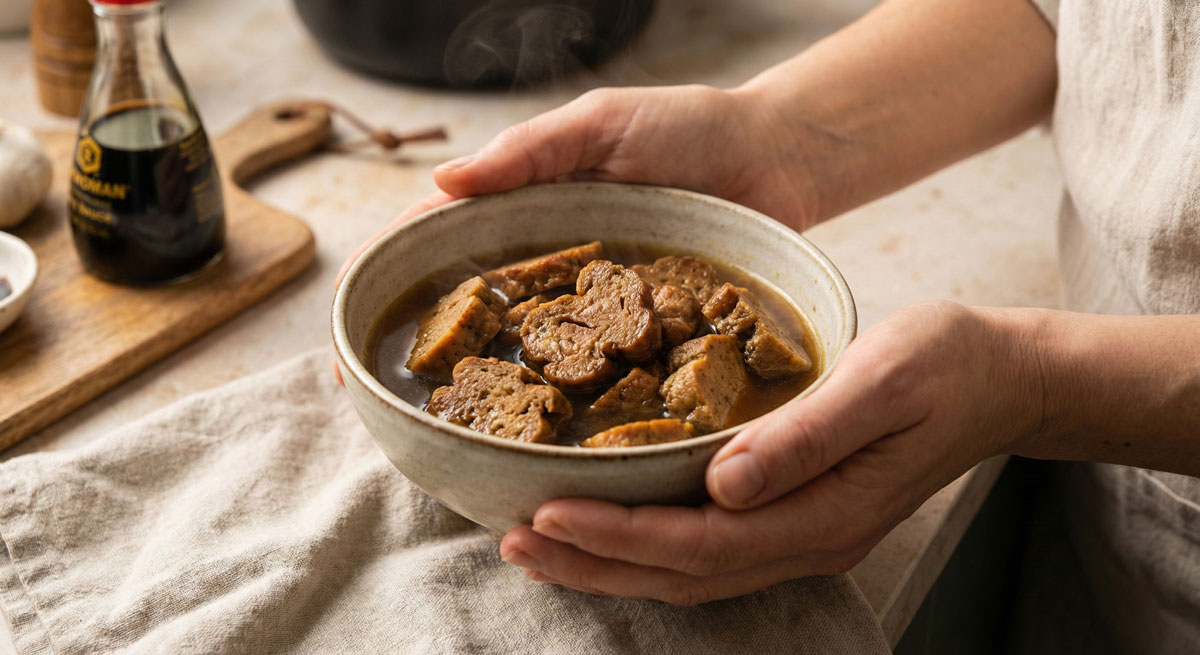
Ever thought making your own vegetarian ‘meat’ was some kind of kitchen magic? I did too! But this Basic Homemade Seitan recipe proves just how simple and rewarding it is. There’s nothing more satisfying than transforming a few simple ingredients into a savory, chewy protein powerhouse. It’s fresher, way cheaper than store-bought, and is about to become your new meal-prep superstar.
Ingredients
• 1 cup / 5 oz / 142g Vital Wheat Gluten
• 1 tsp / 0.1 oz / 3g Onion Powder
• 1 tsp / 0.1 oz / 3g Garlic Powder
• 2 tbsp / 1.1 oz / 32g Soy Sauce
• 0.75 cup / 6 fl oz / 177ml Strong Vegetable Broth, for the dough
• 6 cups / 48 fl oz / 1.42 L Strong Vegetable Broth, for simmering
Instructions
1. In a large mixing bowl, whisk together 1 cup / 5 oz / 142g of vital wheat gluten, 1 tsp / 0.1 oz / 3g of onion powder, and 1 tsp / 0.1 oz / 3g of garlic powder until fully combined.
2. In a separate small bowl, mix together 2 tbsp / 1.1 oz / 32g of soy sauce and 0.75 cup / 6 fl oz / 177ml of vegetable broth.
3. Slowly pour the liquid mixture into the dry while mixing with your hands until a single, rubbery ball of dough forms.
4. Knead the dough on a clean surface for 2–3 minutes to develop the gluten and create an even, chewy texture.
5. Allow the dough to rest for 5 minutes, then knead again for another 1–2 minutes.
6. Divide the dough into 3 equal pieces and stretch or press each piece to approximately 1 inch / 2.54 cm thickness.
7. In a large pot, bring the remaining 6 cups / 48 fl oz / 1.42 L of vegetable broth to a gentle simmer over low heat.
8. Carefully place the seitan pieces into the pot, cover, and let them simmer slowly for 45–60 minutes. Avoid a rolling boil, as this can make the texture spongy.
9. Remove the seitan from the broth and let it cool slightly before slicing or using in your favorite recipes.
Nutritional Information
• (Estimated per serving, based on 8 servings)
• Calories: 60 kcal
• Carbohydrates: 3g
• Protein: 12g
• Fat: 0.5g
• Sodium: 280mg
Pro Tips
• for the Best Homemade Seitan
• Never Let It Boil: The most critical rule is to maintain a gentle simmer. A rolling boil will make the seitan expand too quickly and become spongy rather than dense and meaty.
• Don’t Skimp on Kneading: Kneading develops the gluten strands. For a firm, shreddable texture, knead for the full recommended time. For a softer loaf, knead less.
• Flavor the Dough: Vital wheat gluten is plain. Adding seasonings like onion and garlic powder directly into the flour is essential for building flavor from the inside out.
• Let It Rest: Seitan firms up as it cools. For the best texture, let it rest in its broth in the fridge overnight. It’s the ultimate meal-prep protein!
FAQ
Q: Can I make this seitan recipe soy-free
A: Yes, absolutely. To make this recipe soy-free, simply replace the 2 tablespoons of soy sauce with an equal amount of tamari (if gluten is not a concern) or coconut aminos. This substitution will still provide the essential savory, umami flavor.
Q: How much protein is in this homemade seitan
A: This homemade seitan is an excellent source of plant-based protein. Based on the nutritional estimate, a single serving packs about 12 grams of protein for only 60 calories, making it a very efficient protein for vegetarian and vegan diets.
Q: What is the best way to store homemade seitan
A: For the best texture and to keep it from drying out, store the cooled seitan in its simmering broth in an airtight container in the refrigerator. It will stay fresh for up to a week. You can also freeze seitan for up to 3 months.
Q: Why is my seitan spongy instead of meaty
A: A spongy texture is almost always caused by cooking the seitan at too high a temperature. It’s crucial to maintain a very gentle simmer, not a rolling boil. Boiling causes the seitan to expand too quickly, creating large air pockets and a bread-like, spongy consistency.