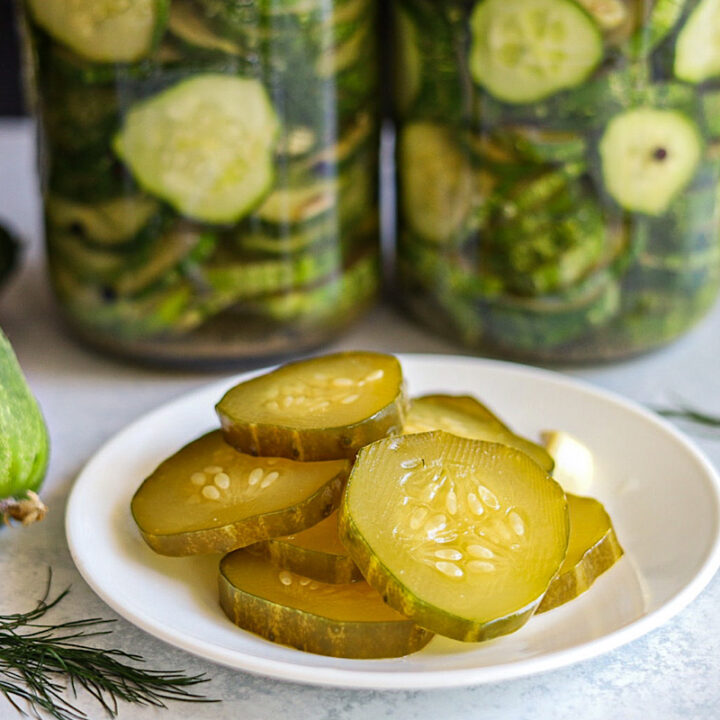
There’s nothing quite like the satisfying *snap* of a perfectly crisp, homemade dill pickle. Forget those limp, overly salty spears from the grocery store! This recipe unlocks the secret to creating jars of tangy, crunchy, and incredibly flavorful pickles right in your own kitchen. It’s a classic canning project that’s easier than you think and fills your pantry with a taste of summer that you can enjoy all year long. Let’s get pickling!
Ingredients
• 2¼ lbs or 1 kg pickling cucumbers
• 1 pint or 475 ml cider vinegar
• 1½ cups or 355 ml water
• 3 Tbs or 45 g sugar
• 2 Tbs or 36 g pickling salt
• 1 bay leaf
• 5 to 6 whole cloves
• ¼ tsp or 1 g celery seeds
• ½ tsp or 1 g whole peppercorns
• ½ tsp or 1 g mustard seeds
• 1 tsp dill seeds or 2 heads fresh dill weed
Instructions
1. First, prepare your cucumbers by washing them thoroughly and quartering them lengthwise into spears.
2. In a large non-reactive pot, combine the cider vinegar, water, sugar, salt, and bay leaf.
3. Place the cloves, celery seeds, peppercorns, mustard seeds, and ½ teaspoon of the dill seeds into a small muslin spice bag and add it to the pot. If you’re using fresh dill, omit the dill seeds from the spice bag.
4. Bring the brine mixture to a rolling boil, then reduce the heat and let it simmer gently for 15 minutes to allow the flavors to meld.
5. While the brine simmers, prepare two clean quart-sized canning jars. Place ¼ tsp of the remaining dill seeds (or 1 head of fresh dill) into the bottom of each jar.
6. Remove the bay leaf and the spice bag from the hot brine and discard them.
7. Tightly pack the cucumber spears vertically into the prepared jars. You want them to be snug but not crushed.
8. Carefully pour the hot vinegar mixture over the cucumbers in each jar, ensuring they are completely submerged. Leave at least a ½-inch of headspace at the top of the jar.
9. Wipe the jar rims, secure the lids, and process the jars in a boiling-water bath for 20 minutes.
10. Carefully remove the jars from the water bath and let them cool completely on a towel. Check that the seals are firm, then label and store your pickles in a cool, dark place.
Nutritional Information
• Pickles are a low-calorie and fat-free snack.
• They are a source of Vitamin K, which is important for bone health.
• Due to the brining process, pickles are typically high in sodium.
Pro Tips
• for Perfect Pickles
• For the crispiest pickles, use the freshest, firmest pickling cucumbers you can find. Avoid any with soft spots.
• Trim about 1/16th of an inch off the blossom end of each cucumber. This end contains an enzyme that can lead to softer pickles.
• Always use pickling or canning salt. Iodized table salt can make your brine cloudy and negatively impact the flavor and texture.
FAQ
Q: Is this dill pickle recipe vegan friendly
A: Yes, this recipe is completely vegan. All ingredients, including the cider vinegar, sugar, and spices, are plant-based. For strict vegans, you can ensure your sugar is not processed with bone char by choosing organic or certified vegan brands.
Q: How can I make these pickles lower in sodium for a healthier vegetarian snack
A: While pickling salt is essential for proper preservation and texture, you can experiment with slightly reducing it. However, for a significantly lower-sodium option, consider making refrigerator pickles, which don’t rely as heavily on salt for safety. Always enjoy canned pickles in moderation as part of a balanced vegetarian diet.
Q: How long will these homemade vegetarian pickles last in my pantry
A: When properly canned and sealed, these dill pickles are a fantastic vegetarian pantry staple. They will last for at least one year when stored in a cool, dark place. After opening a jar, keep it refrigerated and enjoy the pickles within a few weeks for the best flavor and crunch.