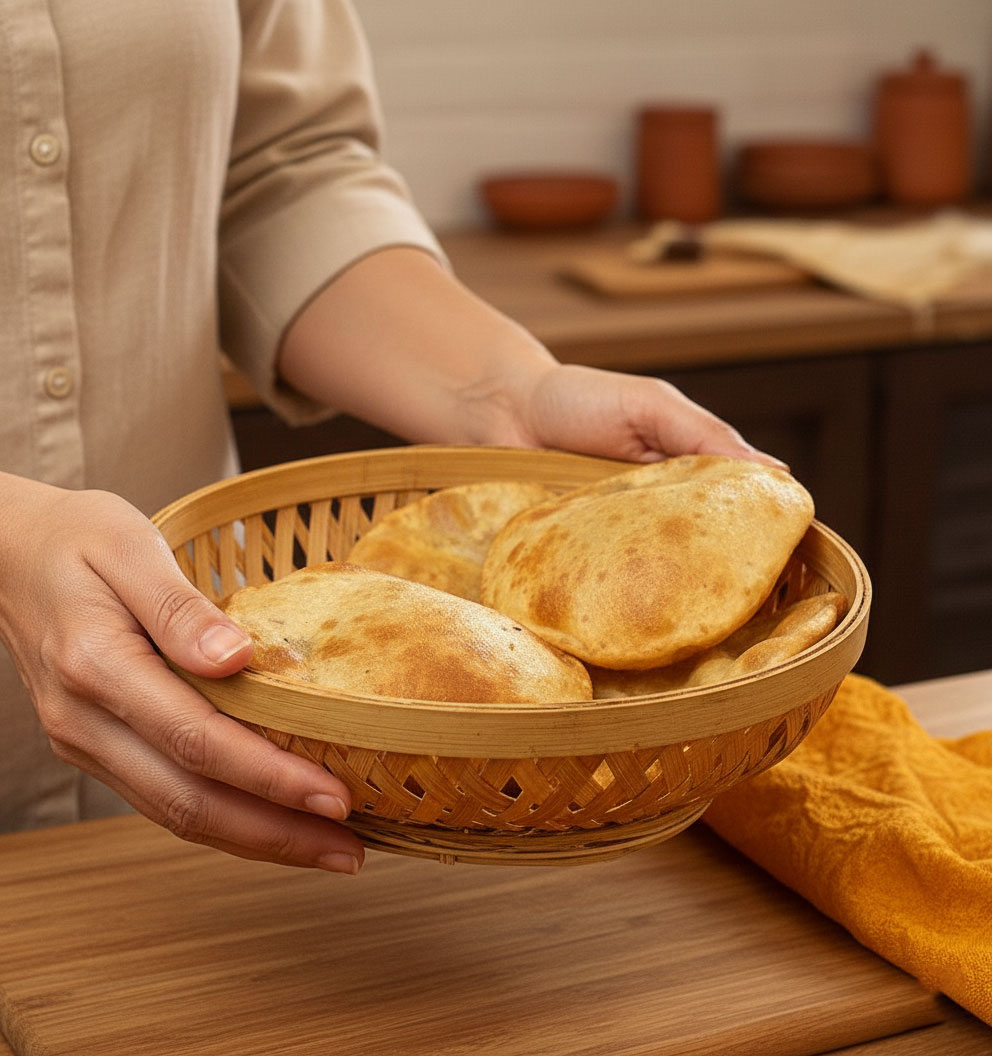
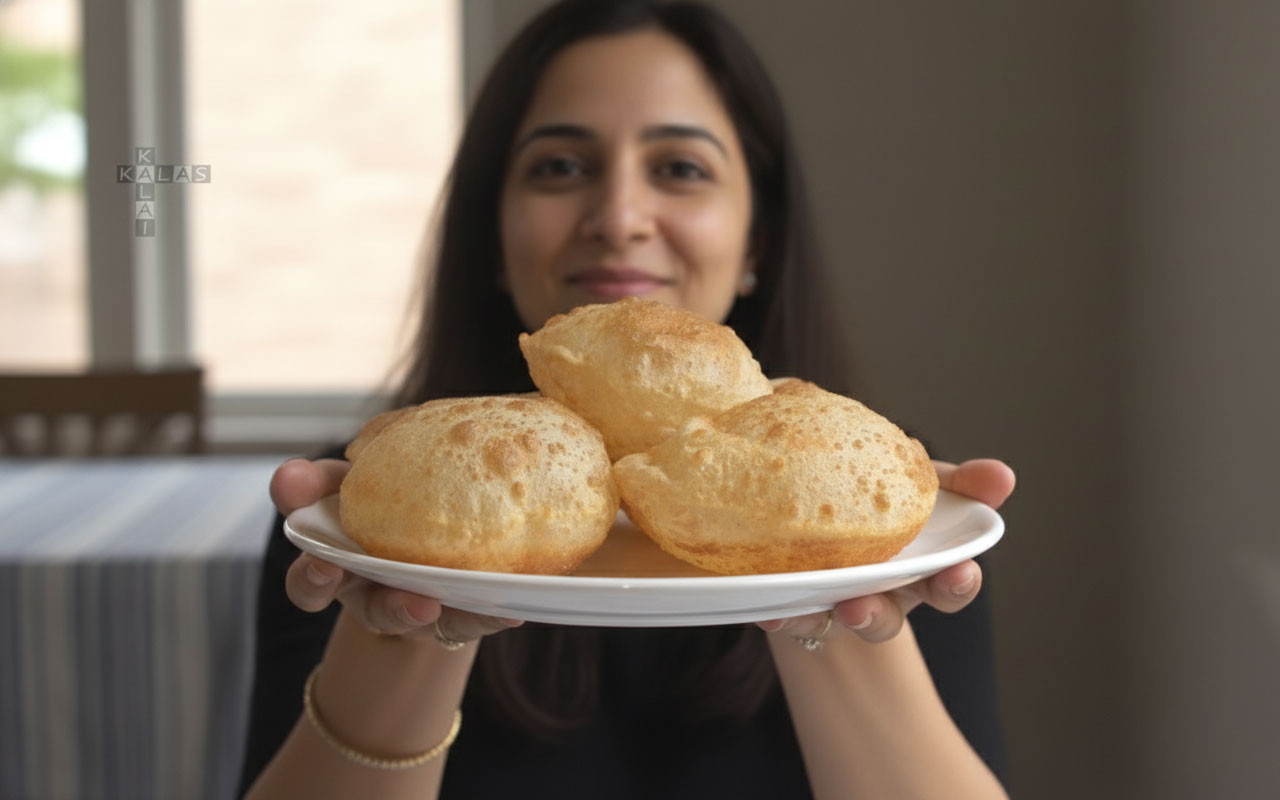
There’s nothing quite like the magic of a poori puffing up into a golden balloon in hot oil! This beloved Indian fried bread is a festival on a plate—crisp on the outside, yet wonderfully soft and chewy inside. My recipe elevates the classic poori with a hint of toasted cumin and black pepper, while a buttermilk-based dough ensures they stay tender and pliable long after they’ve cooled. Whether you’re serving them with a rich chana masala or a simple potato sabzi, these masala pooris are guaranteed to steal the show. Let’s get frying!
Ingredients
• 🥣
• Flour: 2 cups sieved chapati flour, 260 g / 9.2 oz
• OR: 1 cup whole wheat flour, 130 g / 4.6 oz, mixed with 1 cup all-purpose flour, 120 g / 4.2 oz
• Salt: 0.5 teaspoon
• Spices: 1 tbsp coarsely crushed dry-roasted cumin seeds OR 1 tbsp black poppy seeds
• Pepper: 1 teaspoon freshly cracked black pepper
• Fat for dough: 2 tbsp melted ghee or vegetable oil
• Buttermilk: 0.75 cup / 180 ml at room temperature, plus more as needed
• Frying Oil: Ghee or vegetable oil for deep-frying
Instructions
1. 📝
2. In a large mixing bowl, whisk together the flour, salt, cumin (or poppy seeds), and black pepper.
3. Add the 2 tbsp of melted ghee or oil. Rub it into the flour with your fingertips until the mixture resembles coarse breadcrumbs.
4. Pour in about two-thirds of the buttermilk (0.66 cup / 160 ml) and begin to mix, gathering the flour into a cohesive mass. Add more buttermilk, a little at a time, until you have a dough that is stiff yet pliable.
5. Transfer the dough to a clean work surface. Lightly oil your hands and knead for 7-8 minutes until the dough is completely smooth and silky.
6. Rub the surface of the dough with a little oil, place it in the bowl, and cover with an inverted bowl or a damp cloth. Let it rest at room temperature for at least 30 minutes or up to 3 hours.
7. After resting, knead the dough briefly. Divide it into 16 equal portions and roll each portion between your palms to form a smooth, crack-free ball. Keep the balls covered with a damp cloth to prevent them from drying out.
8. Lightly oil your rolling surface. Take one ball, flatten it into a disc, and roll it out evenly into a 5-inch (12.5 cm) circle. Don’t make it too thin. Place the rolled poori on a baking sheet and cover; repeat with the remaining dough balls, arranging them in a single layer.
9. Pour oil to a depth of 3 inches (7.5 cm) in a wok or deep pot. Heat over medium-high heat until it reaches 365°F / 185°C. A small piece of dough dropped in should sizzle and rise to the top quickly.
10. Gently slide one poori into the hot oil. As it rises to the surface, use the back of a slotted spoon to gently press it down. This pressure will cause it to puff up like a balloon.
11. Once puffed, flip the poori over and fry for another 15-20 seconds until the other side is golden brown. The entire process for one poori takes less than a minute.
12. Remove the poori with the slotted spoon, allowing excess oil to drain back into the pot. Place it on a wire rack or a plate lined with paper towels.
13. Serve immediately while hot and puffed. To keep a batch warm, place them in a single layer on a baking sheet in a 275°F / 135°C oven for up to 30 minutes.
Nutritional Information
• Per poori (approximate)
• Calories: 85 kcal
• Carbohydrates: 10 g
• Protein: 2 g
• Fat: 4 g
• Sodium: 50 mg
Pro Tips
• for Perfect Pooris
• Dough consistency is key. Your dough should be firm and stiff, not soft like chapati dough. A softer dough will absorb excess oil during frying.
• Maintain hot oil. Keep the oil consistently hot, around 365°F / 185°C. If the oil isn’t hot enough, the pooris will be greasy; if it’s too hot, they’ll burn before puffing.
• The gentle press. As the poori bobs to the surface, use the back of a slotted spoon to gently press it down into the oil. This pressure is what encourages it to inflate perfectly.
• Roll with oil, not flour. Instead of using dry flour for rolling, lightly oil your work surface or the dough ball. This keeps the frying oil clean and prevents a burnt flour taste.
FAQ
Q: Can I make this masala poori recipe vegan
A: Yes, you can easily make this recipe vegan. Simply replace the 2 tbsp of ghee in the dough with vegetable oil. For the buttermilk, create a vegan version by mixing 0.75 cup of unsweetened almond or soy milk with 2 teaspoons of lemon juice or apple cider vinegar. Let it sit for 5-10 minutes to curdle before using it in the dough.
Q: What vegetarian protein dishes pair well with masala poori
A: Masala pooris are incredibly versatile. For a protein-rich vegetarian meal, pair them with chickpea-based dishes like Chana Masala or Pindi Chole. They are also excellent with lentil curries such as Dal Makhani or Tadka Dal, or with paneer dishes like Paneer Butter Masala or Matar Paneer.
Q: How do I store leftover masala pooris
A: Pooris are best enjoyed immediately while hot and puffed. However, if you have leftovers, let them cool completely and store them in an airtight container at room temperature for up to 24 hours. They will lose their puffiness but will remain soft. You can reheat them in a 275°F / 135°C oven for a few minutes to warm them through.
Q: Why are my pooris absorbing too much oil
A: Greasy pooris are usually caused by two main factors. First, ensure your dough is stiff and firm, not soft like chapati dough; a soft dough will soak up oil. Second, maintain the correct oil temperature (around 365°F / 185°C). If the oil isn’t hot enough, the poori will sit in it for too long and become oily instead of puffing up quickly.