Ingredients for Authentic Baigan Sak
4 tbsp (60 ml) peanut oil plus 2 tbsp (30 ml) mustard oil (or 6 tbsp/90 ml vegetable oil)
- 8–10 oz (230–285 g) small eggplant, cut into 0.75-inch (2 cm) cubes
- 0.5 tsp (2 ml) garam masala
- 0.5 tsp (2 ml) turmeric
- 1–2 whole green jalapeños or dried whole red chilies (adjust to heat preference)
- 1 tsp (5 ml) crushed fennel seeds
- 1 tsp (5 ml) crushed coriander seeds
- 1 tsp (5 ml) crushed cumin seeds
- 0.5 cassia or bay leaf
- 16 oz (455 g) fresh spinach, trimmed and coarsely chopped (or 10 oz/285 g frozen, pressed dry)
- 1 tsp (5 ml) jaggery or maple syrup
- 0.5 tbsp (7 ml) salt
- 1 tbsp (15 ml) lemon or lime juice
- 4–5 lemon or lime wedges for garnish
Step-by-Step Baigan Sak Cooking Guide
- Heat 4 tbsp (60 ml) of peanut or vegetable oil in a nonstick wok or large frying pan over moderately high heat.
- When the oil is hot but not smoking, drop in the 8–10 oz (230–285 g) of eggplant cubes and stir-fry until they are reddish-brown and crisp on the outside.
- Remove the eggplant with a slotted spoon, drain on paper towels, and immediately sprinkle with 0.5 tsp (2 ml) garam masala and 0.5 tsp (2 ml) turmeric, tossing to coat.
- Add the 2 tbsp (30 ml) of mustard oil (or remaining vegetable oil) to the same pan and heat until the mustard oil reaches the smoking point for a few seconds.
- Immediately add the chilies, crushed seeds (fennel, coriander, cumin), and the cassia leaf to the hot oil.
- After a few seconds of sizzling, add the 16 oz (455 g) of spinach, 1 tsp (5 ml) jaggery, and 0.5 tbsp (7 ml) salt.
- Reduce the heat to moderate and cook for approximately 4 minutes, stirring frequently until the greens are wilted but still vibrant.
- Fold in the 1 tbsp (15 ml) lemon juice and the spiced eggplant cubes, tossing gently just to reheat the eggplant without losing its crispness.
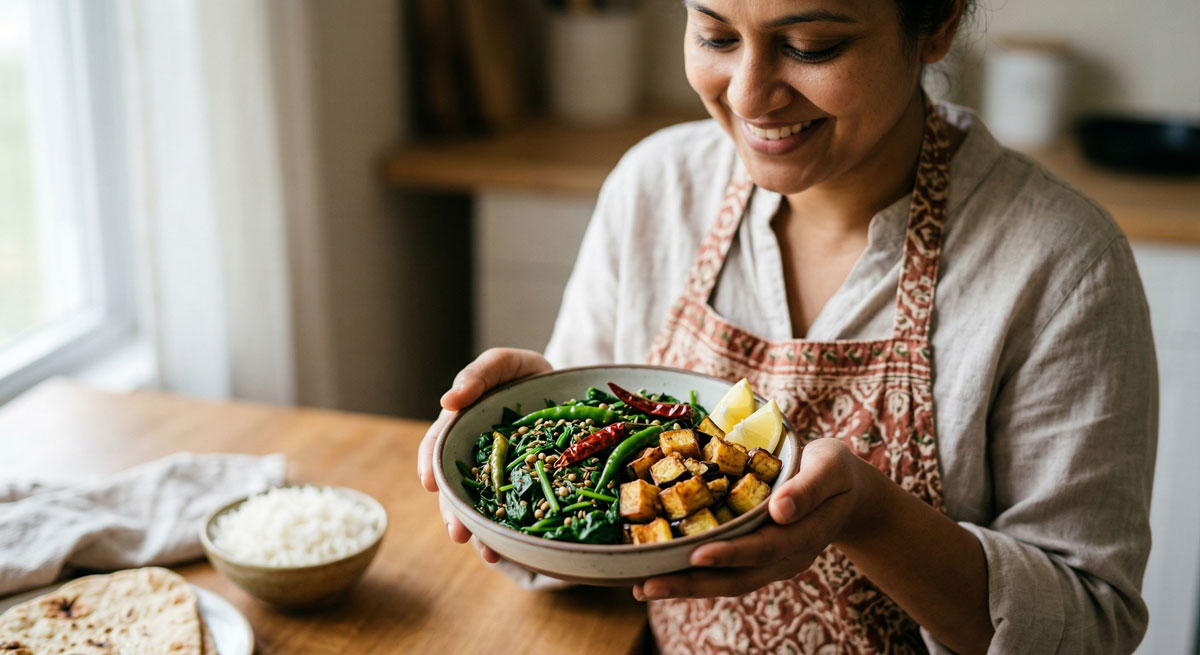
- Serve the Baigan Sak immediately while the colors are exuberant, garnished with fresh lime wedges alongside steaming white rice.
Nutritional Information for Baigan Sak
(Approximate values per serving based on 5 servings)
- Calories: 185 kcal
- Total Fat: 16g
- Total Carbohydrates: 8g
- Protein: 3g
Pro Tips for the Perfect Baigan Sak
- The Mustard Oil "Flash": For an authentic Bengali flavor, you must heat the mustard oil until it just begins to smoke before adding your spices. This removes the raw, pungent edge of the oil and leaves behind a sophisticated, nutty aroma.
- Preserve the Green: Do not overcook the spinach! The goal of a traditional Baigan Sak is to have "exuberant" color. High heat and a quick 4-minute sauté ensure the greens wilt and soften without turning into a dull, grey mush.
- Texture Timing: Only toss the crispy eggplant back into the pan at the very last second. This ensures you get that "butter-soft" interior and "crispy" exterior contrast against the silky greens.
- Freshly Crushed Seeds: If you have a mortar and pestle, crush your fennel, coriander, and cumin seeds just before cooking. The volatile oils released from freshly cracked seeds provide a much deeper flavor profile than pre-ground spices.
Frequently Asked Questions (FAQ)
1. What is the best type of eggplant for Baigan Sak? While you can use any variety, the small Italian or slender Japanese/Chinese eggplants are ideal for Baigan Sak. They have thinner skins and fewer seeds, which allows them to crisp up beautifully in the oil without becoming overly bitter.
2. Can I make this dish less spicy? Absolutely. While the dish is traditionally "hot and spicy," you can control the heat by using milder chilies like Anaheim or Yellow Wax. For the mildest version, remove the seeds from the fresh green chilies before adding them to the pan.
3. Is Baigan Sak vegan and gluten-free? Yes! This recipe is naturally vegan and gluten-free. Just ensure your Garam Masala blend doesn't contain any hidden additives. It’s a fantastic, nutrient-dense option for plant-based diets.
4. How should I serve Baigan Sak for a complete meal? In Bengal, Baigan Sak is almost always served with a side of steaming jasmine or basmati rice. To build a full menu, consider adding a simple yellow dal (lentil soup), a dollop of cooling yogurt (raita), and perhaps some paper-thin rotis or parathas.