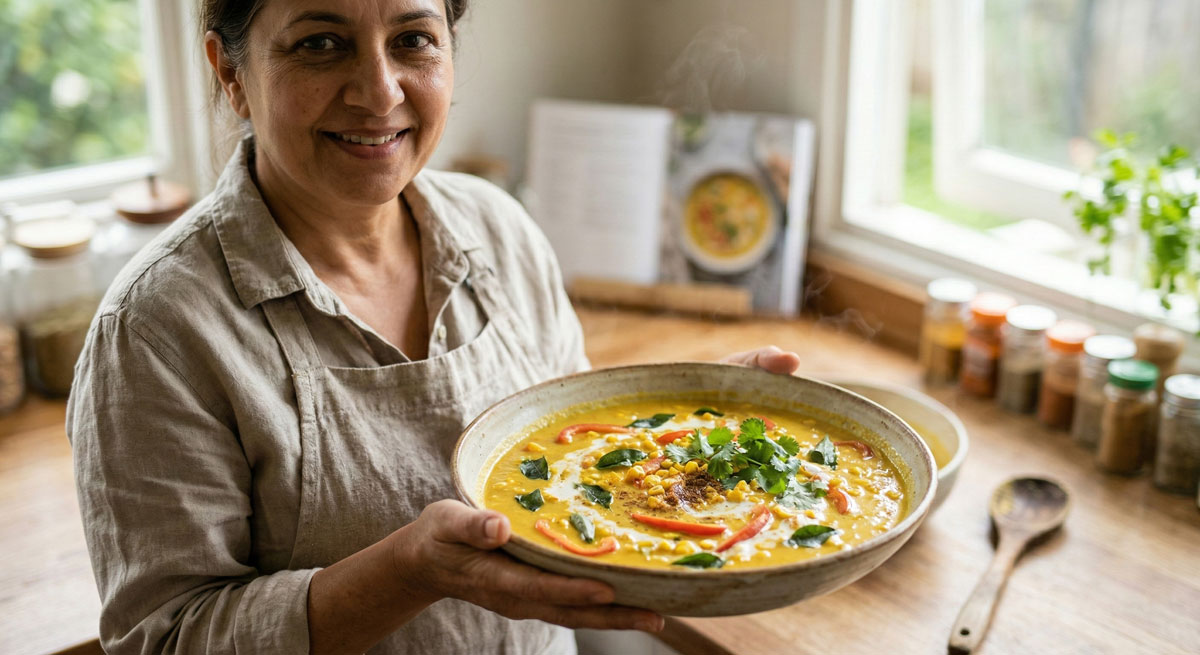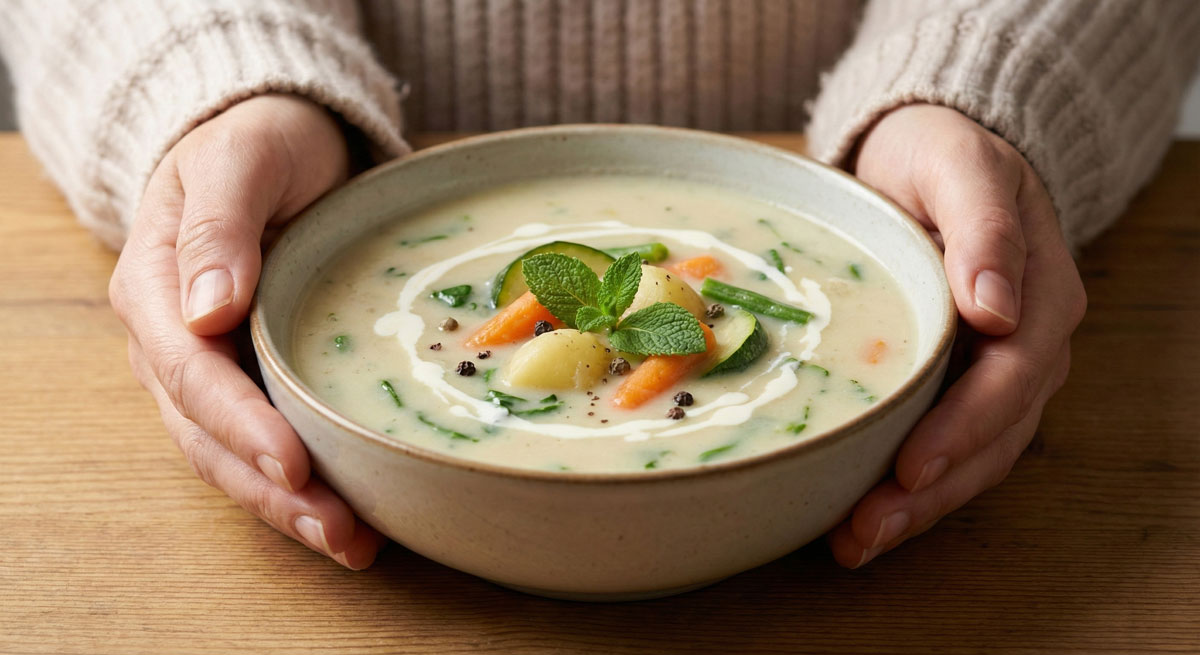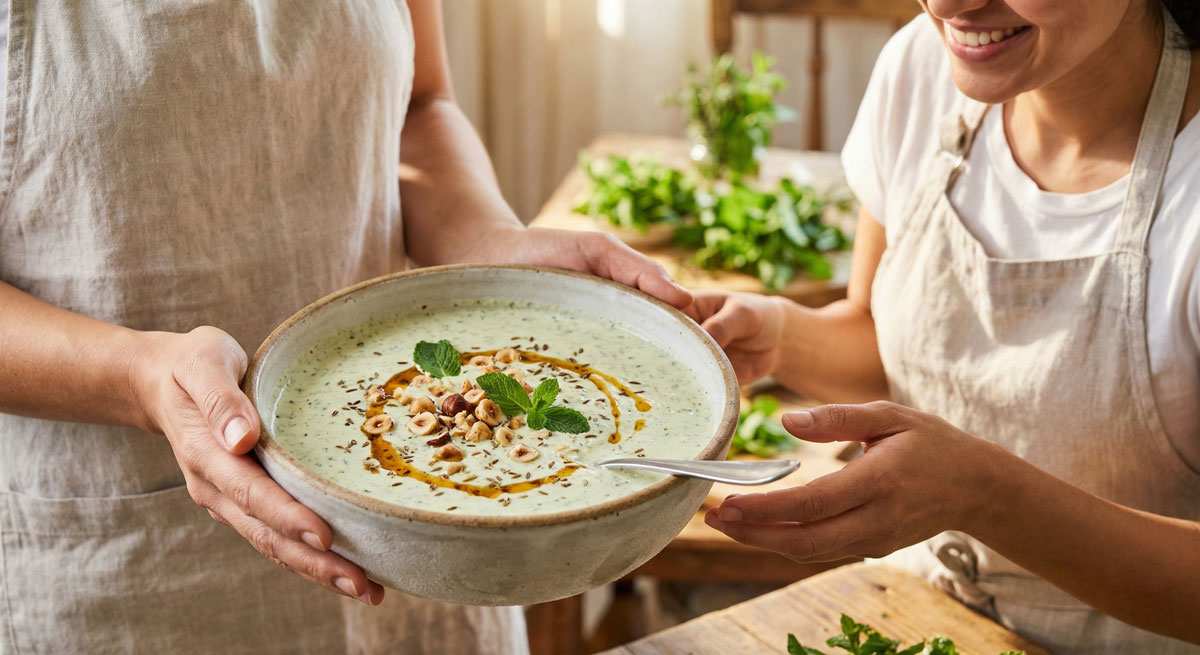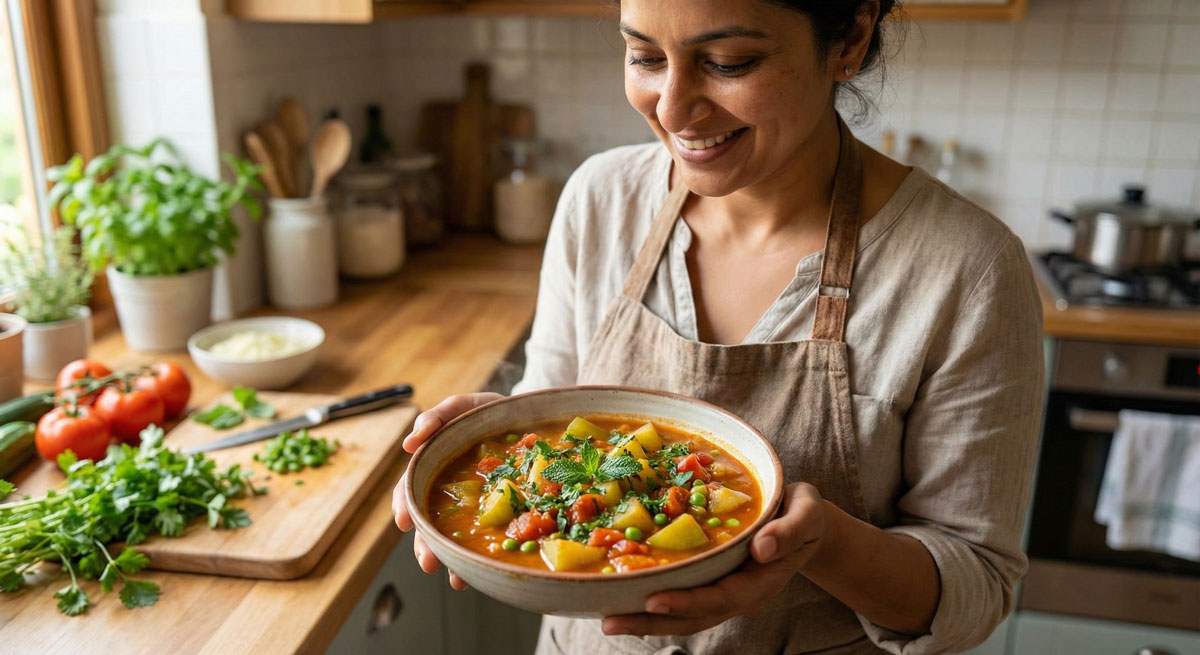
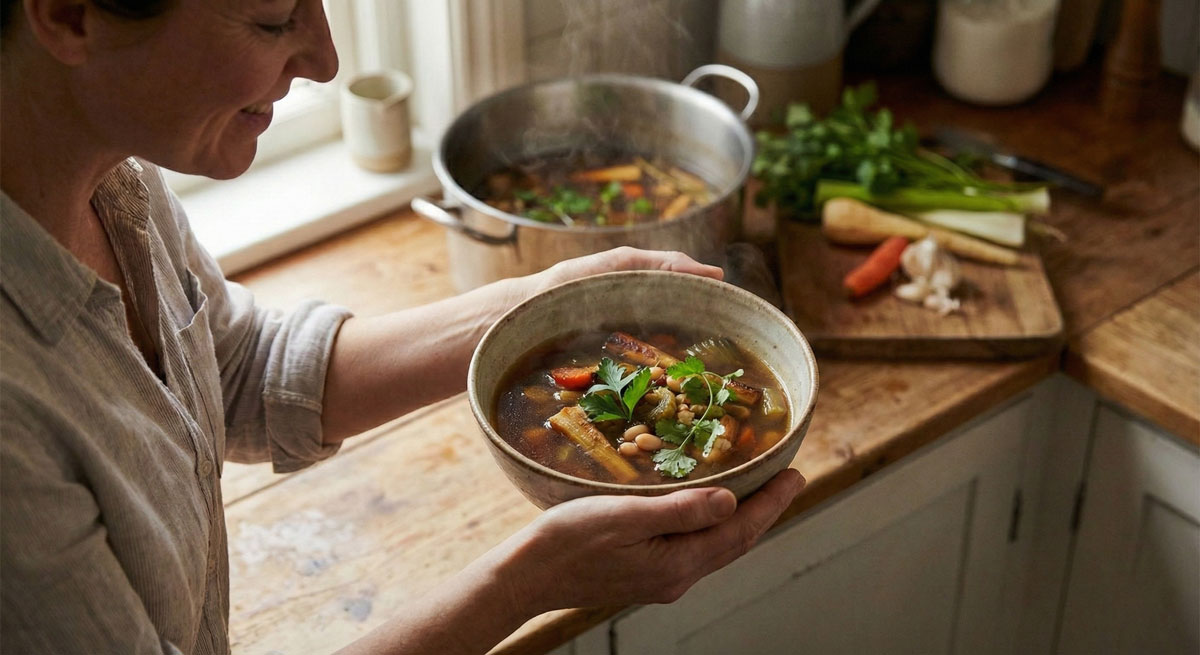
Forget thin, watery broths! My secret to next-level vegetarian cooking is this incredible Brown Vegetable Stock. We slowly caramelize root vegetables until they’re sweet and deeply savory, then simmer them with hearty white beans and a whisper of ginger. The result is a liquid gold that’s a game-changer for soups and stews, but honestly, it’s so good you’ll want to sip it straight from a mug. It’s the cozy, foundational recipe your kitchen has been missing.
Ingredients
• 2 cups / 12.9 oz / 365 g dried white beans
• 4 tbsp / 2 fl oz / 60 ml ghee or unsalted butter
• 3 medium-sized carrots, coarsely chopped
• 1 medium-sized parsnip, coarsely chopped
• 2 celery stalks with leaves, diced
• 12 cups / 101 fl oz / 3 L water
• 10 sprigs fresh parsley
• 10 sprigs fresh coriander
• 1 sprig fresh thyme or 0.25 tsp / 1 g dried thyme
• 3 whole cloves
• 1 small bay or cassia leaf
• 0.5 inch / 1.5 cm piece of fresh ginger root, scraped and julienned
• 1.5 tbsp / 0.8 oz / 22 g salt
Instructions
1. Place 2 cups / 365 g of dried white beans in a saucepan and cover with 2 inches / 5 cm of water.
2. Bring to a boil, simmer for exactly 2 minutes, then remove from heat, cover, and set aside while you prep the vegetables.
3. Heat 4 tbsp / 60 ml of ghee or butter in a large stockpot over moderate heat.
4. Add the chopped carrots, parsnip, and celery. Cook slowly for 20 minutes, stirring occasionally, until the vegetables are well-browned and caramelized.
5. Stir in 12 cups / 3 L of water, the fresh parsley, and coriander. Increase heat to high and bring to a boil.
6. Skim and discard any beans that float to the surface. Drain the remaining beans and add them to the stockpot.
7. Create a bouquet garni by tying the thyme, cloves, bay leaf, and ginger in cheesecloth. Add it to the pot along with 1.5 tbsp / 22 g of salt.
8. Reduce heat to low, cover, and simmer gently for 4 hours to develop a deep, rich flavor.
9. For a clear stock: Remove the bouquet garni and strain the liquid through a fine-mesh sieve, discarding the solids.
10. For a hearty soup: Remove the bouquet garni and purée the vegetables and beans with the stock until smooth. Add cream if desired and season to taste.
Nutritional Information
• Per Serving (approx. 1 cup / 250 ml)
• Calories: 315 kcal
• Carbohydrates: 42 g
• Protein: 14 g
• Fat: 10 g
Pro Tips
• for Success
• Don’t rush the browning. The deep, savory flavor comes from letting the vegetables slowly caramelize for at least 20 minutes. This Maillard reaction is the key to a true “brown” stock.
• Use the quick soak method. Boiling the beans for 2 minutes before adding them to the stock is crucial for softening their skins and ensuring they cook evenly during the long simmer.
• Skim for clarity. For a crystal-clear broth, use a spoon to skim off any foam that rises to the surface during the first 30 minutes of simmering.
• Make it vegan. To make this stock 100% vegan, simply substitute the ghee or butter with a high-heat neutral oil like avocado oil or a quality vegan butter for the browning step.
FAQ
Q: Can I make this brown vegetable stock vegan
A: Absolutely! To make this recipe 100% vegan, simply replace the ghee or butter with a high-quality vegan butter or a neutral, high-heat oil like avocado oil for caramelizing the vegetables. The rest of the ingredients are naturally plant-based.
Q: Why does this vegetable stock recipe include white beans
A: The white beans are a key ingredient for creating a uniquely rich and hearty vegetarian stock. They add a significant amount of plant-based protein, a creamy body, and a deep savory flavor that you won’t find in traditional vegetable broths, making this stock a substantial base for any dish.
Q: How should I store this homemade brown vegetable stock
A: You can store the stock in an airtight container in the refrigerator for up to 5 days. For longer storage, it freezes beautifully. Pour the cooled stock into freezer-safe containers, jars (leaving space for expansion), or ice cube trays for pre-portioned amounts. It will keep well in the freezer for up to 6 months.
Q: Is it necessary to caramelize the vegetables for 20 minutes
A: Yes, this step is crucial for developing the ‘brown’ in brown vegetable stock. Slowly caramelizing the carrots, parsnip, and celery creates a deep, sweet, and savory flavor profile through the Maillard reaction. Rushing this process will result in a much lighter, less complex broth.