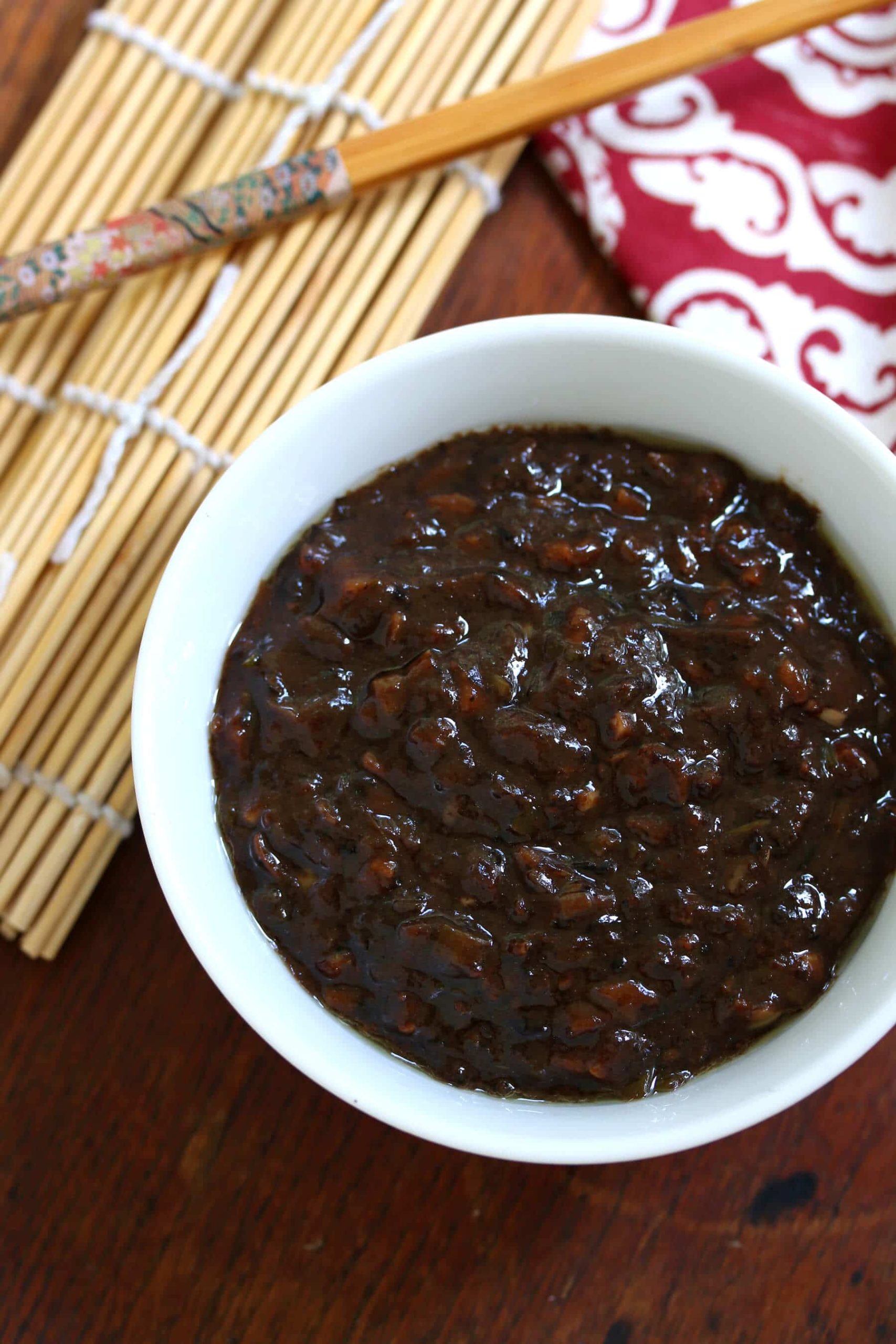
Ready to unlock a world of deep, savory flavor in just 10 minutes? While you might not think of black bean sauce for sushi, its robust, umami-packed punch is the perfect partner for delicate, mild vegetables. The secret lies in fermented black soybeans, which create a complex, savory depth that will elevate any dish you add it to. Forget store-bought jars; this homemade version is quick, easy, and infinitely more delicious!
Ingredients
• Prep Time: 5 minutesCook Time: 5 minutesMakes: about 1 cup / 250 ml
• 2 teaspoons / 10 g Chinese fermented black beans
• 2 tablespoons / 30 ml neutral oil
• 1 teaspoon / 5 g finely minced fresh ginger
• 1 teaspoon / 5 g finely minced garlic
• 1 green onion, thinly sliced
• 1 cup / 250 ml Vegetarian Dashi or low-sodium vegetable stock
• 2 tablespoons / 30 ml rice vinegar
• 1 tablespoon / 15 ml soy sauce
• 1 teaspoon / 5 g salt
• 1 tablespoon / 15 g potato starch or cornstarch, dissolved in 2 tablespoons / 30 ml water
Instructions
1. Place the Chinese black beans in a small bowl, cover with warm water, and soak for 5 minutes. Drain and set aside.
2. Heat the oil in a skillet or small saucepan over medium heat. Add the minced ginger, garlic, and sliced green onion, and sauté for 1 minute until fragrant.
3. Add the soaked black beans, vegetarian dashi, rice vinegar, soy sauce, and salt. Bring the mixture to a rolling boil.
4. Whisk in the dissolved potato starch mixture. Reduce the heat and simmer, stirring constantly, for 2 minutes or until the sauce has thickened to your desired consistency.
5. Use immediately or transfer to an airtight container and refrigerate for later use.
Nutritional Information
• Serving Size: 1 tablespoon
• Calories: approx. 20 kcal
• This sauce is a low-calorie way to add a significant punch of umami and savory flavor to dishes.
• It is naturally vegan and can be made gluten-free by using tamari instead of soy sauce and ensuring your dashi/stock is gluten-free.
Pro Tips
• For a smoother texture and to release more flavor, lightly mash the soaked black beans with the back of a spoon before sautéing.
• For a spicy kick, add a pinch of red pepper flakes or a dash of chili oil along with the ginger and garlic.
• Control the sauce’s thickness by adding the starch slurry slowly. For a thinner sauce, use less; for a thicker one, let it simmer a minute longer.
• Store the sauce in an airtight jar in the refrigerator for up to one week. The flavors will meld and deepen over time.
FAQ
Q: Can I make this black bean sauce gluten-free
A: Yes, absolutely. To make this recipe gluten-free, simply substitute the soy sauce with tamari or a gluten-free soy sauce alternative. Also, ensure that your vegetarian dashi or vegetable stock is certified gluten-free.
Q: Where can I find Chinese fermented black beans
A: Chinese fermented black beans, also known as douchi, are the key to the sauce’s deep umami flavor. You can typically find them in plastic bags or jars at most Asian grocery stores or purchase them from online retailers. There isn’t a direct substitute that captures their unique taste.
Q: What are the best vegetarian dishes to use this sauce with
A: This versatile sauce is fantastic for elevating plant-based meals. Use it as a stir-fry sauce with tofu, seitan, or a mix of vegetables like broccoli and bell peppers. It’s also delicious drizzled over steamed eggplant, tossed with noodles, or used as a savory base for mapo tofu.
Q: How long does this homemade sauce last in the fridge
A: Once cooled, transfer the sauce to an airtight jar or container and store it in the refrigerator. It will stay fresh for up to one week. The flavors will continue to meld and deepen, so it often tastes even better the next day.