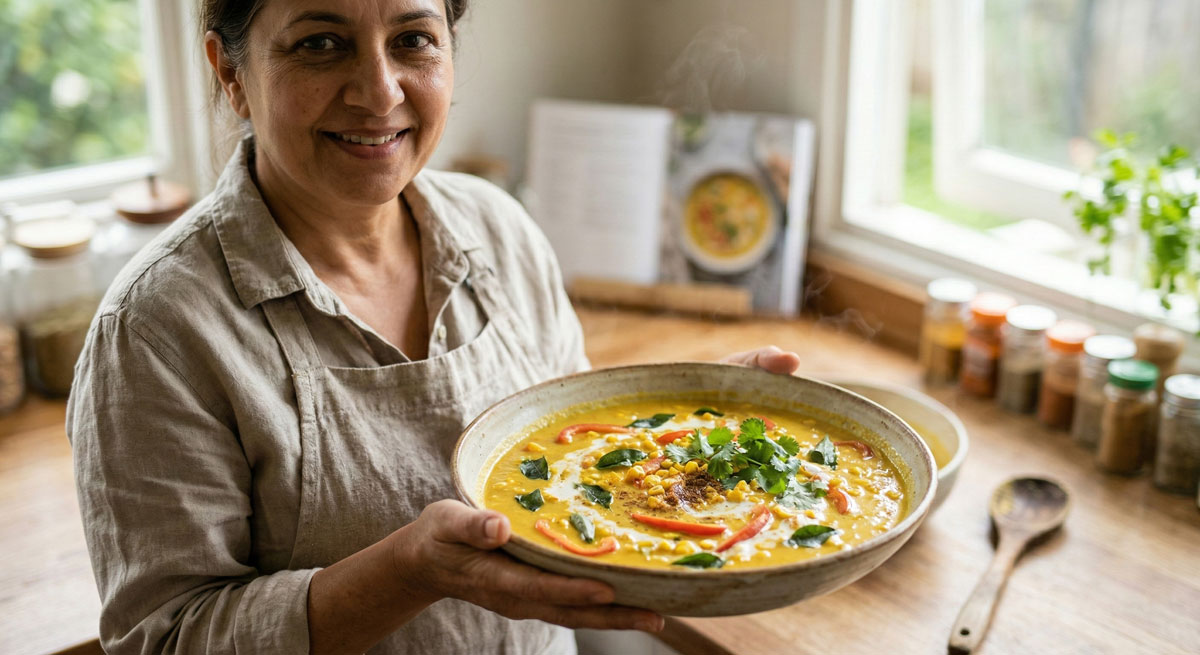
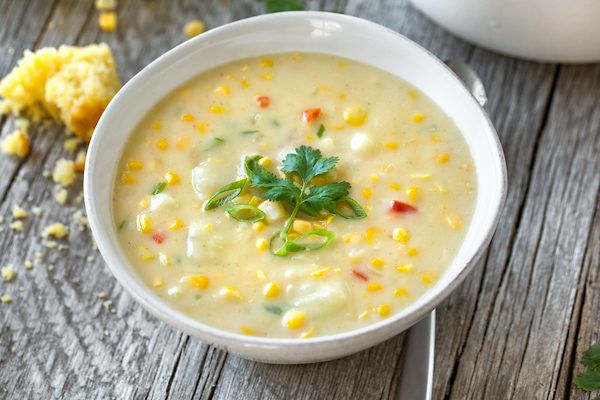
There’s nothing that says ‘summer’ quite like the sweet, sun-kissed flavor of fresh corn. This chowder is a celebration of that singular, perfect ingredient. We’ll use every part of the corn—the kernels for their sweet pop and the cobs to create a surprisingly flavorful broth that forms the base of this incredible soup. It’s creamy, comforting, and tastes like a warm day in a bowl. While I love the pure, clean flavor of the milk-based version, I highly recommend indulging with half-and-half at least once. It’s a seasonal treat you won’t forget!
Ingredients
• Kernels from 6 ears fresh corn (about 4 cups / 600g), cobs reserved
• 2 cups / 475ml water
• Salt and freshly ground black pepper, to taste
• 4 tablespoons / 57g unsalted butter or neutral oil
• 1/2 cup / 50g chopped scallions
• 1/2 teaspoon / 2g granulated sugar
• 1/4 cup / 30g all-purpose flour
• 1 quart / 4 cups / 950ml whole milk or half-and-half
• Cornbread croutons, for garnish (optional)
Instructions
1. Create the corn cob broth by placing the reserved cobs and 2 cups of water in a pot with a tight-fitting lid. Sprinkle with salt and pepper, bring to a boil, then reduce heat to a gentle simmer. Cover and cook for about 30 minutes. Remove the cobs and reserve the broth.
2. In a deep skillet or saucepan over medium-high heat, melt the butter or heat the oil. Add the scallions and sugar, cooking for about 1 minute until soft. Reduce heat to medium, stir in the flour, and cook, stirring constantly, for 5-10 minutes until the mixture is golden and the raw flour smell is gone. Whisk in the milk and reserved corn broth, increase heat to medium-high, and stir constantly until the soup begins to thicken, about 2 minutes.
3. Stir in the fresh corn kernels. Bring the soup to a boil, then reduce the heat to a gentle bubble. Cook, stirring occasionally, for 10-15 minutes, until the corn is tender and the chowder has thickened to your liking. Taste and adjust seasoning with salt and pepper. Serve hot, garnished with cornbread croutons if desired.
Nutritional Information
• Serving Size: 1 bowl (approx. 1.5 cups)
• Calories: 350 kcal
• Protein: 10g
• Carbohydrates: 45g
• Fat: 15g
• Sodium: 400mg
• (Estimates are based on using whole milk and will vary.)
Pro Tips
• For a richer, deeper flavor, roast the corn kernels at 400°F (200°C) for 15-25 minutes until they begin to brown before adding them to the soup.
• To create a heartier, thicker chowder, add one large, peeled and diced baking potato to the pot along with the corn kernels in the final step.
• Stir in 1/2 cup of grated sharp cheddar, Parmesan, or hard goat cheese along with the corn for a deliciously cheesy version.
• For a fresh, tangy twist, add 3 coarsely chopped roma tomatoes to the soup when you add the corn.
FAQ
Q: Can I make this corn chowder vegan
A: Absolutely! To make this chowder vegan, use a neutral oil or vegan butter instead of unsalted butter. For the creamy base, substitute the whole milk or half-and-half with a full-fat, unsweetened plant-based milk like oat milk, cashew milk, or canned coconut milk for the richest result.
Q: How can I add more protein to this vegetarian chowder
A: To boost the protein, consider adding one 15-ounce can of rinsed white beans or chickpeas along with the corn kernels. You could also stir in some smoked or baked tofu cubes at the end of the cooking time for a heartier, more protein-rich meal.
Q: Is this corn chowder recipe gluten-free
A: This recipe is not gluten-free as written because it uses all-purpose flour as a thickener. To make it gluten-free, you can substitute the all-purpose flour with a gluten-free all-purpose flour blend. Alternatively, you can create a slurry with 2 tablespoons of cornstarch and 4 tablespoons of cold water and whisk it into the soup to thicken it near the end of cooking.
Q: How long does this vegetarian corn chowder last in the fridge
A: Stored in an airtight container, this corn chowder will last for 3 to 4 days in the refrigerator. Please note that dairy-based soups can sometimes separate when reheated, so warm it gently on the stovetop over low heat, stirring frequently, for the best texture.