
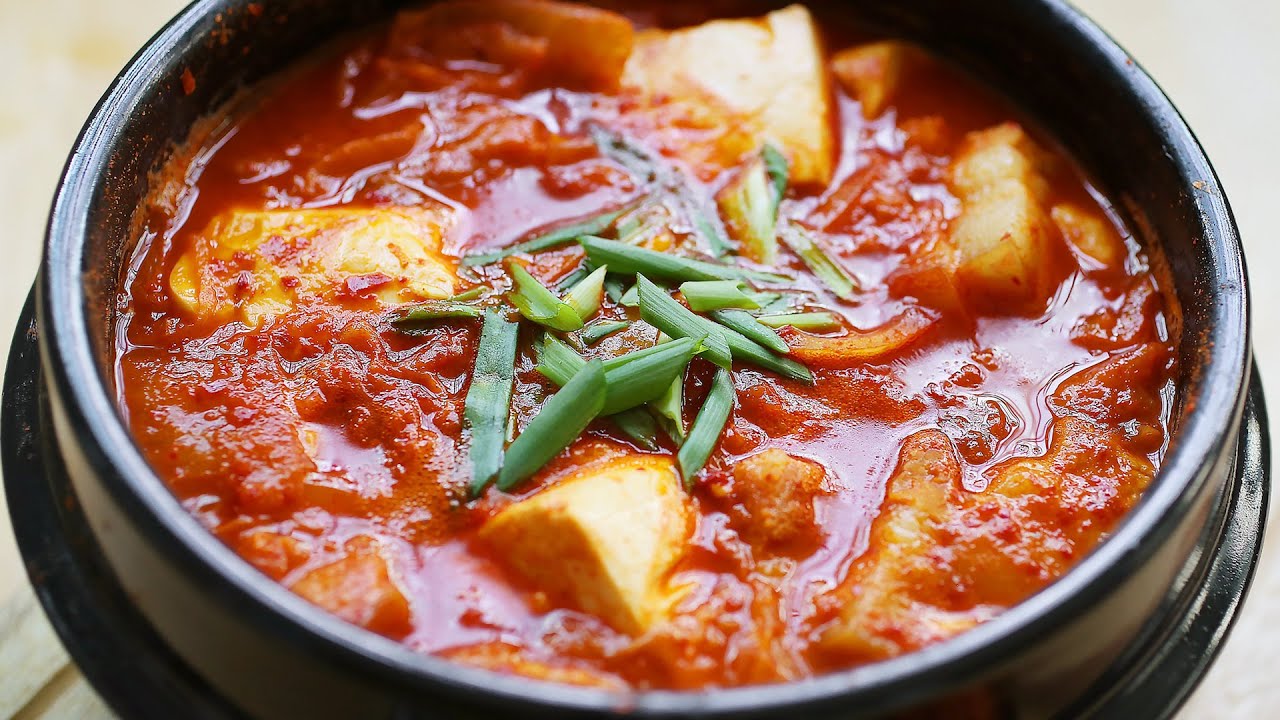
Is there anything more comforting than a bubbling, spicy bowl of soup? If you have a jar of kimchi sitting in your fridge, you’re just 25 minutes away from this incredible Vegetarian Kimchi Jjigae. This recipe is my go-to for a quick lunch or a light, soul-warming dinner. It’s a fiery, tangy, and deeply savory soup that perfectly balances the fermented funk of kimchi with the soft, silky texture of tofu. It’s the ultimate solution for using up that ambitious Asian market haul and transforming simple ingredients into a truly spectacular meal.
Ingredients
• 3 tbsp / 45 ml dark sesame oil, divided
• 6 scallions, cut into 2-inch lengths
• 1 1/2 cups / 340g aged cabbage kimchi, roughly chopped
• 8 oz / 225g silken tofu, cut into 1/2-inch cubes
• 1 tbsp / 15g gochujang (Korean red pepper paste)
• 6 cups / 1.4 L water or vegetable stock
• 1 tbsp / 15 ml rice vinegar
• 1 tbsp / 15 ml soy sauce, or more to taste
• 1/2 cup / 100g short-grain white rice
• Freshly ground black pepper, to taste
Instructions
1. In a large pot or Dutch oven, heat 2 tablespoons of the sesame oil over medium-high heat. Add the scallions and cook, stirring frequently, for about 1 minute until fragrant.2. Add the chopped kimchi, cubed tofu, and gochujang to the pot. Stir gently to combine, cooking for another 30 seconds to toast the paste.3. Pour in the water or vegetable stock, rice vinegar, and soy sauce. Stir everything together and bring the soup to a boil.4. Once boiling, reduce the heat to maintain a steady simmer. Add the rice, stir once, and let it cook for 15 to 20 minutes, or until the rice is tender and cooked through.5. Taste the soup and adjust seasoning as needed with more soy sauce and a few grinds of black pepper. Stir in the remaining 1 tablespoon of sesame oil and serve immediately.
Nutritional Information
• Calories: 385 kcal
• Carbohydrates: 48g
• Protein: 14g
• Fat: 15g
• Sodium: 950mg
• (Estimates are per serving)
Pro Tips
• Pro-Tips for the Best Kimchi Soup
• For the most authentic and deeply flavorful soup, use well-fermented, sour kimchi. The older the kimchi, the richer the flavor of the jjigae will be.
• If your kimchi is very sour, balance the broth by adding a teaspoon of sugar or a splash of mirin to cut through the sharpness.
• For an extra layer of umami, substitute the soy sauce with 1 tablespoon of white or yellow miso paste. Whisk it with a little warm broth before stirring it into the pot at the end.
• Boost the freshness by tossing in a handful of enoki mushrooms or bean sprouts during the last two minutes of cooking.
FAQ
Q: Is all kimchi vegetarian
A: No, not all kimchi is vegetarian. Many traditional recipes contain fish sauce, shrimp paste, or other seafood products. To keep this recipe strictly vegetarian, it is crucial to buy kimchi that is specifically labeled ‘vegetarian’ or ‘vegan’ to ensure no animal products are included.
Q: Can I use a different type of tofu for this soup
A: Yes, you can. This recipe calls for silken tofu for its soft, custard-like texture that melts in your mouth. However, if you prefer a chewier, heartier bite, you can easily substitute it with medium, firm, or extra-firm tofu. Simply cube it and add it as instructed.
Q: How can I add more protein to this vegetarian kimchi jjigae
A: Tofu is already a great source of plant-based protein. To increase the protein content further, you could use extra-firm tofu, add a cup of cooked edamame, or stir in a handful of shiitake or enoki mushrooms, which also contribute a wonderful umami flavor and texture.
Q: How do I store and reheat leftover kimchi jjigae
A: Store any leftovers in an airtight container in the refrigerator for up to 3 days. Note that the rice will continue to absorb the broth and soften over time. Reheat gently on the stovetop, adding a splash of water or vegetable stock to loosen the consistency if needed.