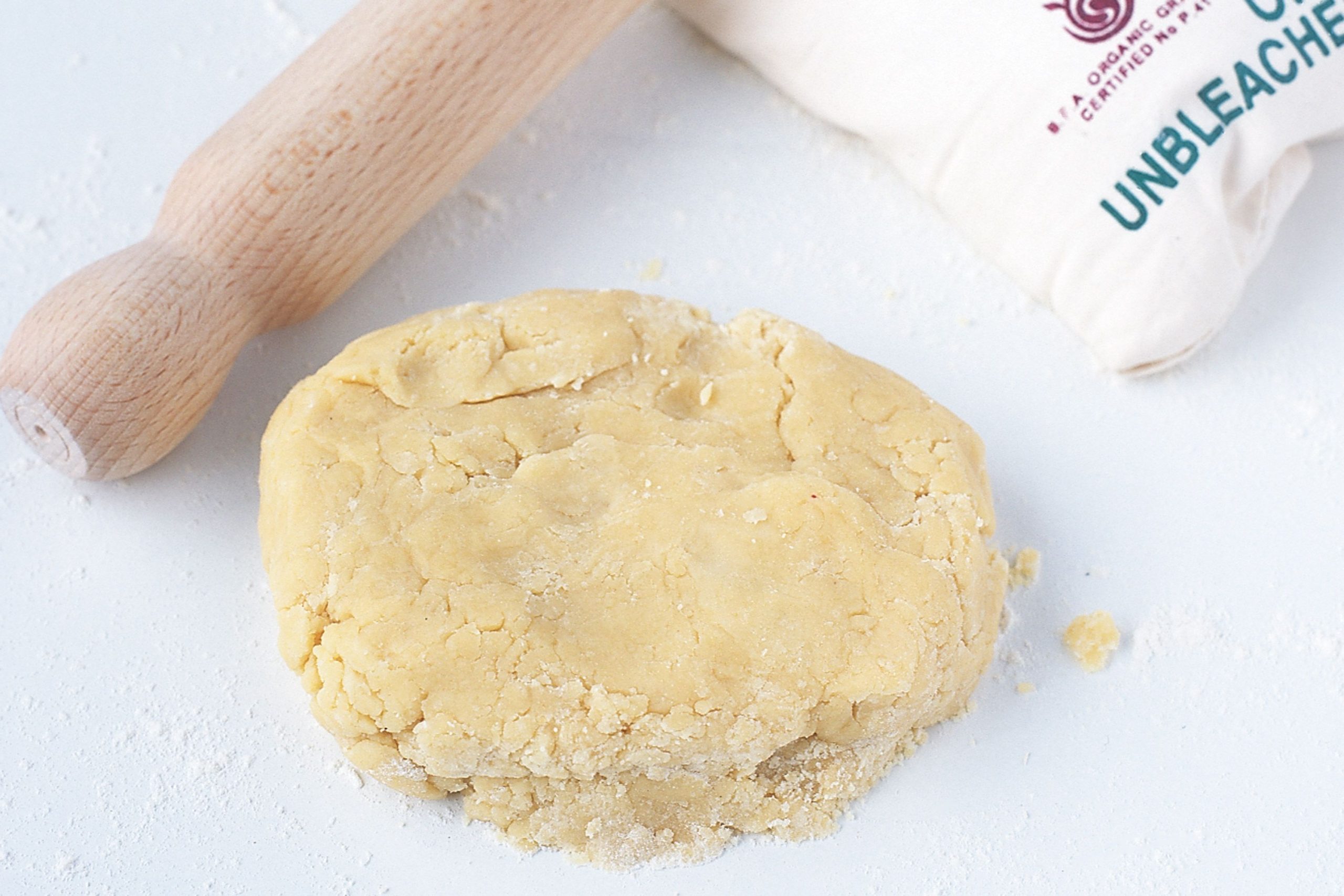
There’s nothing quite like the buttery, flaky perfection of homemade shortcrust pastry. It’s the foundation for so many incredible vegetarian dishes, from hearty vegetable pies and creamy quiches to elegant fruit tarts. This foolproof recipe gives you two versatile options – one savoury, one sweet – and a game-changing trick for rolling it out. Say goodbye to crumbly, difficult dough and hello to a buttery, moist, and easy-to-handle pastry every single time!
Ingredients
• MAKES ENOUGH TO LINE ONE 8-INCH / 20CM TART TIN
• For Savoury Pastry
• 250g / 2 cups all-purpose flour
• 1/2 tsp fine sea salt
• 125g / 1/2 cup + 1 tbsp cold unsalted butter, cubed
• 6 tbsp ice-cold water
• For Sweet Pastry
• 150g / 1 1/4 cups all-purpose flour
• 50g / 1/4 cup granulated sugar
• A pinch of fine sea salt
• 100g / 7 tbsp cold unsalted butter, cubed
• 4 tbsp ice-cold water
Instructions
1. Combine the dry and butter. In a food processor, add the flour, salt, and sugar (if using) and pulse briefly. Add the cold, cubed butter and pulse until the mixture resembles fine breadcrumbs. Alternatively, do this by hand in a large bowl, rubbing the butter into the flour with your fingertips.
2. Add the ice-cold water. With the food processor running, slowly pour the water down the funnel until the dough just comes together into a ball. If mixing by hand, use a butter knife to stir the water in a little at a time. Be careful not to add too much water at once – you may not need it all.
3. Form the dough. As soon as the dough forms, stop mixing. Overworking the dough will develop the gluten and result in a tough pastry. Gently bring it together with your hands into a smooth disc.
4. Roll out the pastry. Place the dough between two large sheets of baking parchment. Using a rolling pin, roll it out to an even thickness of about 2mm (just under 1/8 inch). This method prevents the dough from sticking without adding extra flour, keeping it perfectly buttery.
5. Use or store. You can use the pastry immediately, or store it for later. To store, keep it flat between the parchment sheets on a tray, cover tightly with cling film, and refrigerate for up to 5 days.
Nutritional Information
• Approximate values per serving (1/8th of savoury pastry)
• Calories: 185 kcal
• Fat: 10g
• Carbohydrates: 20g
• Protein: 3g
• Sodium: 148mg
Pro Tips
• for Perfect Pastry
• Roll the pastry between two sheets of baking parchment. This is the secret to a moist, buttery dough as you don’t need any extra bench flour, which can dry it out.
• Make it ahead! The dough can be made the night before and kept in the fridge. Just let it sit at room temperature for 30 minutes before rolling to make it more pliable.
• For a flakier crust, ensure your butter and water are as cold as possible. This creates little pockets of steam when baking, resulting in a lighter texture.
• Infuse your dough with flavour. Add 10g of finely chopped fresh herbs (like thyme or rosemary) to the savoury pastry, or 1 tbsp of finely grated unwaxed lemon zest to the sweet version.
FAQ
Q: Can I make this shortcrust pastry vegan
A: Yes, you can easily adapt this recipe to be vegan. Simply substitute the unsalted butter with a high-quality, cold, block-style vegan butter in the same quantity. Ensure it’s very cold for the best flaky results.
Q: Can I use whole wheat flour for this vegetarian pastry
A: You can substitute up to half of the all-purpose flour with whole wheat flour for a nuttier flavour. You may need to add an extra tablespoon of ice-cold water, as whole wheat flour is more absorbent. The final texture will be slightly denser but delicious.
Q: How do I store this vegetarian pastry dough
A: This dough stores beautifully. You can keep the disc tightly wrapped in the refrigerator for up to 5 days. For longer storage, freeze the tightly wrapped dough for up to 3 months and thaw it overnight in the fridge before using.
Q: Is this vegetarian pastry recipe healthy
A: This recipe uses simple, whole ingredients like flour and butter. While it is a source of fat and carbohydrates, it can be part of a balanced vegetarian diet when used as a base for nutrient-rich fillings like vegetables or fruits. The nutritional information provides a breakdown per serving.