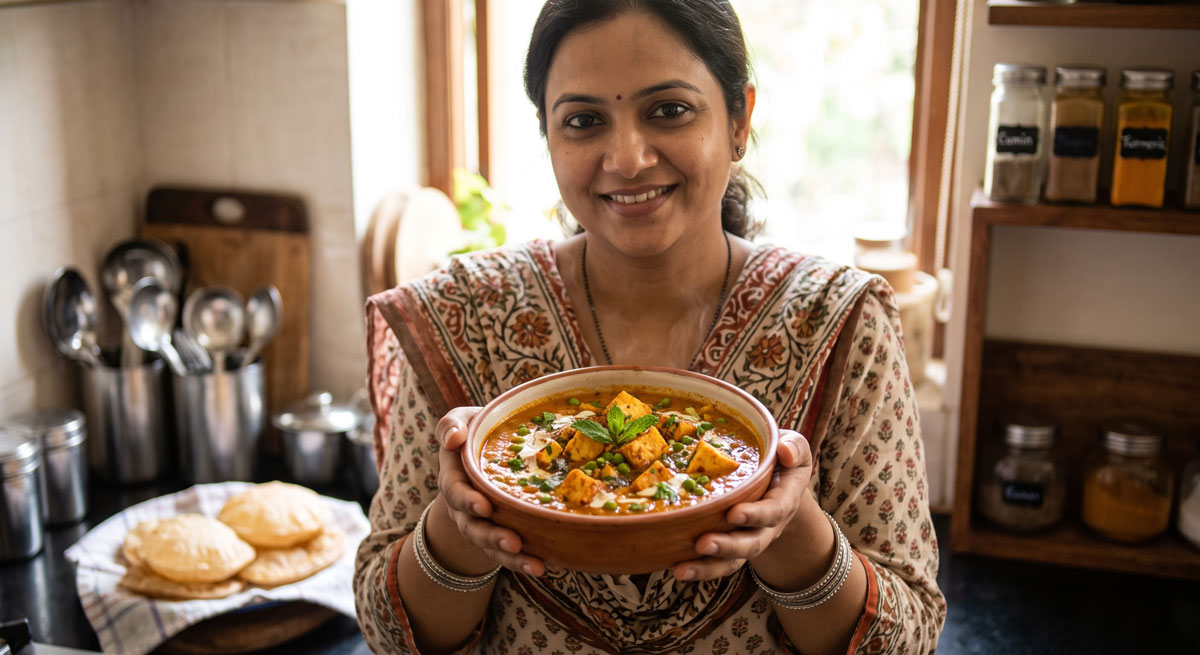
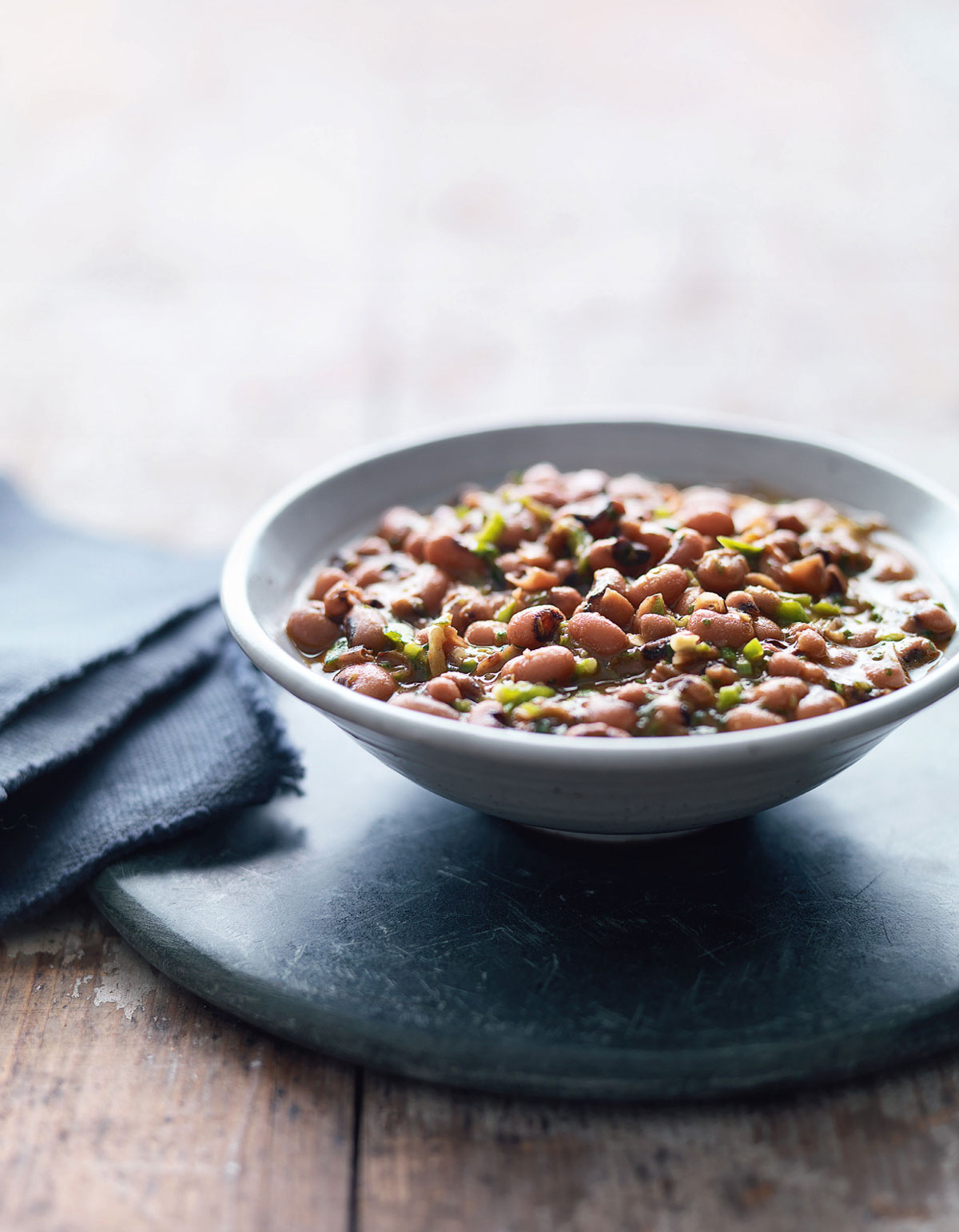
There’s a special kind of comfort found in a simple bowl of dal, and this North Indian Black-Eyed Pea Curry, known as Lobia Masala, is comfort in its purest form. Unlike heavier dals, this one is light yet deeply flavorful, with a vibrant green masala paste that sings with fresh cilantro and a gentle kick of chili. It’s the kind of humble, everyday dish that nourishes the soul and pairs beautifully with fluffy basmati rice or warm, flaky flatbreads. Get ready to add a new staple to your weekly rotation!
Ingredients
• 1 cup / 200g dried black-eyed peas, washed and soaked overnight
• 4 cups / 1 liter water, for cooking
• ¾ teaspoon / 4g salt, or to taste
• 1 well-packed cup / 30g fresh cilantro tops, chopped
• 2–4 fresh hot green chilies, chopped
• 1 tablespoon / 15ml tomato purée
• 4 tablespoons / 60ml water, for the paste
• 2 teaspoons / 10ml olive or peanut oil
• 1 generous pinch ground asafetida (hing)
• ½ teaspoon whole cumin seeds
• 1 dried hot red chili
• ½ medium onion, peeled and cut into fine half rings
Instructions
1. Cook the Peas: Drain the soaked black-eyed peas and place them in a large pot with 4 cups (1 liter) of fresh water. Bring to a boil, skimming off any froth that rises to the surface. Reduce the heat to low, partially cover, and let it simmer gently for about 1 hour and 15 minutes, or until the peas are tender. To create a creamier texture, use the back of a spoon to mash a few tablespoons of the cooked peas against the side of the pot. Stir in the salt.
2. Prepare the Green Masala Paste: While the peas are cooking, combine the chopped cilantro, green chilies, and tomato purée in a blender. Add 4 tablespoons (60ml) of water and blend until you have a smooth, vibrant paste. You may need to scrape down the sides with a spatula to ensure everything is well combined.
3. Temper the Spices (Tadka): In a small frying pan, heat the oil over medium heat. Once hot, add the pinch of asafetida. A few seconds later, add the cumin seeds and let them sizzle and become fragrant. Add the whole dried red chili, allowing it to darken slightly. Finally, add the sliced onions and sauté until they turn a beautiful reddish-brown.
4. Combine and Simmer: Add the blended green masala paste to the onions in the frying pan. Cook, stirring frequently, until the paste thickens and the oil begins to separate from the mixture. Pour this entire aromatic tadka into the pot of cooked black-eyed peas. Stir everything together thoroughly. Allow the dal to simmer for another 5-10 minutes for the flavors to meld. Adjust the consistency with a little hot water if you prefer a thinner dal.
Nutritional Information
• (per serving)
• Calories: 250 kcal
• Protein: 12g
• Carbohydrates: 35g
• Fat: 7g
• Fiber: 10g
• Sodium: 450mg
Pro Tips
• For a faster cooking time, use a pressure cooker. Cook the soaked peas for 3-4 whistles on medium heat.
• Don’t skip the asafetida (hing)! It adds a unique savory, umami flavor and also aids in digestion, which is especially helpful with legumes.
• To deepen the flavor, add a teaspoon of ginger-garlic paste along with the onions during the tempering stage.
• Finish the dal with a squeeze of fresh lemon or lime juice just before serving to brighten up all the flavors.
FAQ
Q: Is this black-eyed pea curry a good source of protein
A: Absolutely! Black-eyed peas are a fantastic source of plant-based protein. One serving of this Lobia Masala contains approximately 12 grams of protein, making it a nutritious and satisfying option for any vegetarian or vegan diet.
Q: Can I make this lobia masala recipe vegan
A: Yes, this recipe is naturally vegan as written. It uses olive or peanut oil for the tempering (tadka) instead of ghee. Just be sure to serve it with vegan-friendly sides like basmati rice or a dairy-free flatbread.
Q: How should I store leftover black-eyed pea curry
A: This dal stores beautifully, making it perfect for meal prep. Allow the curry to cool completely, then transfer it to an airtight container. It will keep in the refrigerator for up to 4 days. For longer storage, you can freeze it for up to 3 months.
Q: What can I use if I don’t have black-eyed peas
A: While black-eyed peas give this dish its classic taste, you can substitute them with other legumes. Canned or soaked chickpeas (chana) or kidney beans (rajma) would work well, though you may need to adjust the cooking time accordingly.